


A telephone intervention to achieve differentiation in dietary intake: a randomized trial in paediatric primary care
- PMID: 27492865
- PMCID: PMC5529253
- DOI: 10.1111/ijpo.12171
A telephone intervention to achieve differentiation in dietary intake: a randomized trial in paediatric primary care
Abstract
Background: Telehealth offers opportunities to extend clinical and research interventions for paediatric obesity.
Objectives: To assess utility of a telephone intervention, implemented through a national primary care paediatric research network, for promoting differentiation in dietary intake, consistent with either a low-glycemic load (Low GL) or Low Fat prescription, among overweight/obese school-age children.
Methods: Five-week telephone dietary counselling intervention for parents of overweight/obese school-age children recruited through the Slone Center Office-based Research Network. Parent-child dyads were randomized to Low GL or Low Fat diet. Primary outcomes were dietary GL and dietary fat, adjusted for energy intake and assessed by 24-h dietary recall.
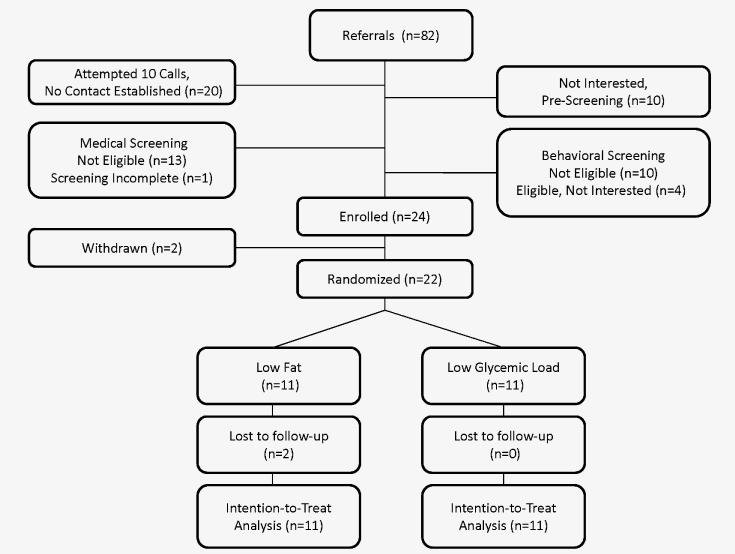
Results: Subjects were randomized to Low GL (n = 11, 8.1 ± 1.7 years, 45.5% male) or Low Fat (n = 11, 8.2 ± 2.0 years, 36.4% male), with no baseline differences. Overall, 86% of subjects attended at least four of five counselling sessions, and study completion rate was 91% (based on completion of the final dietary recalls). Reported satisfaction was high. In adjusted analyses limited to 'recall completers,' reduction in dietary GL (g/1000 kcal) achieved within the Low GL group was significant (p = 0.01) and greater than the change in dietary GL in the Low Fat group (mean ± SE; -12.9 ± 4.4 vs. 5.1 ± 4.9, p = 0.03). Similarly, reduction in dietary fat (% of total energy) within the Low Fat group was significant (-5.6 ± 2.5, p = 0.046) but with no difference between groups (p = 0.25).
Conclusion: A telephone-based dietary intervention for overweight/obese children, implemented through a national paediatric research network, fostered prescribed dietary changes. ClinicalTrials.gov registration: NCT00620152.
Keywords: Diet; obesity; paediatric; practice-based research; telehealth; treatment.
© 2016 World Obesity Federation.
References
-
- Rhodes ET, Ludwig DS. Childhood obesity as a chronic disease: keeping the weight off. Jama. 2007;298(14):1695–6. - PubMed
Publication types
MeSH terms
Associated data
Grants and funding
LinkOut - more resources
Full Text Sources
Other Literature Sources
Medical
