Review
. 2016 Dec:168:1-11.
doi: 10.1016/j.pharmthera.2016.07.010. Epub 2016 Aug 2.

Targeting the ROS-HIF-1-endothelin axis as a therapeutic approach for the treatment of obstructive sleep apnea-related cardiovascular complications

Affiliations
Free PMC article
Review

Targeting the ROS-HIF-1-endothelin axis as a therapeutic approach for the treatment of obstructive sleep apnea-related cardiovascular complications

Elise Belaidi et al. Pharmacol Ther. 2016 Dec.
Free PMC article

Abstract

Obstructive sleep apnea (OSA) is now recognized as an independent and important risk factor for cardiovascular diseases such as hypertension, coronary heart disease, heart failure and stroke. Clinical and experimental data have confirmed that intermittent hypoxia is a major contributor to these deleterious consequences. The repetitive occurrence of hypoxia-reoxygenation sequences generates significant amounts of free radicals, particularly in moderate to severe OSA patients. Moreover, in addition to hypoxia, reactive oxygen species (ROS) are potential inducers of the hypoxia inducible transcription factor-1 (HIF-1) that promotes the transcription of numerous adaptive genes some of which being deleterious for the cardiovascular system, such as the endothelin-1 gene. This review will focus on the involvement of the ROS-HIF-1-endothelin signaling pathway in OSA and intermittent hypoxia and discuss current and potential therapeutic approaches targeting this pathway to treat or prevent cardiovascular disease in moderate to severe OSA patients.

Keywords: Cardiovascular disease; Endothelin-1; Hypoxia inducible factor-1; Intermittent hypoxia; Obstructive sleep apnea; Oxidative stress.


Conflict of interest statement

Conflicts of interest

None.

Figures

Fig. 1
Fig. 1
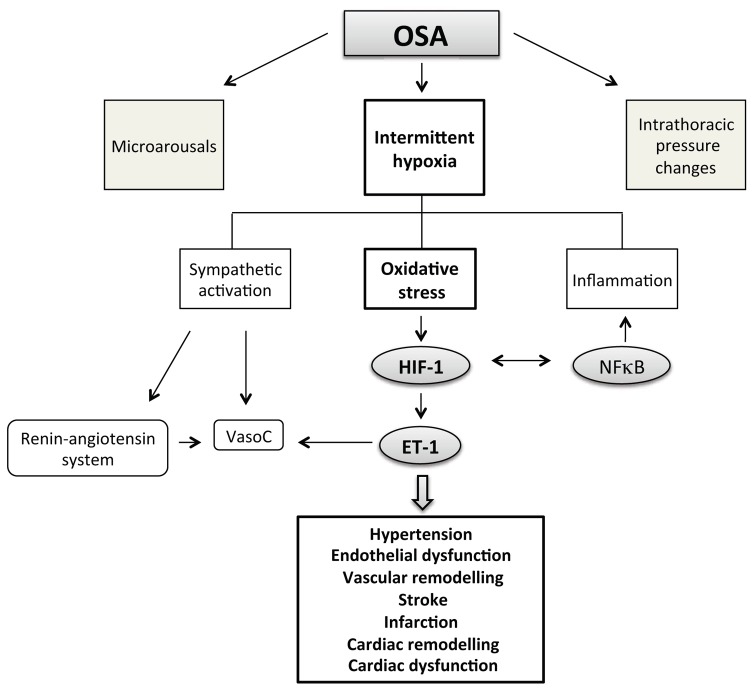
Among the consequences of obstructive sleep apnea (OSA), intermittent hypoxia plays a major role in the development of associated cardiovascular pathologies. More specifically, intermittent hypoxia is well recognized to induce oxidative stress with subsequent activation of the hypoxia inducible factor-1 (HIF-1) transcription factor and upregulation of genes deleterious for the cardiovascular system such as the endothelin-1 (ET-1) gene. NFκB, nuclear factor kappa B; VasoC, vasoconstriction.
Fig. 2
Fig. 2
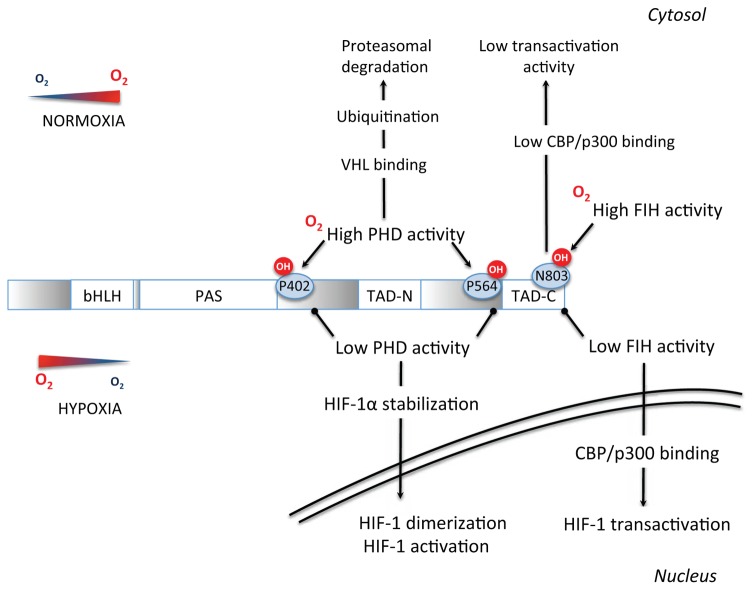
Signal transduction pathways by which a reduction in O2 concentration inhibits prolyl-4-hydroxylases (PHDs) and Factor Inhibiting HIF-1 (FIH), leading to HIF-1α stabilization and activation. See text for detailed description and additional abbreviations.
Fig. 3
Fig. 3
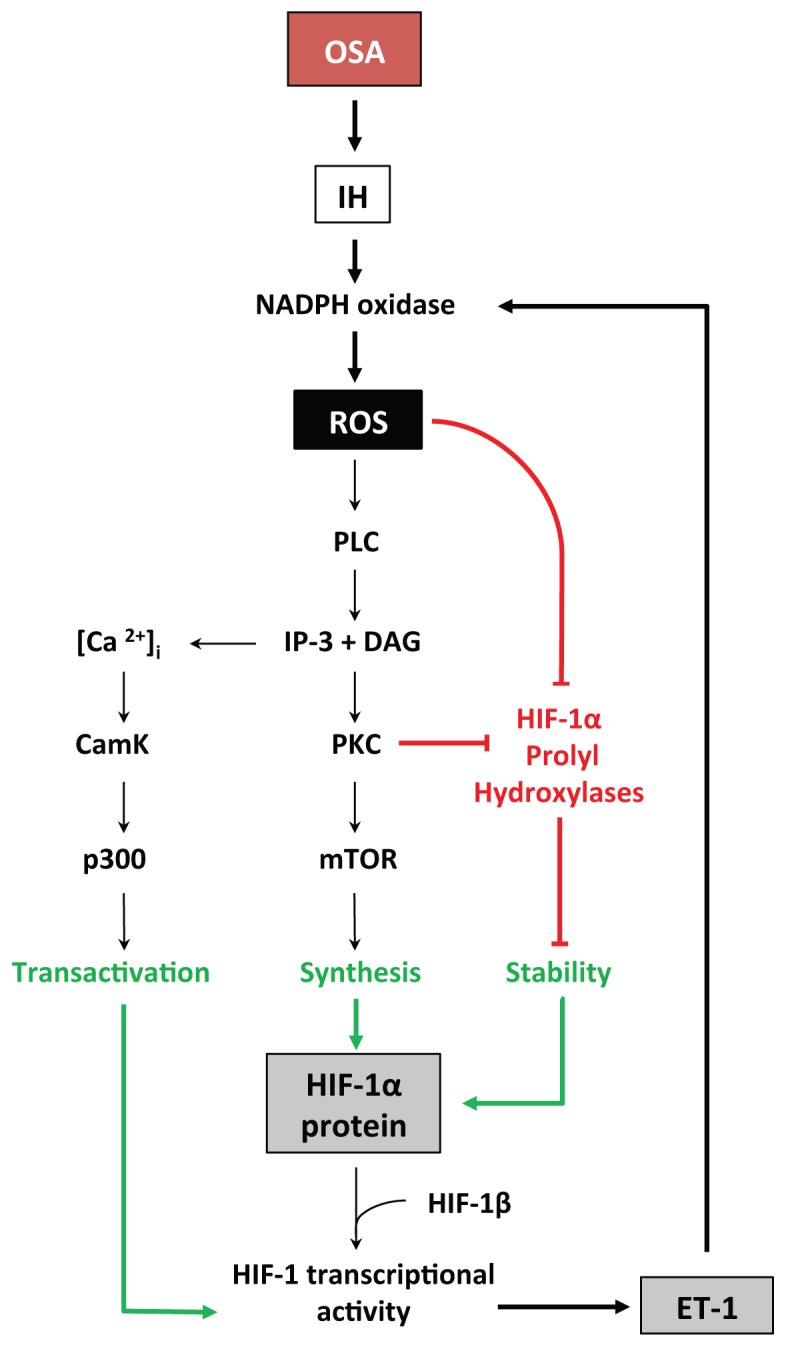
Signal transduction pathways by which obstructive sleep apnea (OSA), intermittent hypoxia (IH) and reactive oxygen species (ROS) induce HIF-1α protein stability, synthesis and transactivation and the promoting effect of endothelin-1 (ET-1) (adapted with permission from (Semenza)). See text for detailed description and additional abbreviations.
Fig. 4
Fig. 4
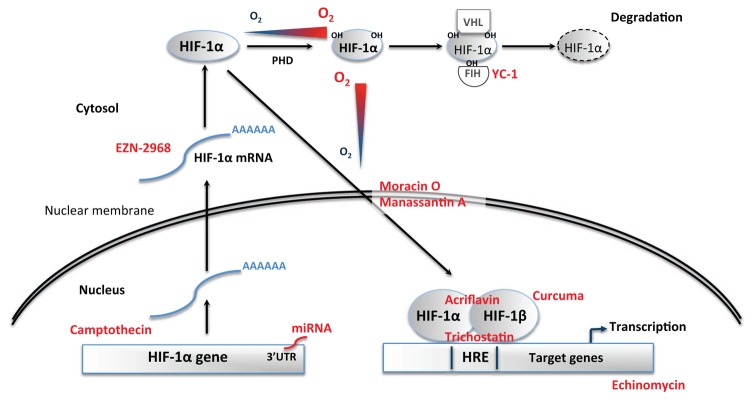
Stabilization of the O2-sensitive cytosolic alpha subunit of the hypoxia inducible factor-1 (HIF-1) transcription factor is determinant for HIF-1 activity. In normoxia, proline hydroxylation (OH) of HIF-1α leads to its recognition by the Von Hippel Lindau (VHL) ubiquitylation complex and subsequent proteasomal degradation. Intermittent hypoxia, by inhibiting prolyl-hydroxylase (PHD) activity, induces HIF-1α stabilization followed by translocation to the nucleus, dimerisation with HIF-1β to form HIF-1, transactivation and binding to hypoxia response elements (HRE) in the promoter of target genes. HIF-1 content and transcriptional activity can be reduced by various therapeutic strategies: miRNA and Camptothecin inhibit its traduction; YC-1 activates FIH; EZN-2968 inhibits its transcription; Moracin O and Manassantin A inhibit its translocation to the nucleus; Acriflavin and Curcuma prevent its dimerisation with HIF-1β; Echynomycin prevents its binding to HRE; Trichostatin prevents its transactivation.

References

    1. Allahdadi KJ, Cherng TW, Pai H, Silva AQ, Walker BR, Nelin LD, et al. Endothelin type A receptor antagonist normalizes blood pressure in rats exposed to eucapnic intermittent hypoxia. Am J Physiol Heart Circ Physiol. 2008;295:H434–440. - PMC - PubMed
    1. Allahdadi KJ, Walker BR, Kanagy NL. Augmented endothelin vasoconstriction in intermittent hypoxia-induced hypertension. Hypertension. 2005;45:705–709. - PubMed
    1. Andreadou I, Iliodromitis EK, Rassaf T, Schulz R, Papapetropoulos A, Ferdinandy P. The role of gasotransmitters NO, H2S and CO in myocardial ischaemia/reperfusion injury and cardioprotection by preconditioning, postconditioning and remote conditioning. Br J Pharmacol. 2015;172:1587–1606. - PMC - PubMed
    1. Anunciato IF, Lobo RR, Coelho EB, Verri WA, Jr, Eckeli AL, Evora PR, et al. Big endothelin-1 and nitric oxide in hypertensive elderly patients with and without obstructive sleep apnea-hypopnea syndrome. Arq Bras Cardiol. 2013;101:344–351. - PMC - PubMed
    1. Arnaud C, Beguin PC, Lantuejoul S, Pepin JL, Guillermet C, Pelli G, et al. The inflammatory preatherosclerotic remodeling induced by intermittent hypoxia is attenuated by RANTES/CCL5 inhibition. Am J Respir Crit Care Med. 2011a;184:724–731. - PMC - PubMed

MeSH terms