Diagnostic Approach to Atypical Parkinsonian Syndromes
- PMID: 27495201
- PMCID: PMC5567217
- DOI: 10.1212/CON.0000000000000348
Diagnostic Approach to Atypical Parkinsonian Syndromes
Abstract
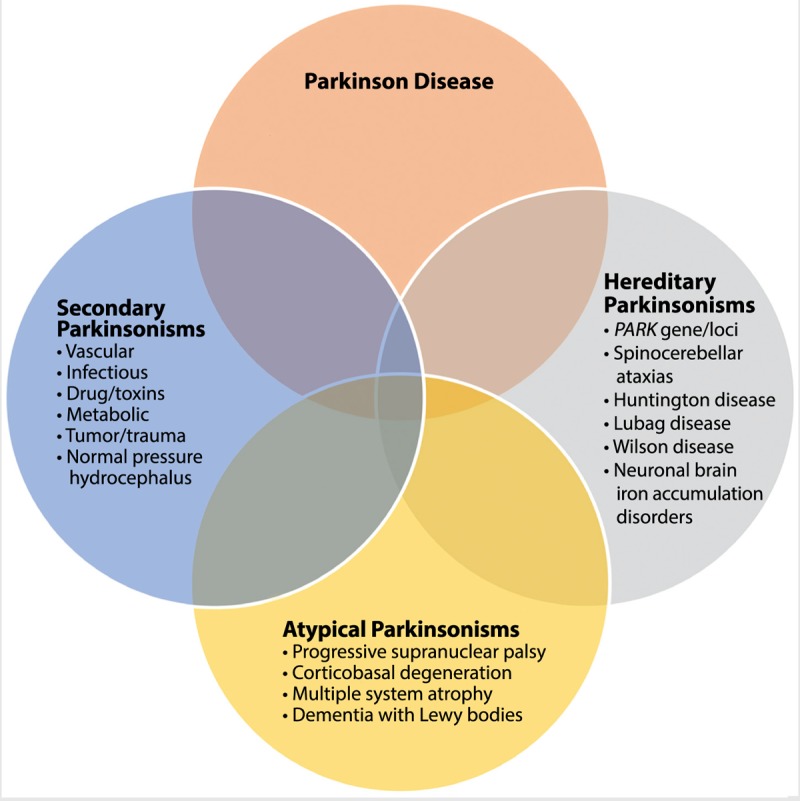
Purpose of review: Although increasingly recognized, atypical parkinsonian syndromes remain challenging to diagnose and are underrecognized due to overlap with other parkinsonisms. This article provides a diagnostic approach to atypical parkinsonian syndromes, including progressive supranuclear palsy (PSP), multiple system atrophy (MSA), corticobasal degeneration (CBD), and dementia with Lewy bodies. The goal of this review is to aid the clinician in recognizing key clinical and pathologic features and to raise awareness of recent advances in diagnostics and treatment.
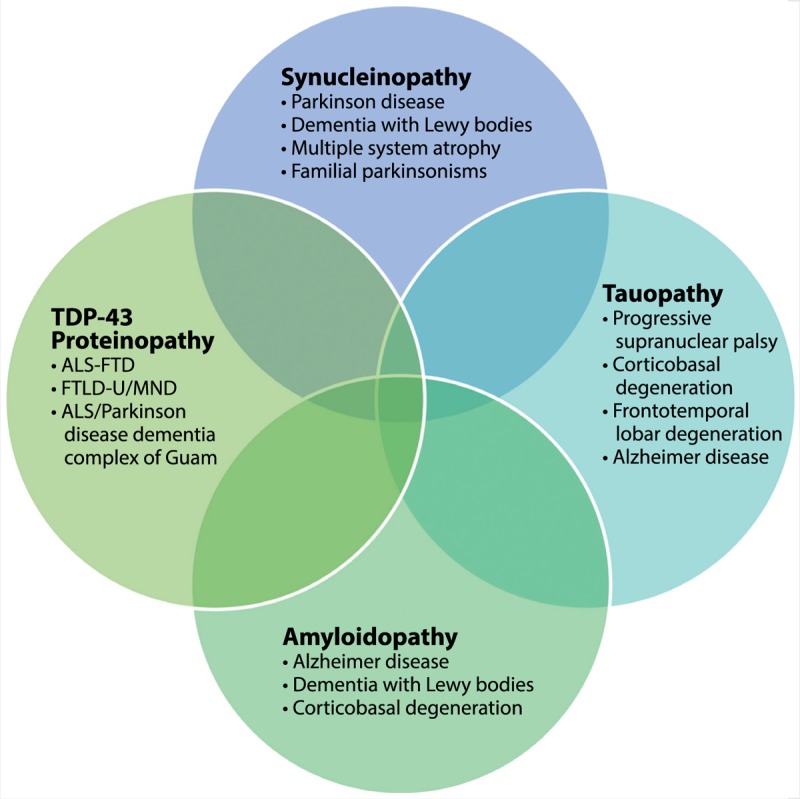
Recent findings: Diagnostic criteria for atypical parkinsonian syndromes are evolving to encompass increasingly recognized heterogeneity in the presentation of these disorders and information gleamed from clinicopathologic correlations. PSP and CBD in particular now share similar pathologic clinical features and include a number of phenotypic variants. Pathologic diagnoses are increasingly used in clinical practice, and there is frequent reference now by clinicians to tauopathies, including PSP and CBD, and the synucleinopathies, which include MSA and dementia with Lewy bodies (as well as Parkinson disease). Research into biomarkers, including both tissue and imaging modalities and genetics, has the potential to increase disease recognition and make earlier diagnosis and treatment possible. Although novel therapeutics are being studied for atypical parkinsonian syndromes such as PSP, no new breakthrough interventions have emerged for the treatment of PSP, CBD, and MSA. Current therapeutic management for these disorders frequently uses a multidisciplinary team approach.
Summary: The approach to atypical parkinsonian syndromes requires recognition of a constellation of overlapping but distinct clinical features that help with identifying and distinguishing them from Parkinson disease and other similar disorders.
Figures
References
-
- Jankovic J, Lang AE. Movement disorders: diagnosis and assessment. In: Bradley WG, Daroff RB, Fenichel GM, Jankovic J, eds. Neurology in clinical practice. 5th edition Philadelphia, PA: Saunders; 2008.
-
- Richardson JC, Steele J, Olszewski J. Supranuclear ophthalmoplegia, pseudobulbar palsy, nuchal dystonia and dementia. A clinical report on eight cases of “heterogenous system degeneration.” Trans Am Neurol Assoc 1963;88:25–29. - PubMed
-
- Batla A, Nehru R, Vijay T. Vertical wrinkling of the forehead or procerus sign in progressive supranuclear palsy. J Neurol Sci 2010;298(1-2):148–149. doi:10.1016/j.jns.2010.08.010. - PubMed
Publication types
MeSH terms
LinkOut - more resources
Full Text Sources
Other Literature Sources
Research Materials
Miscellaneous