


C-type natriuretic peptide and natriuretic peptide receptor B signalling inhibits cardiac sympathetic neurotransmission and autonomic function
- PMID: 27496871
- PMCID: PMC5157132
- DOI: 10.1093/cvr/cvw184
C-type natriuretic peptide and natriuretic peptide receptor B signalling inhibits cardiac sympathetic neurotransmission and autonomic function
Abstract
Aims: B-type natriuretic peptide (BNP)-natriuretic peptide receptor A (NPR-A) receptor signalling inhibits cardiac sympathetic neurotransmission, although C-type natriuretic peptide (CNP) is the predominant neuropeptide of the nervous system with expression in the heart and vasculature. We hypothesized that CNP acts similarly to BNP, and that transgenic rats (TGRs) with neuron-specific overexpression of a dominant negative NPR-B receptor would develop heightened sympathetic drive.
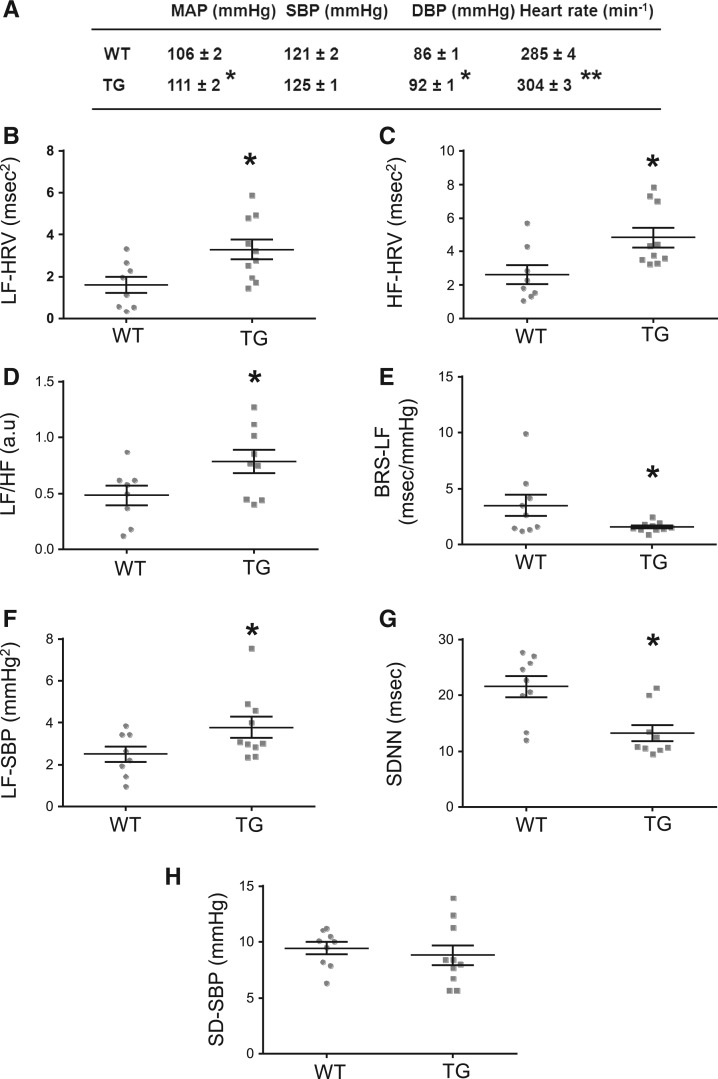
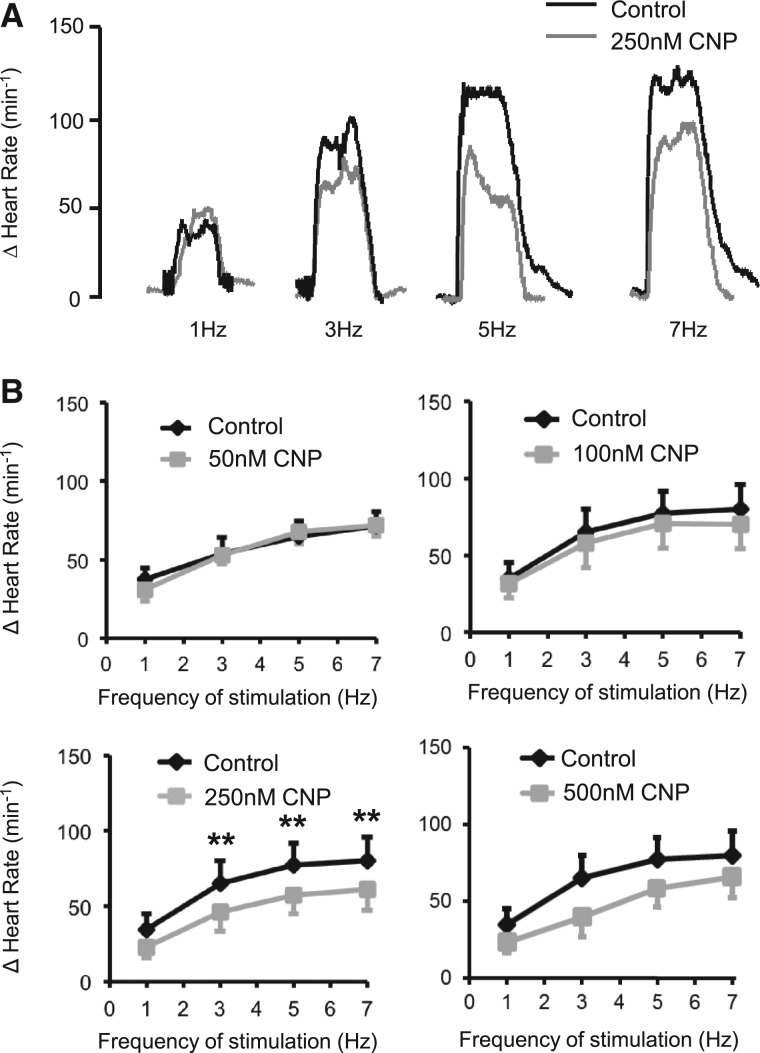
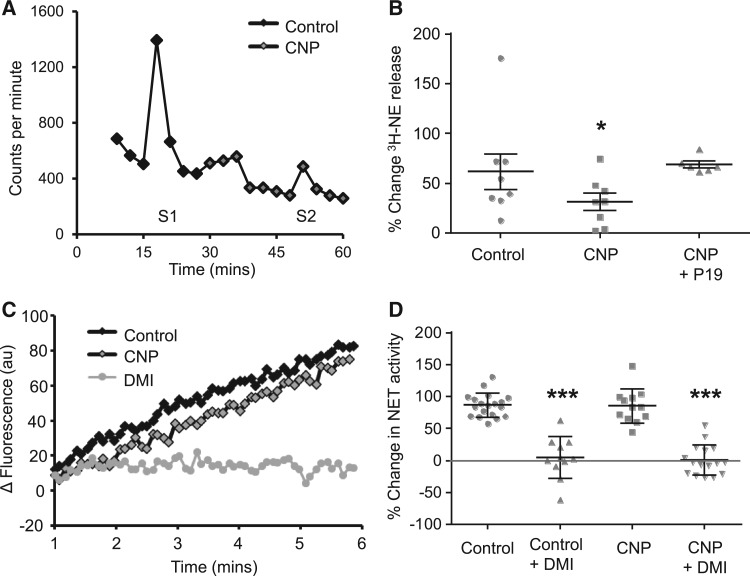
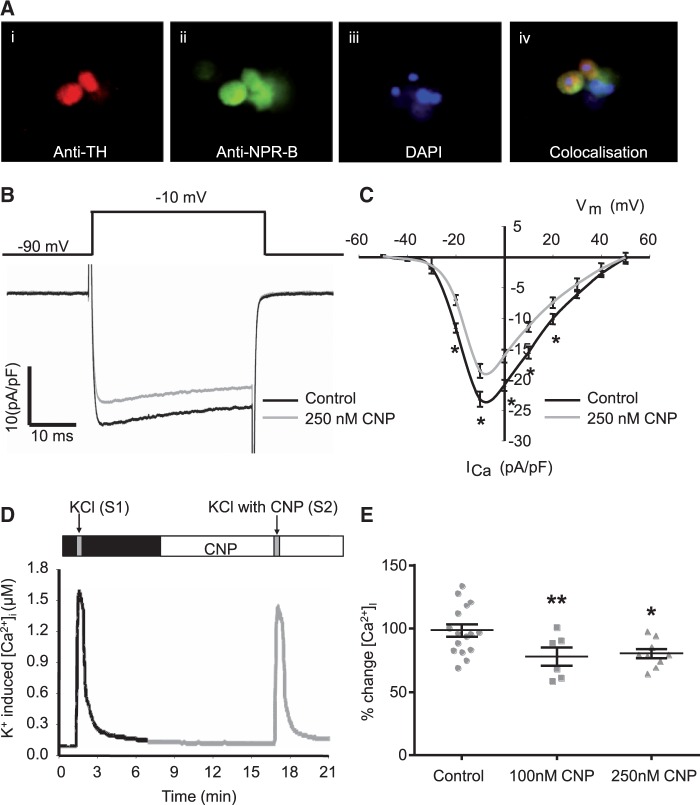
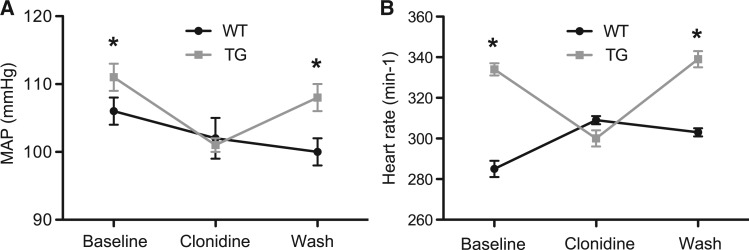
Methods and results: Mean arterial pressure and heart rate (HR) were significantly (P < 0.05) elevated in freely moving TGRs (n = 9) compared with Sprague Dawley (SD) controls (n = 10). TGR had impaired left ventricular systolic function and spectral analysis of HR variability suggested a shift towards sympathoexcitation. Immunohistochemistry demonstrated co-staining of NPR-B with tyrosine hydroxylase in stellate ganglia neurons. In SD rats, CNP (250 nM, n = 8) significantly reduced the tachycardia during right stellate ganglion stimulation (1-7 Hz) in vitro whereas the response to bath-applied norepinephrine (NE, 1 μM, n = 6) remained intact. CNP (250 nM, n = 8) significantly reduced the release of 3H-NE in isolated atria and this was prevented by the NPR-B antagonist P19 (250 nM, n = 6). The neuronal Ca2+ current (n = 6) and intracellular Ca2+ transient (n = 9, using fura-2AM) were also reduced by CNP in isolated stellate neurons. Treatment of the TGR (n = 9) with the sympatholytic clonidine (125 µg/kg per day) significantly reduced mean arterial pressure and HR to levels observed in the SD (n = 9).
Conclusion: C-type natriuretic peptide reduces cardiac sympathetic neurotransmission via a reduction in neuronal calcium signalling and NE release through the NPR-B receptor. Situations impairing CNP-NPR-B signalling lead to hypertension, tachycardia, and impaired left ventricular systolic function secondary to sympatho-excitation.
Keywords: Calcium; Hypertension; Natriuretic peptides; Norepinephrine; Sympathetic.
© The Author 2016. Published on behalf of the European Society of Cardiology.
Figures
Comment in
-
Natriuretic peptides and peripheral autonomic neurotransmission: back to the A, B, and C's.Cardiovasc Res. 2016 Dec;112(3):619-621. doi: 10.1093/cvr/cvw225. Epub 2016 Oct 23. Cardiovasc Res. 2016. PMID: 27979809 Free PMC article. No abstract available.
References
-
- Nakao K, Ogawa Y, Suga S, Imura H. Molecular biology and biochemistry of the natriuretic peptide system. I: natriuretic peptides. J Hypertens 1992;10:907–912. - PubMed
-
- Maruyama K, Shiga T, Iijima M, Moriya S, Mizuno S, Toi S, Arai K, Ashihara K, Abe K, Uchiyama S. Brain natriuretic peptide in acute ischemic stroke. J Stroke Cerebrovasc Dis 2014;23:967–972. - PubMed
-
- Macheret F, Heublein D, Costello-Boerrigter LC, Boerrigter G, McKie P, Bellavia D, Mangiafico S, Ikeda Y, Bailey K, Scott CG, Sandberg S, Chen HH, Malatino L, Redfield MM, Rodeheffer R, Burnett J, Jr, Cataliotti A. Human hypertension is characterized by a lack of activation of the antihypertensive cardiac hormones ANP and BNP. J Am Col Cardiol 2012;60:1558–1565. - PMC - PubMed
-
- Lee CY, Burnett JC., Jr. Natriuretic peptides and therapeutic applications. Heart Fail Rev 2007;12:131–142. - PubMed
Publication types
MeSH terms
Substances
Grants and funding
LinkOut - more resources
Full Text Sources
Other Literature Sources
Molecular Biology Databases
Miscellaneous
