


Assessing cortisol from hair samples in a large observational cohort: The Whitehall II study
- PMID: 27498290
- PMCID: PMC5052124
- DOI: 10.1016/j.psyneuen.2016.07.214
Assessing cortisol from hair samples in a large observational cohort: The Whitehall II study
Abstract
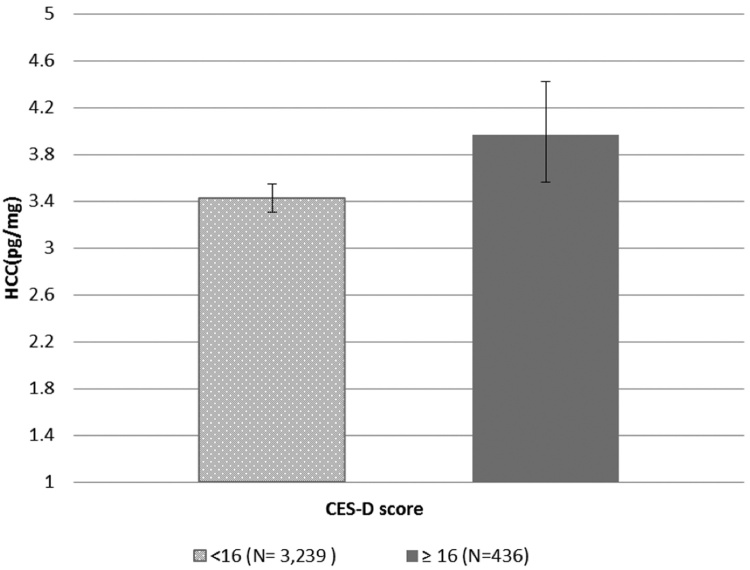
Hair cortisol concentrations (HCC) have been suggested to reflect long-term integrated cortisol levels, but most evidence of associations with co-variates is from small samples of healthy volunteers. The objective of this study was to describe the collection of hair samples in a large cohort study and report associations of demographic and health measures with HCC. We examined HCC measured from the 3cm hair segment near the scalp in 3507 participants (aged 59-83y) from The Whitehall II occupational cohort study of British civil servants. Hair samples were analysed using a column switching LC-APCI-MS/MS assay. Findings from mutually adjusted linear regression analyses revealed lower HCC in participants who reported use of hair dye [% difference (95%CI); -12.5 (-22.0, -1.9), p value=0.022] and evidence suggestive of differences by length of sample storage and seasonal variation. With regard to demographic variables, HCC was lower in women compared to men [-17.0 (-24.8, -8.4), p value <0.001] and higher in Black compared to other ethnic groups. Prevalent diabetes, use of systemic corticosteroids and cardiovascular medication were independently associated with higher HCC. With regard to health, depressive symptoms were associated with higher HCC [20.0 (8.1, 33.3), p value=0.001] following adjustment for physical disease and medication. We conclude that hair steroid analysis presents significant opportunities for assessing cortisol in large scale cohorts. Demographic factors, sample storage, season of collection and hair characteristics should be considered in future analyses. Health status, both mental and physical, is linked to HCC.
Keywords: Cortisol; Depressive symptoms; Diabetes; Medications.
Copyright © 2016 The Authors. Published by Elsevier Ltd.. All rights reserved.
Figures
References
-
- Boesch M., Sefidan S., Annen H., Ehlert U., Roos L., Van Uum S., La Marca R. Hair cortisol concentration is unaffected by basic military training, but related to sociodemographic and environmental factors. Stress. 2015;18:35–41. - PubMed
-
- Braig S., Grabher F., Ntomchukwu C., Reister F., Stalder T., Kirschbaum C., Rothenbacher D. Determinants of maternal hair cortisol concentrations at delivery reflecting the last trimester of pregnancy. Psychoneuroendocrinology. 2015;52:289–296. - PubMed
-
- Broderick J.E., Arnold D., Kudielka B.M., Kirschbaum C. Salivary cortisol sampling compliance: comparison of patients and healthy volunteers. Psychoneuroendocrinology. 2004;29:636–650. - PubMed
-
- Brunner E.J., Hemingway H., Walker B.R., Page M., Clarke P., Juneja M., Marmot M.G. Adrenocortical, autonomic, and inflammatory causes of the metabolic syndrome: nested case-control study. Circulation. 2002;106:2659–2665. - PubMed
-
- Chen Z., Li J., Zhang J., Xing X., Gao W., Lu Z., Deng H. Simultaneous determination of hair cortisol, cortisone and DHEAS with liquid chromatography-electrospray ionization-tandem mass spectrometry in negative mode. J. Chromatogr. B. 2013;929:187–194. - PubMed
Publication types
MeSH terms
Substances
Grants and funding
LinkOut - more resources
Full Text Sources
Other Literature Sources
Medical
