


The Utility of Template Analysis in Qualitative Psychology Research
- PMID: 27499705
- PMCID: PMC4960514
- DOI: 10.1080/14780887.2014.955224
The Utility of Template Analysis in Qualitative Psychology Research
Abstract
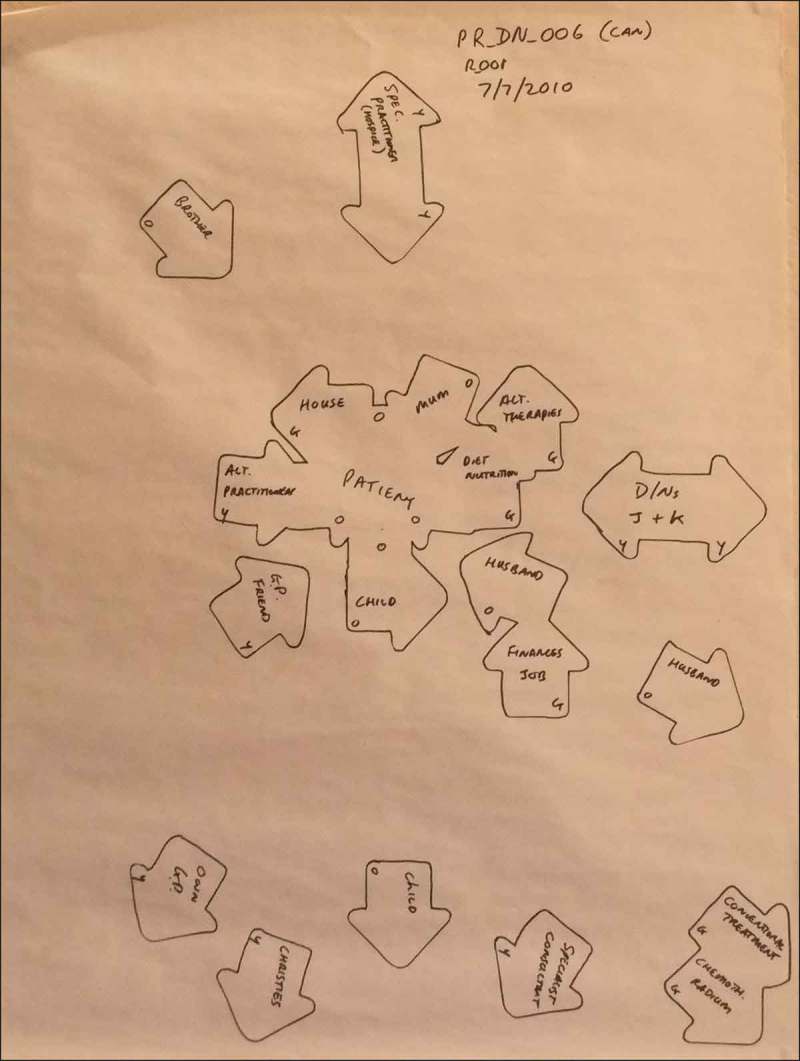
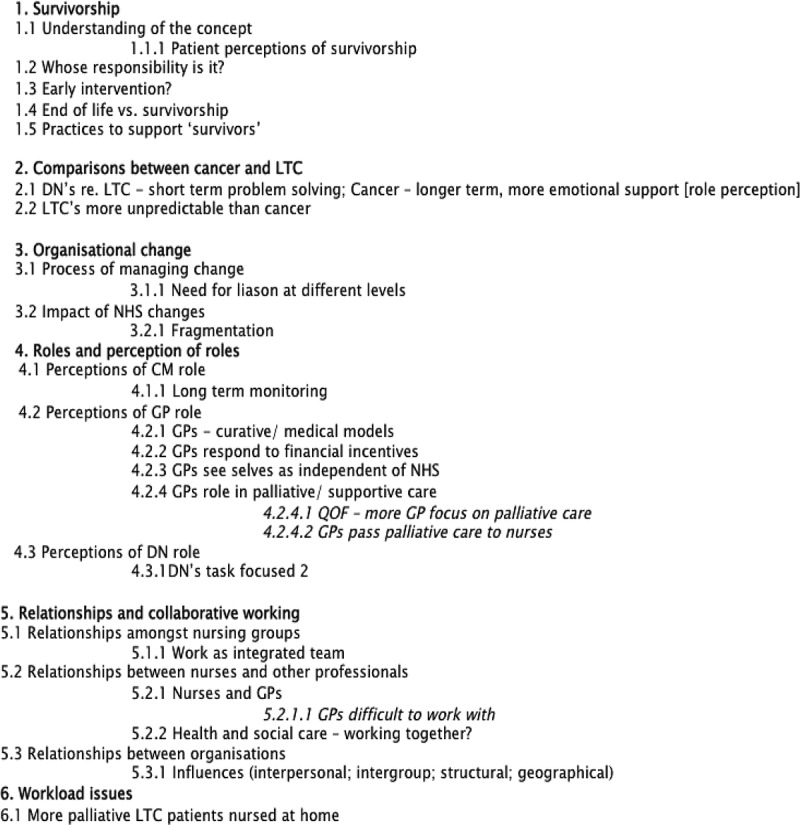
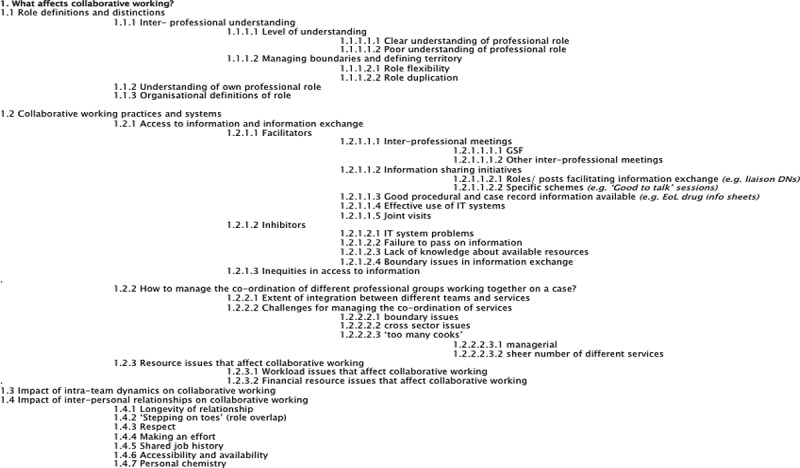
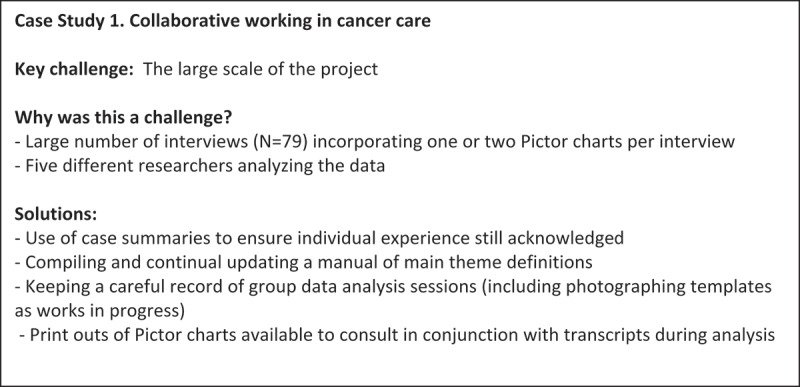
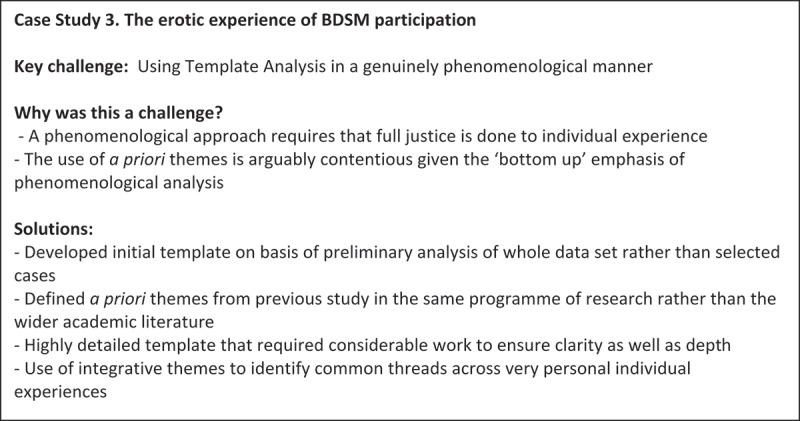
Thematic analysis is widely used in qualitative psychology research, and in this article, we present a particular style of thematic analysis known as Template Analysis. We outline the technique and consider its epistemological position, then describe three case studies of research projects which employed Template Analysis to illustrate the diverse ways it can be used. Our first case study illustrates how the technique was employed in data analysis undertaken by a team of researchers in a large-scale qualitative research project. Our second example demonstrates how a qualitative study that set out to build on mainstream theory made use of the a priori themes (themes determined in advance of coding) permitted in Template Analysis. Our final case study shows how Template Analysis can be used from an interpretative phenomenological stance. We highlight the distinctive features of this style of thematic analysis, discuss the kind of research where it may be particularly appropriate, and consider possible limitations of the technique. We conclude that Template Analysis is a flexible form of thematic analysis with real utility in qualitative psychology research.
Keywords: Pictor technique; Template Analysis; a priori themes; applied research; group data analysis; qualitative research; thematic analysis.
Figures
References
-
- Boothby JL, Thorn BE, Overduin LY. Ward LC. Catastrophizing and perceived partner responses to pain. Pain. 2004;109:500–6. ‘. ’. - PubMed
-
- Braun V. Clarke V. Using thematic analysis in psychology. Qualitative Research in Psychology. 2006;3:77–101. ‘. ’.
-
- Brooks J. Young people with diabetes and their peers - an exploratory study of peer attitudes, beliefs, responses and influences. Project report to Diabetes UK, University of Huddersfield; 2014.
-
- Brooks J, King N. Wearden A. ‘Couples’ experiences of interacting with outside others in chronic fatigue syndrome: a qualitative study’. Chronic Illness. 2014;10:5–17. - PubMed
LinkOut - more resources
Full Text Sources
Other Literature Sources