


Pilot study of a compassion meditation intervention in chronic pain
- PMID: 27499883
- PMCID: PMC4972045
- DOI: 10.1186/s40639-014-0004-x
Pilot study of a compassion meditation intervention in chronic pain
Abstract
Background: The emergence of anger as an important predictor of chronic pain outcomes suggests that treatments that target anger may be particularly useful within the context of chronic pain. Eastern traditions prescribe compassion cultivation to treat persistent anger. Compassion cultivation has been shown to influence emotional processing and reduce negativity bias in the contexts of emotional and physical discomfort, thus suggesting it may be beneficial as a dual treatment for pain and anger. Our objective was to conduct a pilot study of a 9-week group compassion cultivation intervention in chronic pain to examine its effect on pain severity, anger, pain acceptance and pain-related interference. We also aimed to describe observer ratings provided by patients' significant others and secondary effects of the intervention.
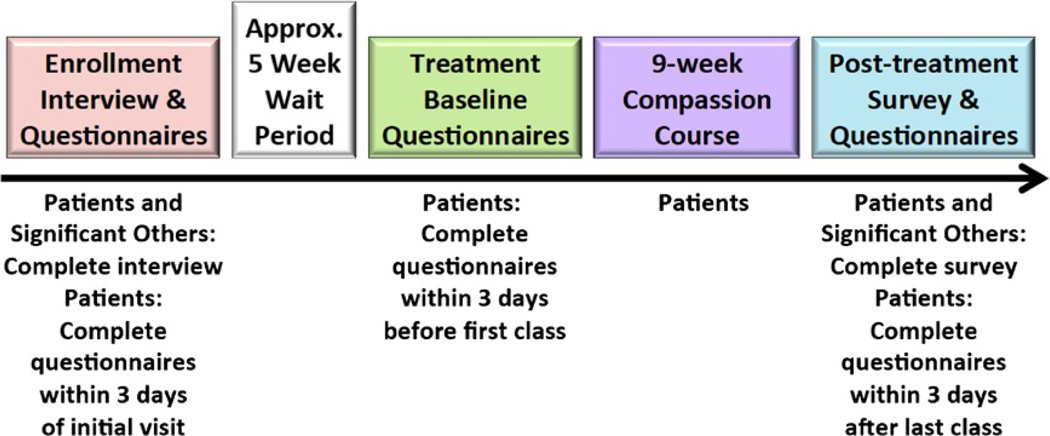
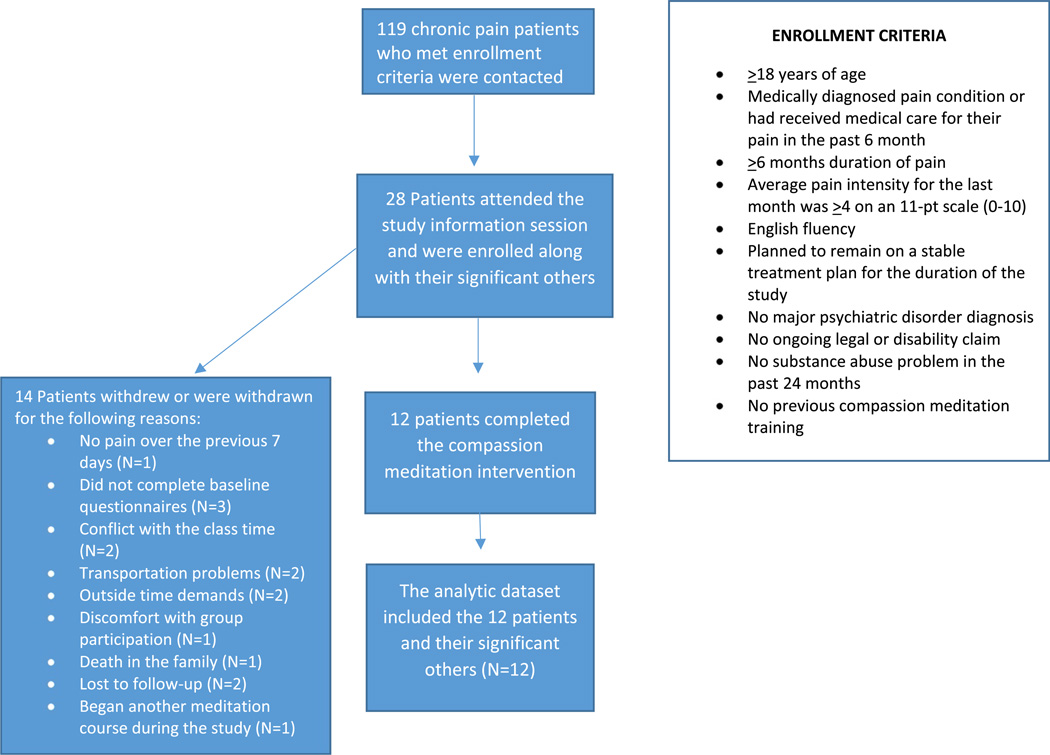
Methods: Pilot clinical trial with repeated measures design that included a within-subjects wait-list control period. Twelve chronic pain patients completed the intervention (F= 10). Data were collected from patients at enrollment, treatment baseline and post-treatment; participant significant others contributed data at the enrollment and post-treatment time points.
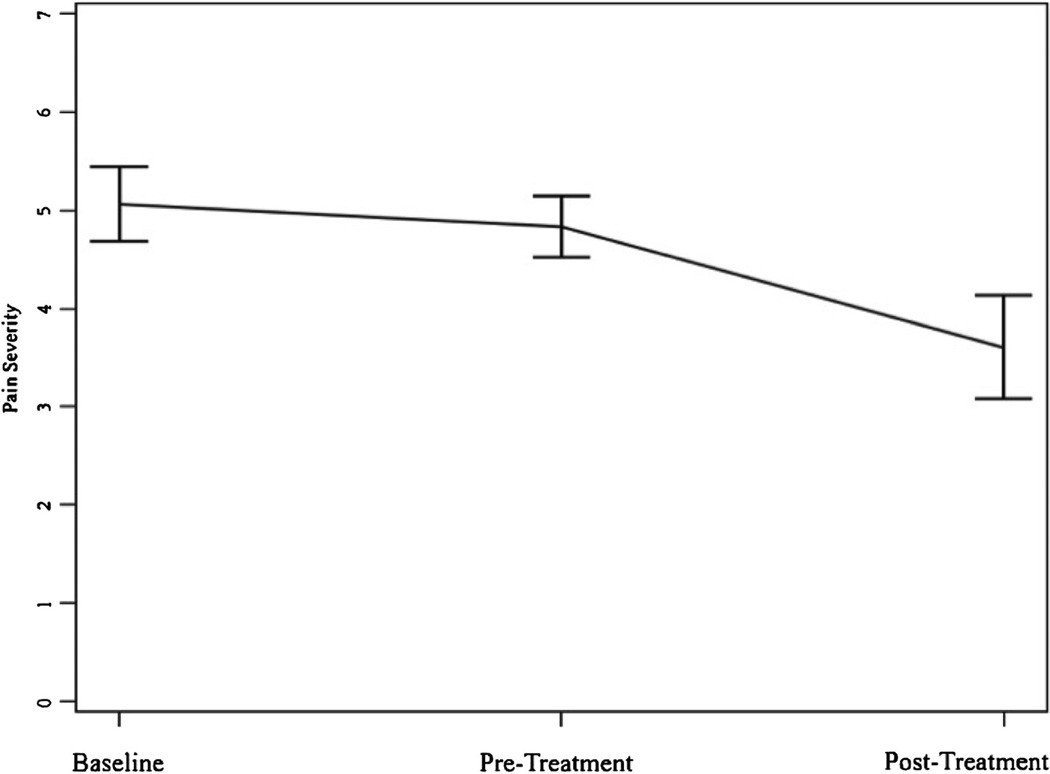
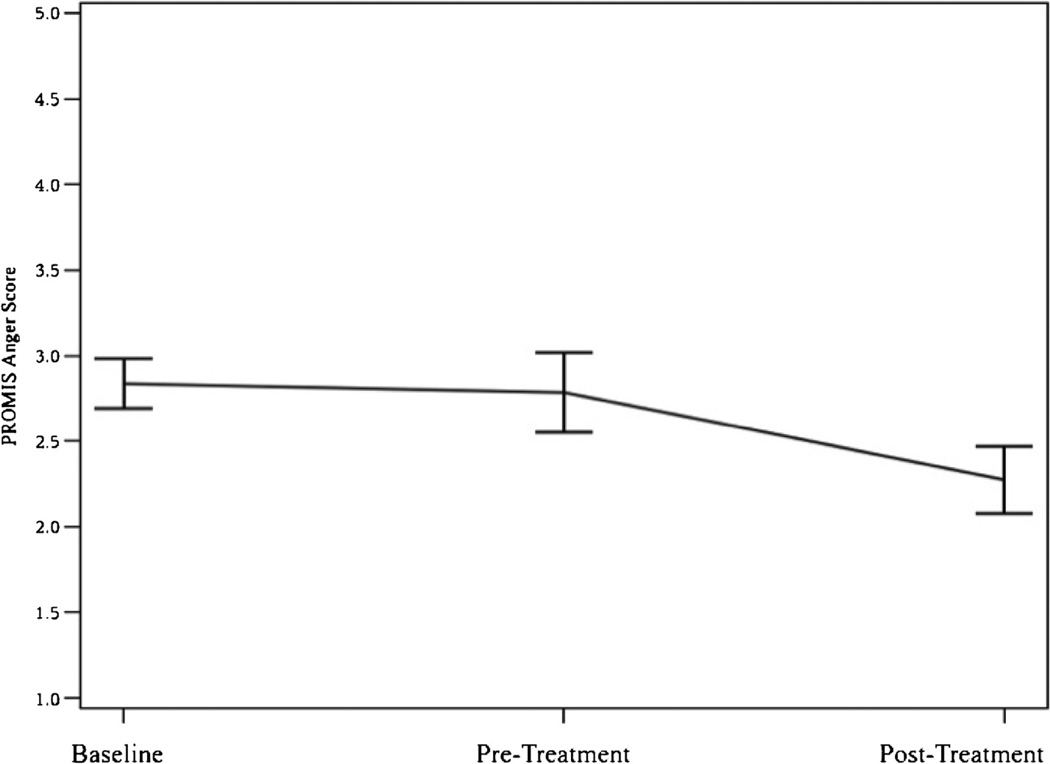
Results: In this predominantly female sample, patients had significantly reduced pain severity and anger and increased pain acceptance at post-treatment compared to treatment baseline. Significant other qualitative data corroborated patient reports for reductions in pain severity and anger.
Conclusions: Compassion meditation may be a useful adjunctive treatment for reducing pain severity and anger, and for increasing chronic pain acceptance. Patient reported reductions in anger were corroborated by their significant others. The significant other corroborations offer a novel contribution to the literature and highlight the observable emotional and behavioral changes in the patient participants that occurred following the compassion intervention. Future studies may further examine how anger reductions impact relationships with self and others within the context of chronic pain.
Keywords: Anger; Chronic pain; Compassion; Meditation; Women.
Figures
References
-
- IOM: Relieving Pain In America: A Blueprint For Transforming Prevention, Care, Education, And Research. Institute of Medicine Report. Washington, D.C: The National Academies Press; 2011. - PubMed
-
- Melzack R, Wall PD. Pain Mechanisms - a new theory. Science. 1965;150(3699):971–979. - PubMed
-
- Melzack R. From the gate to the neuromatrix. Pain. 1999;6:S121–S126. - PubMed
-
- McCracken LM, Iverson GL. Predicting complaints of impaired cognitive functioning in patients with chronic pain. J Pain Symptom Manag. 2001;21(5):392–396. - PubMed
-
- McWilliams LA, Cox BJ, Enns MW. Mood and anxiety disorders associated with chronic pain: an examination in a nationally representative sample. Pain. 2003;106(1–2):127–133. - PubMed
Grants and funding
LinkOut - more resources
Full Text Sources
Other Literature Sources