. 2016 Dec:59:21-32.
doi: 10.1016/j.evalprogplan.2016.07.004. Epub 2016 Jul 27.

Lessons learned while building a trauma-informed public behavioral health system in the City of Philadelphia

Affiliations

Lessons learned while building a trauma-informed public behavioral health system in the City of Philadelphia

Rinad S Beidas et al. Eval Program Plann. 2016 Dec.

Abstract

Exposure to traumatic experiences among youth is a serious public health concern. A trauma-informed public behavioral health system that emphasizes core principles such as understanding trauma, promoting safety, supporting consumer autonomy, sharing power, and ensuring cultural competence, is needed to support traumatized youth and the providers who work with them. This article describes a case study of the creation and evaluation of a trauma-informed publicly funded behavioral health system for children and adolescents in the City of Philadelphia (the Philadelphia Alliance for Child Trauma Services; PACTS) using the Exploration, Preparation, Implementation, and Sustainment (EPIS) as a guiding framework. We describe our evaluation of this effort with an emphasis on implementation determinants and outcomes. Implementation determinants include inner context factors, specifically therapist knowledge and attitudes (N=114) towards evidence-based practices. Implementation outcomes include rate of PTSD diagnoses in agencies over time, number of youth receiving TF-CBT over time, and penetration (i.e., number of youth receiving TF-CBT divided by the number of youth screening positive on trauma screening). We describe lessons learned from our experiences building a trauma-informed public behavioral health system in the hopes that this case study can guide other similar efforts.

Keywords: Evidence-based practices; Implementation science; Trauma-informed system.


Figures

Figure 1
Figure 1
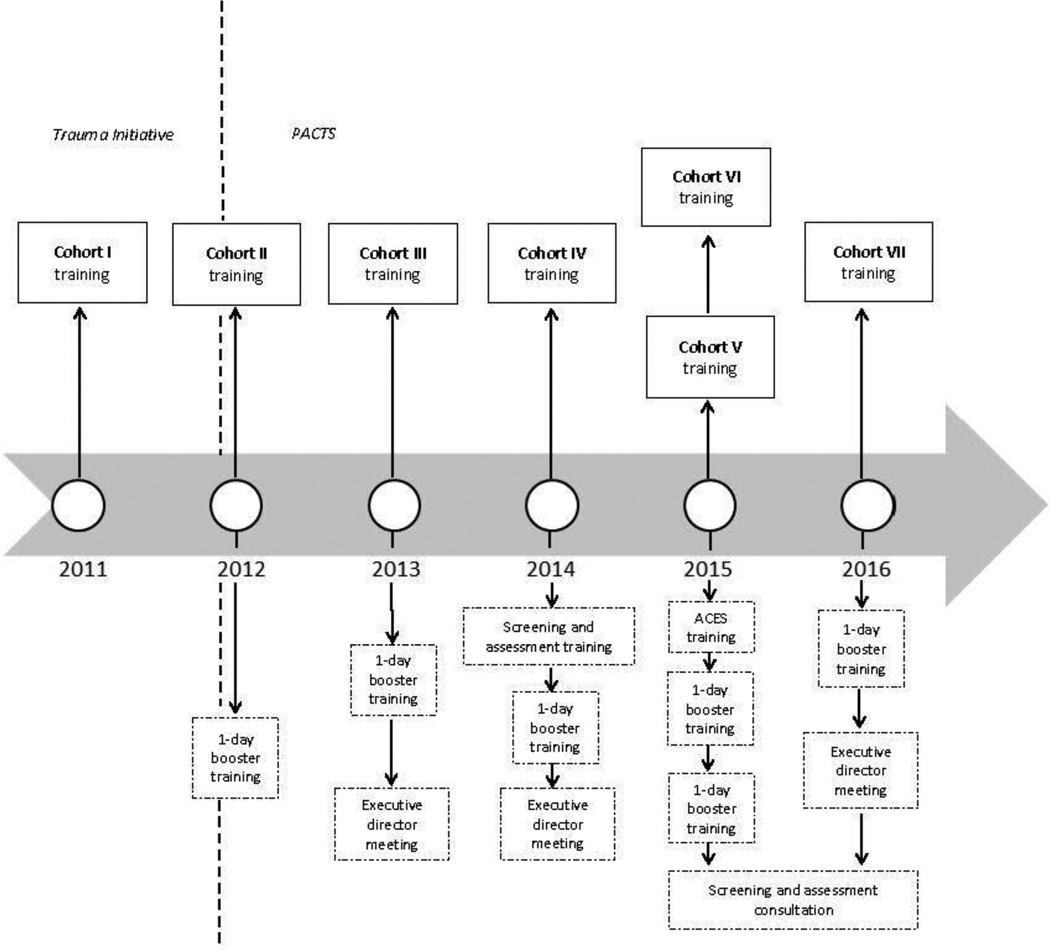
Timeline of TF-CBT implementation Note. The trauma initiative began in 2011; the Philadelphia Alliance for Child Trauma Services (PACTS) began in 2012. This is denoted by the vertical dashed line. For each year, we denote the core activities that occurred to visually depict the actions taken to build a trauma-informed public behavioral health system.
Figure 2
Figure 2
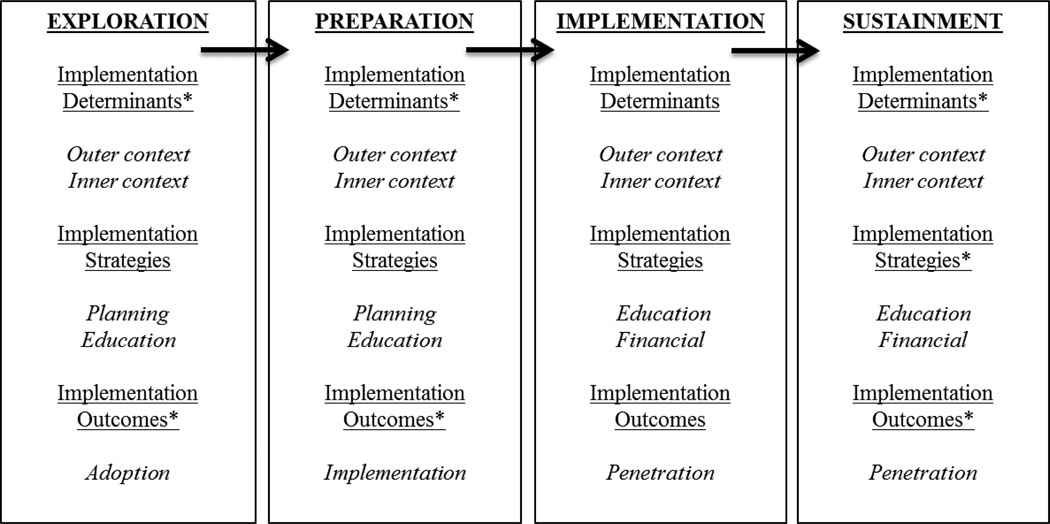
The Exploration, Preparation, Implementation, and Sustainment (EPIS) framework Note: Reproduced from (Aarons, et al., 2011). * = components that we did not measure as part of this evaluation. Our primary focus as part of this evaluation was the implementation phase. Specifically, we measured inner context implementation determinants, including therapist knowledge and attitudes, and implementation outcomes (i.e., penetration). In the manuscript, we report on implementation strategies used in each phase of the implementation process.
Figure 3
Figure 3
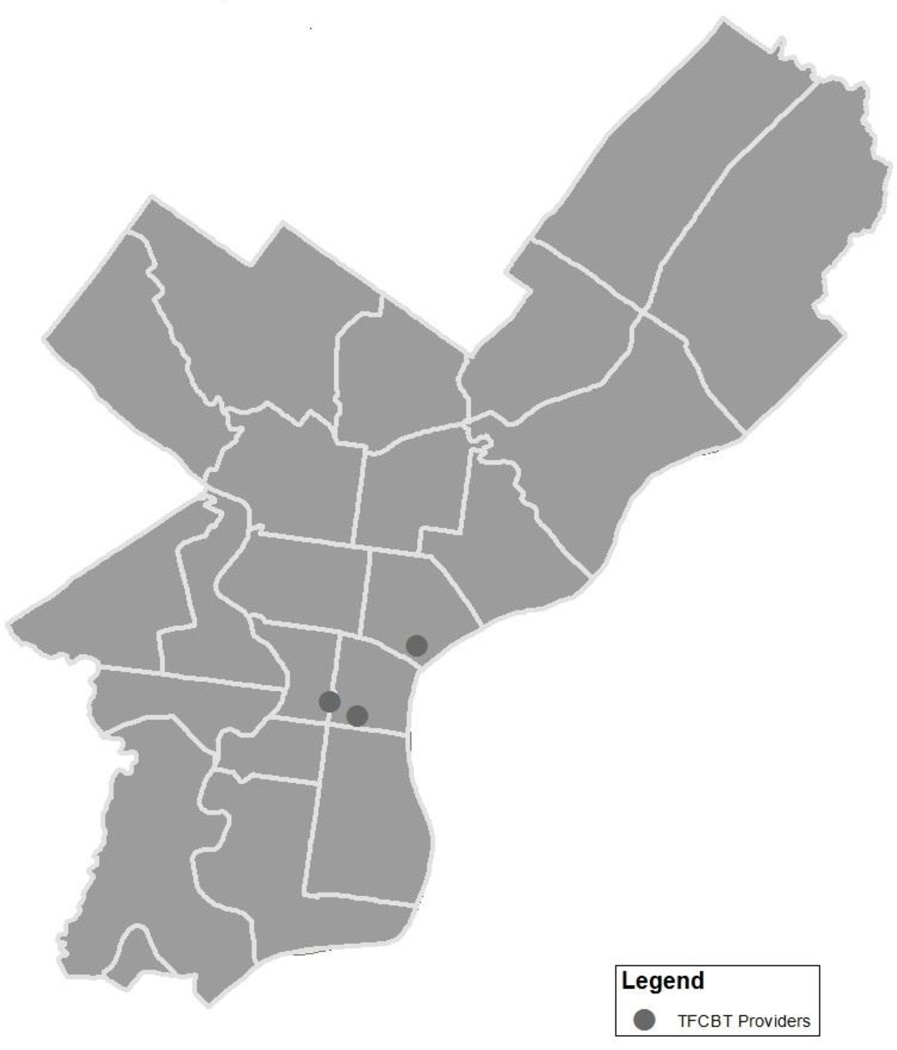
Map of trauma providers prior to PACTS Note. Prior to PACTS, there were three programs providing TF-CBT. Each circle in the figure represents one program which has multiple therapists within it providing TF-CBT.
Figure 4
Figure 4
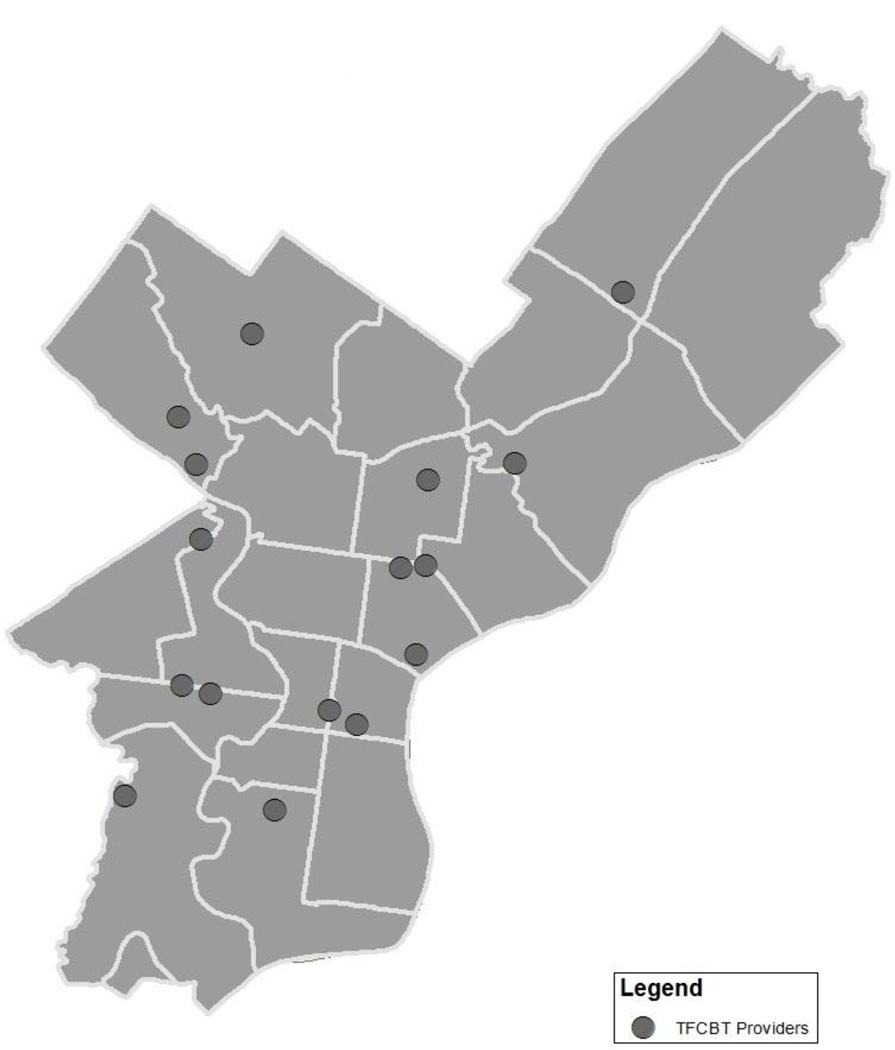
Map of trauma providers after PACTS (as of 2016) Note. There are 14 organizations and 16 programs in the City of Philadelphia implementing TF-CBT through PACTS. Each circle in the figure represents one program which has multiple therapists within it providing TF-CBT.
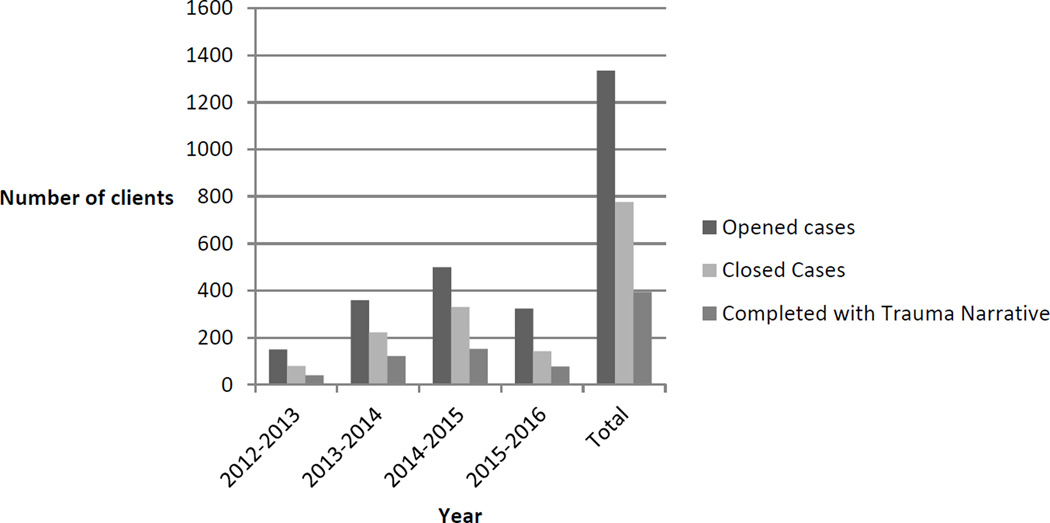
Figure 5
Figure 5
Number of clients who started and completed TF-CBT from participating agencies implementing TF-CBT from 2012–2016 Note. Data from 2015–2016 only includes information from Quarters 1 and 2 because data is currently being collected. Opened cases refer to new cases that began TF-CBT in that year. Closed cases refer to cases that ended TF-CBT in that year. Completed with trauma narrative refers to those cases that were closed that completed TF-CBT and included the trauma narrative. All data presented here reflects unique cases.

References

    1. Aarons GA. Mental health provider attitudes toward adoption of evidence-based practice: the Evidence-Based Practice Attitude Scale (EBPAS) Mental Health Services Research. 2004;6:61–74. - PMC - PubMed
    1. Aarons GA, Ehrhart MG, Farahnak LR, Sklar M. Aligning leadership across systems and organizations to develop a strategic climate for evidence-based practice implementation. Annual Review of Public Health. 2014;35:255–274. - PMC - PubMed
    1. Aarons GA, Fettes D, Willging C, Gunderson L, Garrison L, Phillips J. Work life and attitudes toward a specific evidence-based practice. NIMH Conference on Mental Health Services Research, Publishing; Bethesda, MD. 2014.
    1. Aarons GA, Glisson C, Hoagwood K, Kelleher K, Landsverk J, Cafri G. Psychometric properties and U.S. National norms of the Evidence-Based Practice Attitude Scale (EBPAS) Psychol Assess. 2010;22:356–365. - PMC - PubMed
    1. Aarons GA, Hurlburt M, Horwitz SM. Advancing a conceptual model of evidence-based practice implementation in public service sectors. Administration and Policy in Mental Health. 2011;38:4–23. - PMC - PubMed

MeSH terms