


Japanese secular trends in birthweight and the prevalence of low birthweight infants during the last three decades: A population-based study
- PMID: 27503177
- PMCID: PMC4977558
- DOI: 10.1038/srep31396
Japanese secular trends in birthweight and the prevalence of low birthweight infants during the last three decades: A population-based study
Abstract
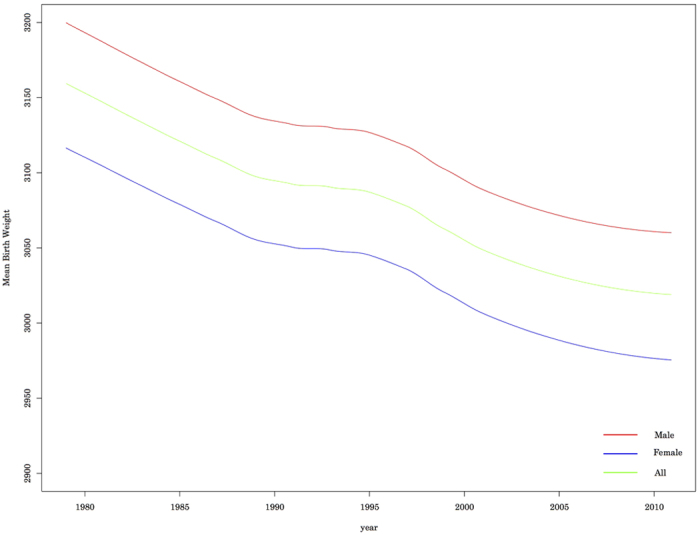
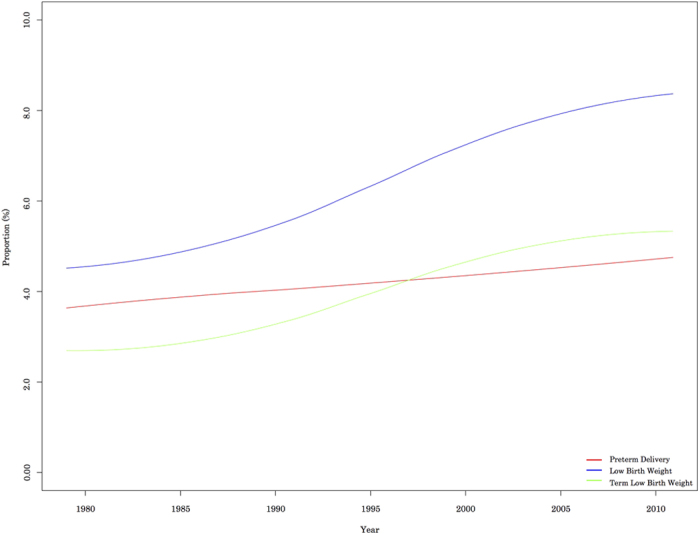
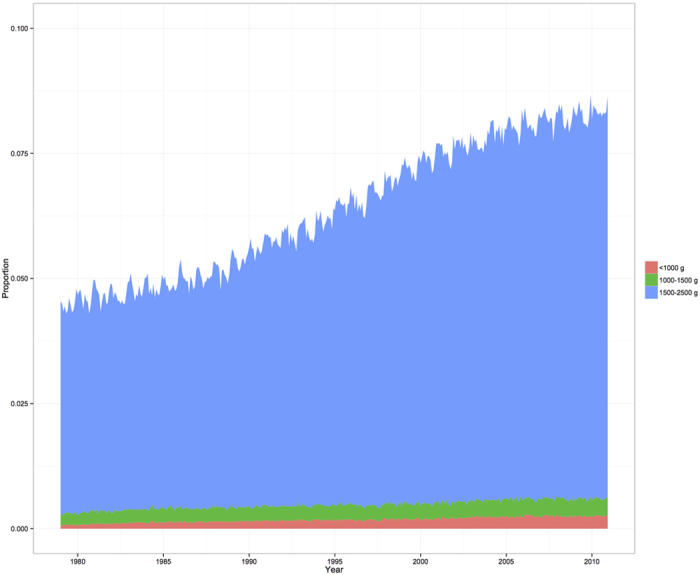
Since low birthweight has been correlated with both neonatal and long-term health, we performed this epidemiological study to evaluate the Japanese secular trends in mean birthweight and the prevalence of preterm/term low birthweight infants during the last three decades. We used population-based birth certificate data from January 1979 to December 2010. Time trends were analysed using a linear regression model. During the study period, we observed a significant decrease in the mean birthweight for singleton live births (3,152 ± 436 g in 1979 and 3,018 ± 421 g in 2010 p < 0.001) and an increase in the prevalence of preterm/term low birthweight infants. A 96.3% increase in the proportion of term low birthweight infants was observed during the study period (2.7% in 1979 and 5.3% in 2010). In addition, an increased proportion of preterm/low birthweight infants born to younger women was observed (<35 years vs. ≥35 years). These trends may be related to changing patterns in Japanese women's nutritional status and the relatively strict recommended limit on weight gain during pregnancy. Understanding the long-term trends for singleton births may allow us to identify the associated risk factors and reduce the future socioeconomic burden that is associated with low birthweight infants.
Figures
References
-
- Ananth C. V. & Wen S. W. Trends in fetal growth among singleton gestations in the United States and Canada, 1985 through 1998. Semin. Perinatol. 26, 260–267 (2002). - PubMed
-
- Statistics and Information Department, Japanese Ministry of Health, Labour and Welfare. Vital Statistics of Japan 1980–2010 (2010).
-
- Barker D. J. P. & Osmond C. Infant mortality, childhood nutrition, and ischaemic heart disease in England and Wales. The Lancet 327, 1077–1081 (1986). - PubMed
Publication types
MeSH terms
LinkOut - more resources
Full Text Sources
Other Literature Sources
Medical
