


Active Life Expectancy In The Older US Population, 1982-2011: Differences Between Blacks And Whites Persisted
- PMID: 27503957
- PMCID: PMC5240930
- DOI: 10.1377/hlthaff.2015.1247
Active Life Expectancy In The Older US Population, 1982-2011: Differences Between Blacks And Whites Persisted
Abstract
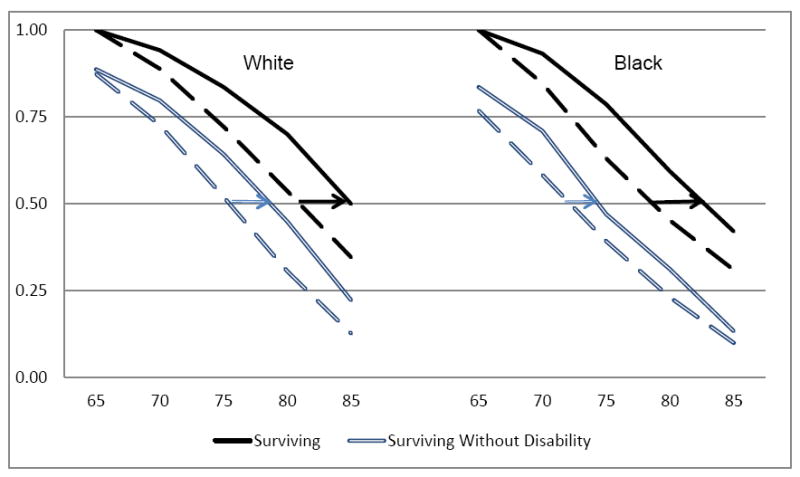
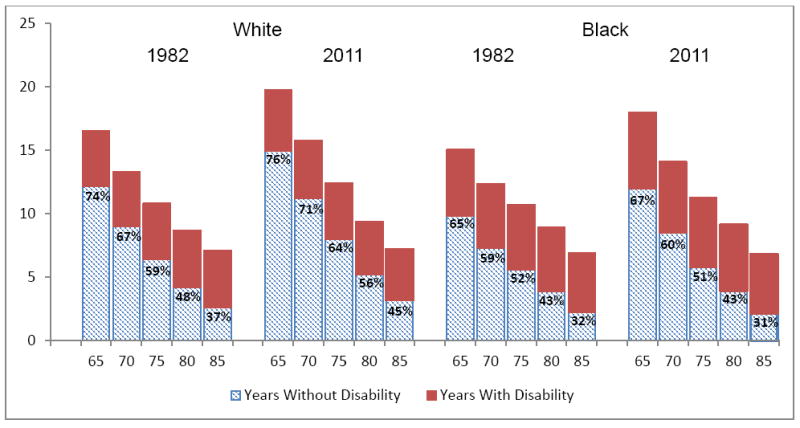
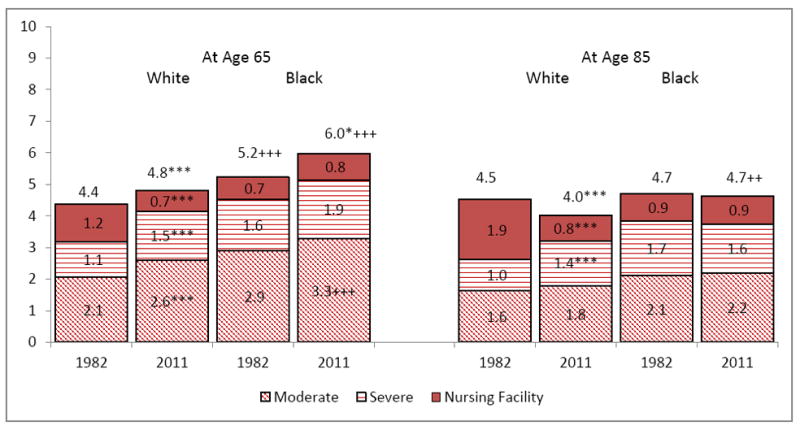
Understanding long-range trends in longevity and disability is useful for projecting the likely impact of the baby-boom generation on long-term care utilization and spending. We examine changes in active life expectancy in the United States from 1982 to 2011 for white and black adults ages sixty-five and older. For whites, longevity increased, disability was postponed to older ages, the locus of care shifted from nursing facilities to community settings, and the proportion of life at older ages spent without disability increased. In contrast, for blacks, longevity increases were accompanied by smaller postponements in disability, and the percentage of remaining life spent active remained stable and well below that of whites. Older black women were especially disadvantaged in 2011 in terms of the proportion of years expected to be lived without disability. Public health measures directed at older black adults-particularly women-are needed to offset impending pressures on the long-term care delivery system as the result of population aging.
Keywords: Demography; Disparities; Elderly.
Project HOPE—The People-to-People Health Foundation, Inc.
Figures
References
-
- Projected Population by Single Year of Age, Sex, Race, and Hispanic Origin for the United States: 2014 to 2060. [August 18, 2015];US Census Bureau, Population Division Release date: December 2014. Available at: http://www.census.gov/population/projections/data/national/2014/download....
Publication types
MeSH terms
Grants and funding
LinkOut - more resources
Full Text Sources
Other Literature Sources
Medical
