


The epidemiology of thoracolumbar trauma: A meta-analysis
- PMID: 27504058
- PMCID: PMC4963326
- DOI: 10.1016/j.jor.2016.06.019
The epidemiology of thoracolumbar trauma: A meta-analysis
Abstract
Purpose: To describe the epidemiology of thoracolumbar fractures and associated injuries in blunt trauma patients.
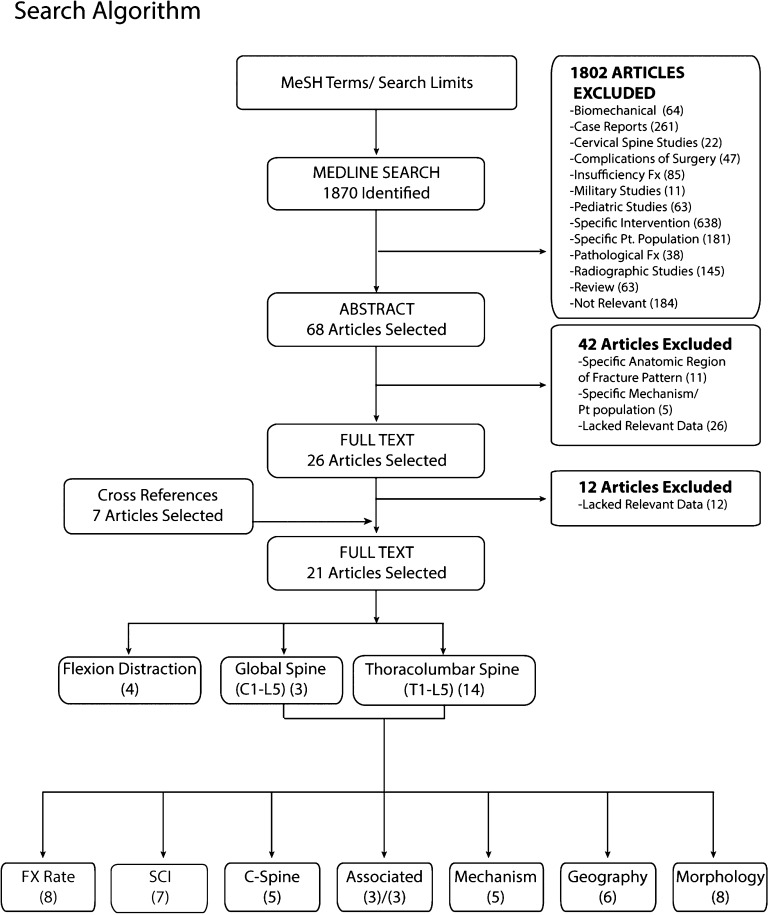
Methods: A systematic review and metaanalysis was performed based on a MEDLINE database search using MeSH terms for studies matching our inclusion criteria. The search yielded 21 full-length articles, each sub-grouped according to content. Data extraction and multiple analyses were performed on descriptive data.
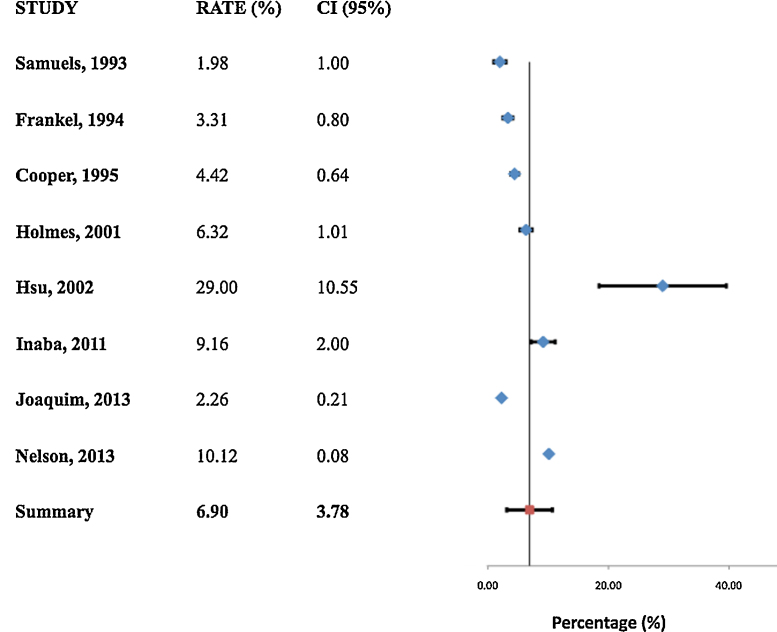
Results: The rate of thoracolumbar fracture in blunt trauma patients was 6.90% (±3.77, 95% CI). The rate of spinal cord injury was 26.56% (±10.70), and non-contiguous cervical spine fracture occurred in 10.49% (±4.17). Associated injury was as follows: abdominal trauma 7.63% (±9.74), thoracic trauma 22.64% (±13.94), pelvic trauma 9.39% (±6.45), extremity trauma 18.26% (±5.95), and head trauma 12.96% (±2.01). Studies that included cervical spine fracture with thoracolumbar fracture had the following rates of associated trauma: 3.78% (±5.94) abdominal trauma, 21.65% (±16.79) thoracic trauma, 3.62% (±1.07) pelvic trauma, 18.36% (±4.94) extremity trauma, and 15.45% (±11.70) head trauma. A subgroup of flexion distraction injuries showed an associated intra-abdominal injury rate of 38.70% (±13.30). The most common vertebra injured was L1 at a rate of 34.40% (±15.90). T7 was the most common non-junctional vertebra injured at 3.90% (±1.09). Burst/AO type A3 fractures were the most common morphology 39.50% (±16.30) followed by 33.60% (±15.10) compression/AO type A1, 14.20% (±8.08) fracture dislocation/AO type C, and 6.96% (±3.50) flexion distraction/AO type B. The most common etiology for a thoracolumbar fracture was motor vehicle collision 36.70% (±5.35), followed by high-energy fall 31.70% (±6.70).
Conclusions: Here we report the incidence of thoracolumbar fracture in blunt trauma and the spectrum of associated injuries. To our knowledge, this paper provides the first epidemiological road map for blunt trauma thoracolumbar injuries.
Keywords: Abdominal injury; Blunt trauma; Cervical spine; Epidemiology; Fracture; Meta-analysis; Spinal cord injury; Spine; Thoracic injury; Thoracolumbar; Trauma.
Figures
References
-
- Price C., Makintubee S., Herndon W., Istre G.R. Epidemiology of traumatic spinal cord injury and acute hospitalization and rehabilitation charges for spinal cord injuries in Oklahoma, 1988–1990. Am J Epidemiol. 1994;139(1):37–47. - PubMed
-
- van den Berg M.E.L., Castellote J.M., de Pedro-Cuesta J., Mahillo-Fernandez I. Survival after spinal cord injury: a systematic review. J Neurotrauma. 2010;27(8):1517–1528. - PubMed
-
- Higgins J, Green S. Cochrane handbook for systematic reviews of interventions [Internet]. Available from: http://handbook.cochrane.org/ [cited 24.04.16].
LinkOut - more resources
Full Text Sources
Other Literature Sources
