The Diagnosis and Treatment of Hair and Scalp Diseases
- PMID: 27504707
- PMCID: PMC4908932
- DOI: 10.3238/arztebl.2016.0377
The Diagnosis and Treatment of Hair and Scalp Diseases
Abstract
Background: Hair loss is caused by a variety of hair growth disorders, each with its own pathogenetic mechanism.
Methods: This review is based on pertinent articles retrieved by a selective search in PubMed, on the current German and European guidelines, and on the authors' clinical and scientific experience.
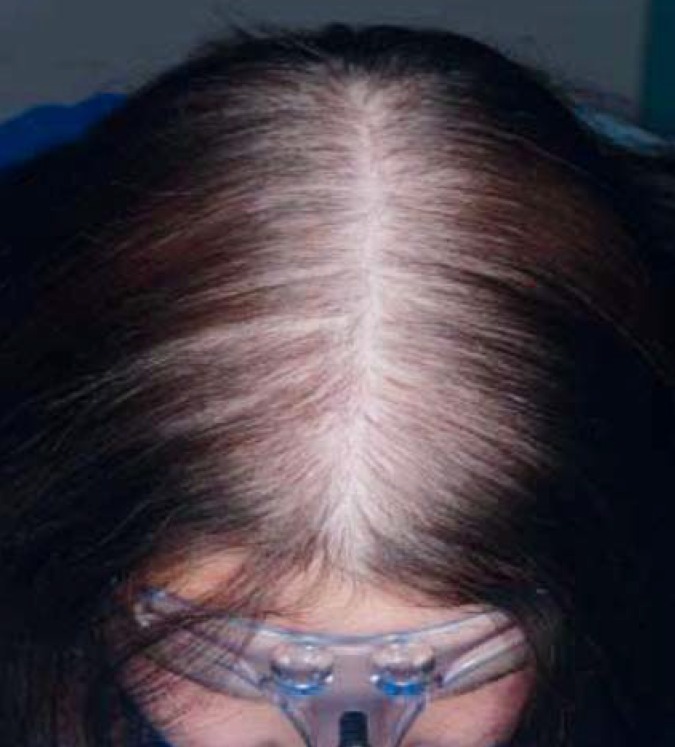
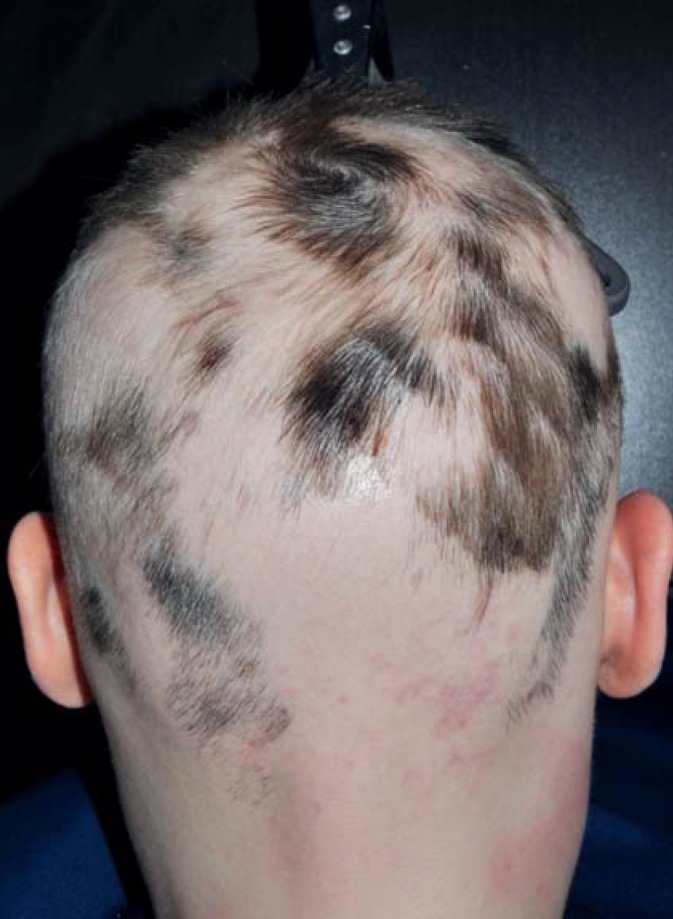
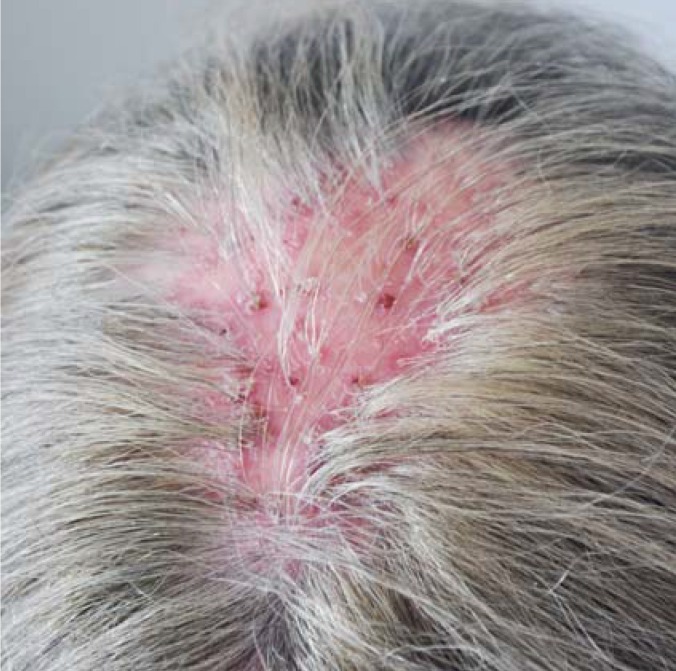
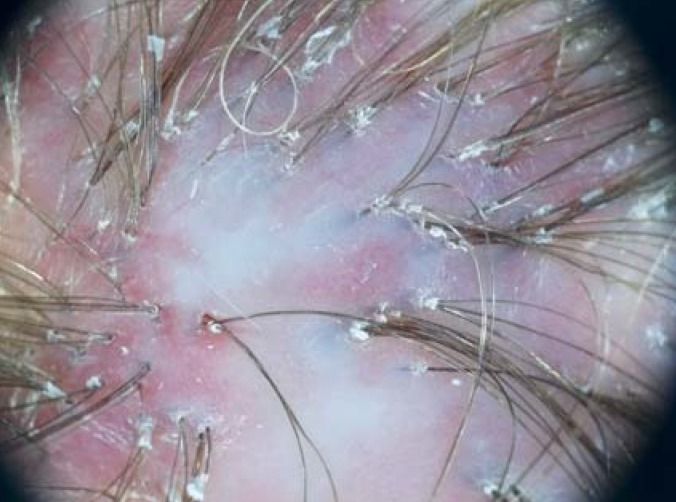
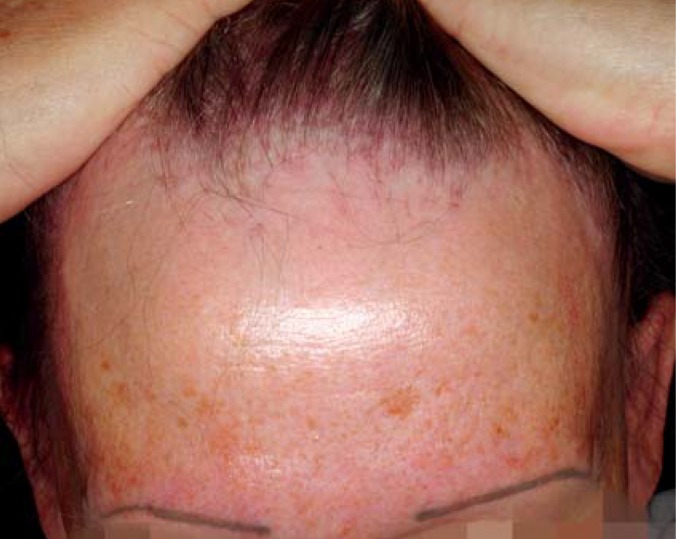
Results: Excessive daily hair loss (effluvium) may be physiological, as in the postpartum state, or pathological, due for example to thyroid disturbances, drug effects, iron deficiency, or syphilis. Androgenetic alopecia generally manifests itself in women as diffuse thinning of the hair over the top of the scalp, and in men as receding temporal hairlines and loss of hair in the region of the whorl on the back of the head. Alopecia areata is patchy hair loss arising over a short time and involving the scalp, eyebrows, beard, or entire body. The hair loss of alopecia areata is reversible in principle but hard to treat. Folliculitis decalvans is a form of alopecia with scarring, characterized by inflamed papules, pustules, and crusts at the edges of the lesions. Lichen planopilaris generally presents with small patches of baldness, peripilar erythema, and round areas of skin scaling. Kossard's frontal fibrosing alopecia is characterized by a receding hairline and loss of eyebrows.
Conclusion: Hair loss is a symptom, not a diagnosis. The pathogenesis of the alopecias involves a range of genetic, endocrine, immune, and inflammatory processes, each of which calls for its own form of treatment.
Figures
References
-
- Cash T. The psychosocial consequences of androgenetic alopecia: a review of the research literature. Br J Dermatol. 1999;141:398–405. - PubMed
-
- Paus R, Cotsarelis G. The biology of hair follicles. N Engl J Med. 1999;341:491–497. - PubMed
-
- Courtois M, Loussouarn G, Hourseau S, Grollier JF. Periodicity in the growth and shedding of hair. Br J Dermatol. 1996;134:47–54. - PubMed
-
- Lindner J, Hillmann K, Blume-Peytavi U, et al. Hair shaft abnormalities after chemotherapy and tamoxifen therapy in patients with breast cancer evaluated by optical coherence tomography. Br J Dermatol. 2012;167:1272–1278. - PubMed
-
- Ross EK, Vincenzi C, Tosti A. Videodermoscopy in the evaluation of hair and scalp disorders. J Am Acad Dermatol. 2006;55:799–806. - PubMed
Publication types
MeSH terms
Substances
LinkOut - more resources
Full Text Sources
Other Literature Sources
Medical