


Epidemiology of hepatitis C virus in Ghana: a systematic review and meta-analysis
- PMID: 27507267
- PMCID: PMC4977883
- DOI: 10.1186/s12879-016-1708-7
Epidemiology of hepatitis C virus in Ghana: a systematic review and meta-analysis
Abstract
Background: To fully understand the burden of hepatitis C (HCV) infection in Ghana towards informing appropriate preventive measures, accurate prevalence estimates are needed. In this study, we estimate the prevalence of chronic HCV infection by systematically reviewing primary studies published between 1995 and 2015.
Methods: A systematic review and meta-analysis was conducted as per the PRISMA guidelines. Comprehensive searches for hepatitis C prevalence studies for the years 1995-2015 were conducted in PubMed, ScienceDirect, Google Scholar, Africa Journals Online (AJOL) and the WHO African Index Medicus databases. We also searched the websites of the ministry of health and Ghana Health service for non-indexed studies or reports on the subject. Further systematic reference screening of published reviews and retrieved studies were also conducted to identify additional publications not captured through the online searches.
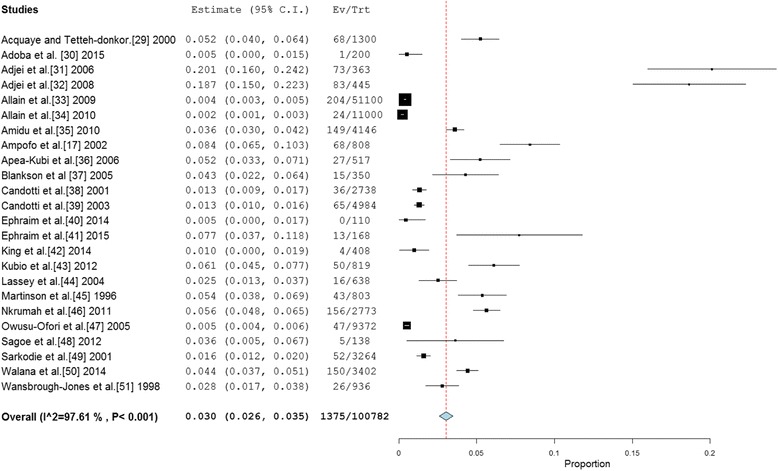
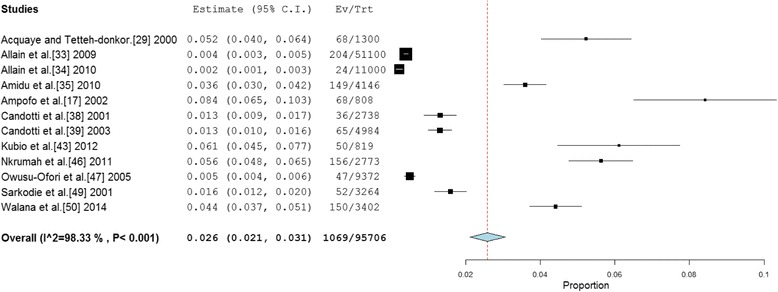
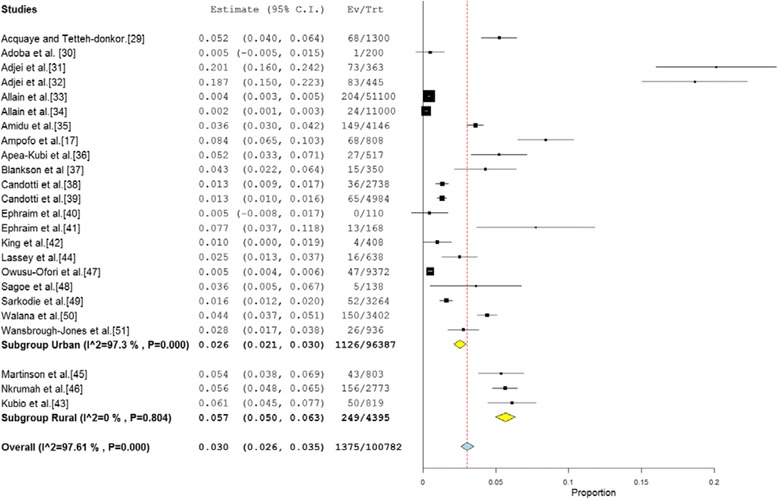
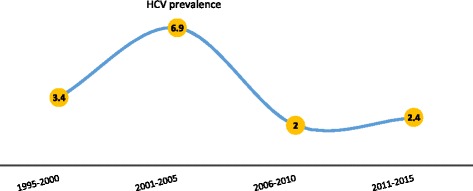
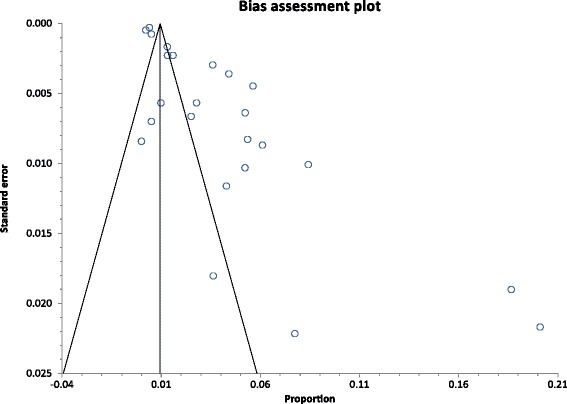
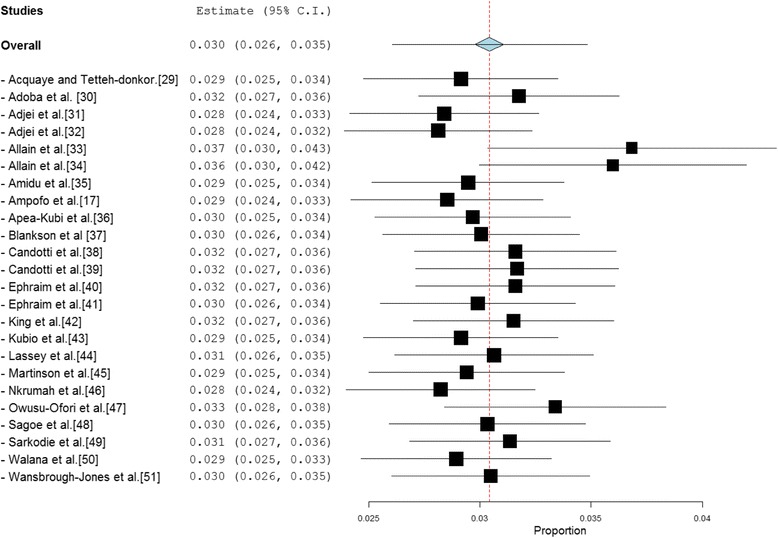
Results: Twenty-Four (24) studies from nine regions of Ghana with a combined sample size of 100,782 were analyzed. No study involving participants from Upper West region was retrieved. The national prevalence of chronic HCV was estimated as 3.0 % (95 % CI = 2.6 % to 3.5 %; I(2) = 97.61 %, p < 0. 001). Prevalence rates of chronic HCV infection among blood donors was 2.6 % (95 % CI = 2.1 % to 3.1 %; I(2) = 98.33 %, p < 0.001) with higher prevalence rate estimated for replacement blood donors (RBDs) than voluntary blood donors (RBDs). Among pregnant women and parturients, anti-HCV seroprevalence was estimated as 4.6 % (95 % CI = 1.8 % to 7.5 %; I(2) = 75.74 %, p = 0.016). The national prevalence of HIV/HCV co-infection was also estimated as 2.8 % (95 % CI = 0.4-6 %; I(2) = 65.86 %, p = 0.0053). Regional prevalence of chronic HCV infection were determined for Ashanti (1.5 %, 95 % CI = 1.2 % to 1.9 %; I(2) = 96.24 %, p < 0.001) and Greater Accra (6.4 %, 95 % CI = 4.2 % to 8.6 %; I(2) = I(2) = 88.5 %, P < 0. 001) regions but no estimates were available for the other eight regions. The ascending order of HCV prevalence rates according to years in which studies were conducted was 2006-2010 < 2011-2015 < 1995-2002 < 2001-2005. Higher prevalence of chronic HCV infection was estimated for rural (5.7; 95 % CI 5.0-6.3 %; I(2) = 0, p = 0.804) than urban (2.6 %, 95 % CI = 2.1 % to 3.0 %; I(2) = 97.3 %, p = 0.0001) settings.
Conclusion: Our study demonstrates a high prevalence of chronic hepatitis C infection in Ghana. This highlights the urgent need for stronger commitments from government and all stakeholders within the country to outline efficient preventive and curative measures towards reducing the overall burden of the disease.
Keywords: Ghana; HCV; Hepatitis C; Meta-analysis; Prevalence; Systematic reviews; Viral infections.
Figures



References
-
- Di Bisceglie AM, Order SE, Klein JL, et al. The role of chronic viral hepatitis in hepatocellular carcinoma in the United States. Am J Gastroenterol. 1991;86:335–8. - PubMed
Publication types
MeSH terms
Substances
LinkOut - more resources
Full Text Sources
Other Literature Sources
Medical
