


Lung Function in African Infants in the Drakenstein Child Health Study. Impact of Lower Respiratory Tract Illness
- PMID: 27509359
- PMCID: PMC5394784
- DOI: 10.1164/rccm.201601-0188OC
Lung Function in African Infants in the Drakenstein Child Health Study. Impact of Lower Respiratory Tract Illness
Abstract
Rationale: Lower respiratory tract illness is a major cause of childhood morbidity and mortality. It is unknown whether infants are predisposed to illness because of impaired lung function or whether respiratory illness reduces lung function.
Objectives: To investigate the impact of early life exposures, including lower respiratory tract illness, on lung function during infancy.
Methods: Infants enrolled in the Drakenstein child health study had lung function at 6 weeks and 1 year. Testing during quiet natural sleep included tidal breathing, exhaled nitric oxide, and multiple breath washout measures. Risk factors for impaired lung health were collected longitudinally. Lower respiratory tract illness surveillance was performed and any episode investigated.
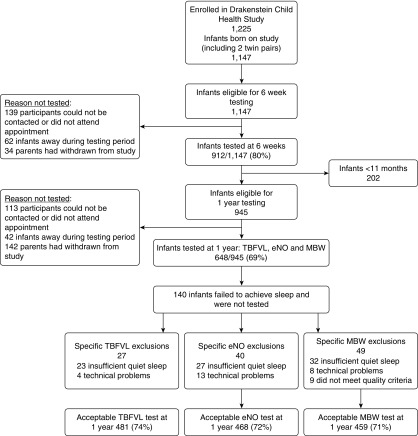
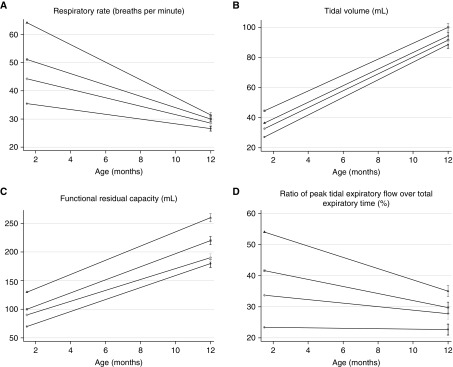
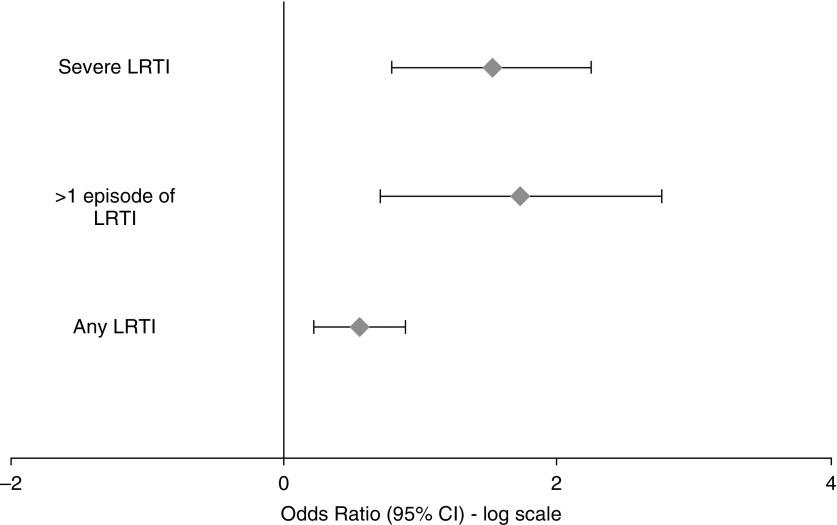
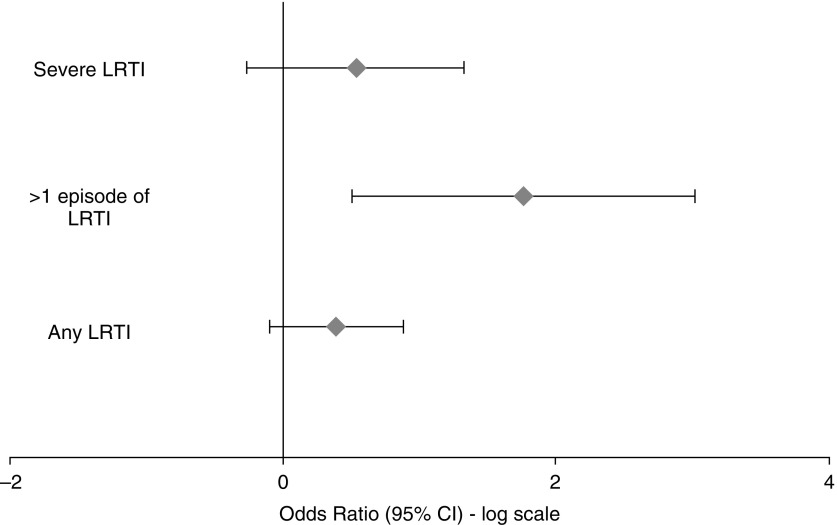
Measurements and main results: Lung function was tested in 648 children at 1 year. One hundred and fifty (29%) infants had a lower respiratory tract illness during the first year of life. Lower respiratory tract illness was independently associated with increased respiratory rate (4%; 95% confidence interval [CI], 1.01-1.08; P = 0.02). Repeat episodes further increased respiratory rate (3%; 95% CI, 1.01-1.05; P = 0.004), decreased tidal volume (-1.7 ml; 95% CI, -3.3 to -0.2; P = 0.03), and increased the lung clearance index (0.13 turnovers; 95% CI, 0.04-0.22; P = 0.006) compared with infants without illness. Tobacco smoke exposure, lung function at 6 weeks, infant growth, and prematurity were other independent predictors of lung function at 1 year.
Conclusions: Early life lower respiratory tract illness impairs lung function at 1 year, independent of baseline lung function. Preventing early life lower respiratory tract illness is important to optimize lung function and promote respiratory health in childhood.
Keywords: LRTI; epidemiology; infant; lung function; lung growth and development.
Figures
Comment in
-
Bending the Twig Does the Tree Incline: Lung Function after Lower Respiratory Tract Illness in Infancy.Am J Respir Crit Care Med. 2017 Jan 15;195(2):154-155. doi: 10.1164/rccm.201611-2325ED. Am J Respir Crit Care Med. 2017. PMID: 28084817 Free PMC article. No abstract available.
References
-
- Liu L, Oza S, Hogan D, Perin J, Rudan I, Lawn JE, Cousens S, Mathers C, Black RE. Global, regional, and national causes of child mortality in 2000-13, with projections to inform post-2015 priorities: an updated systematic analysis. Lancet. 2015;385:430–440. - PubMed
-
- Zar HJ, Ferkol TW. The global burden of respiratory disease-impact on child health. Pediatr Pulmonol. 2014;49:430–434. - PubMed
-
- Turner SW, Palmer LJ, Rye PJ, Gibson NA, Judge PK, Young S, Landau LI, Le Souëf PN. Infants with flow limitation at 4 weeks: outcome at 6 and 11 years. Am J Respir Crit Care Med. 2002;165:1294–1298. - PubMed
-
- Martinez FD, Morgan WJ, Wright AL, Holberg CJ, Taussig LM. Diminished lung function as a predisposing factor for wheezing respiratory illness in infants. N Engl J Med. 1988;319:1112–1117. - PubMed
Publication types
MeSH terms
Substances
Grants and funding
LinkOut - more resources
Full Text Sources
Other Literature Sources
