


Review
doi: 10.1186/s40798-016-0051-2.
eCollection 2015 Jun.
Medical Care for Swimmers
Affiliations
- PMID: 27512647
- PMCID: PMC4960281
- DOI: 10.1186/s40798-016-0051-2
Item in Clipboard
Review
Medical Care for Swimmers
Sports Med Open.
.
Abstract
Swimming is one of the most popular sports worldwide. Competitive swimming is one of the most watched sports during the Olympic Games. Swimming has unique medical challenges as a result of a variety of environmental and chemical exposures. Musculoskeletal overuse injuries, overtraining, respiratory problems, and dermatologic conditions are among the most common problems swimmers encounter. Although not unique to swimming, overtraining is a serious condition which can have significant negative impact on swimmers' health and performance. This review article is an attempt to discuss various issues that a medical team should consider when caring for swimmers.
Figures
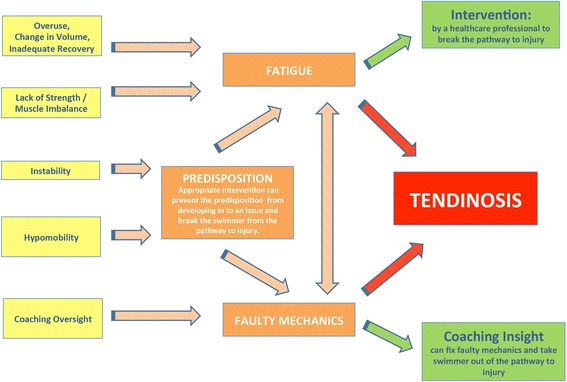
Pathway to injury: competitive swimmer. Reproduced from Edelman et al. [25, 26] with permission
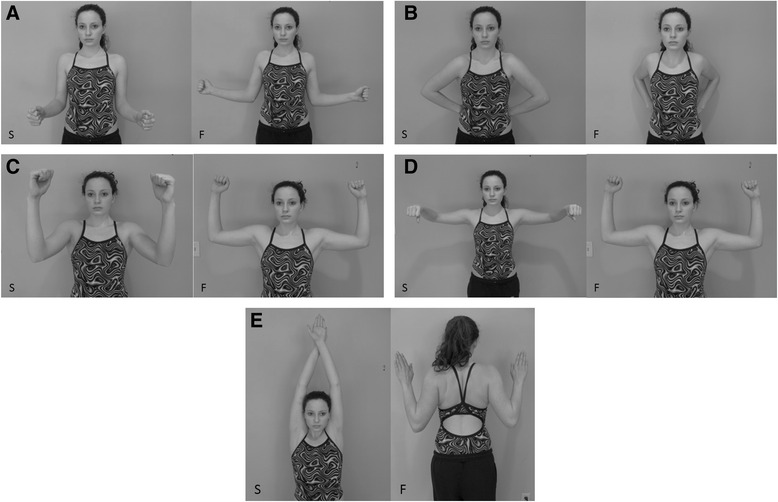
On-deck active warm-up (S start, F finish). Complete 2 sets of 15 for each activity. Active Warm-Up: a Place your arms by your side, bend your elbows to 90° to assume the start position. Externally rotate your arms to the end range at a comfortable pace and then return to the starting position. As you externally rotate, pinch your shoulder blades together. Do not force the end range. Complete 2 sets of 15 repetitions. Active Warm-Up: b Place the back of your hands on your back at the belt line and bring your elbows forward to assume the start position. Squeeze your elbows and shoulder blades together and then return to the start position. Complete 2 sets of 15 repetitions. Active Warm-up c Forward elevate your arms to 90° and then bend your elbows to 90° to assume the starting position. Horizontally abduct your arms to a “goal post” position, squeezing your shoulder blades together at the same time. Then, return to the starting position. Complete 2 sets of 15 repetitions. Active Warm-up: d Abduct your arms to 90° and bend your elbows to 90° to assume the starting position. Then, externally rotate your shoulders to achieve the “goal post” position. Return to the starting position. Complete 2 sets of 15 repetitions. Active Warm-up: e Assume a tight streamline for the start position. Drop your elbows into your “back pockets,” while squeezing your shoulder blades together and keeping your hands up. Return to the streamline position and complete 2 sets of 15 repetitions
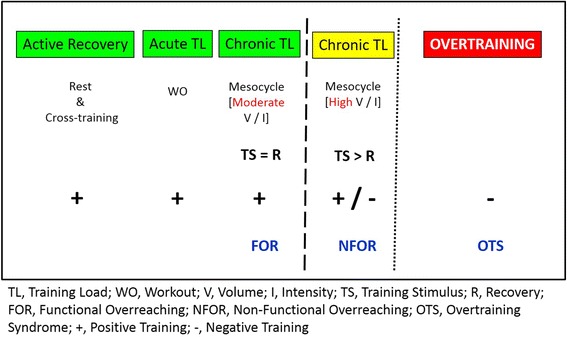
Overtraining continuum. Reproduced from Wilber et al. [114] with permission
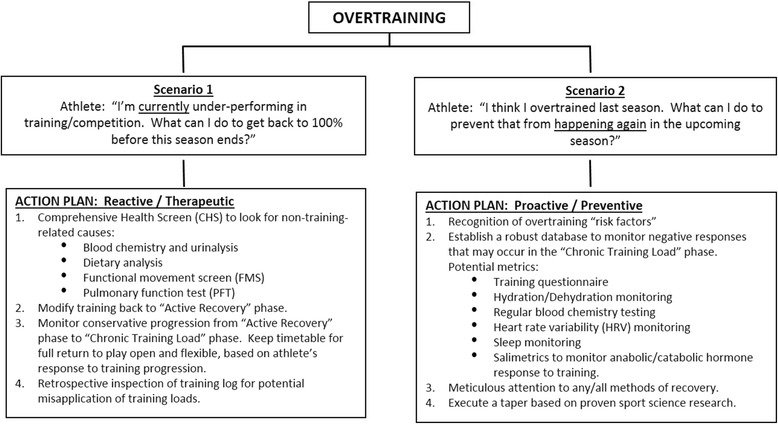
Overtraining treatment algorithm. Reproduced from Wilber et al. [114] with permission
References
-
- Gustafson M. NBC record ratings prove swimming’s viability. 2012.
-
- Dijkstra HP, Geertsema L, Benzarti N, van Dorssen EA, van den Hoogenband CR, Mountjoy M. Review of the Local Organizing Committee (LOC) medical services during the 12th FINA World Swimming Championships (25 m) in Doha, Qatar. Br J Sports Med. 2016;50(10):613–8. doi: 10.1136/bjsports-2015-095600. - DOI - PubMed
-
- Rodrigues F, Mader A. Energy Systems in Swimming. In: Seifert L, Chollet D, Mujika I, editors. World Book of Swimming: From Science to Performance. New York: Nova Science Publishers Inc.; 2011. pp. 224–54.
Publication types
LinkOut - more resources
Full Text Sources
Other Literature Sources
