Invasive Non-typhoidal Salmonella Infections in Asia: Clinical Observations, Disease Outcome and Dominant Serovars from an Infectious Disease Hospital in Vietnam
- PMID: 27513951
- PMCID: PMC4981332
- DOI: 10.1371/journal.pntd.0004857
Invasive Non-typhoidal Salmonella Infections in Asia: Clinical Observations, Disease Outcome and Dominant Serovars from an Infectious Disease Hospital in Vietnam
Abstract
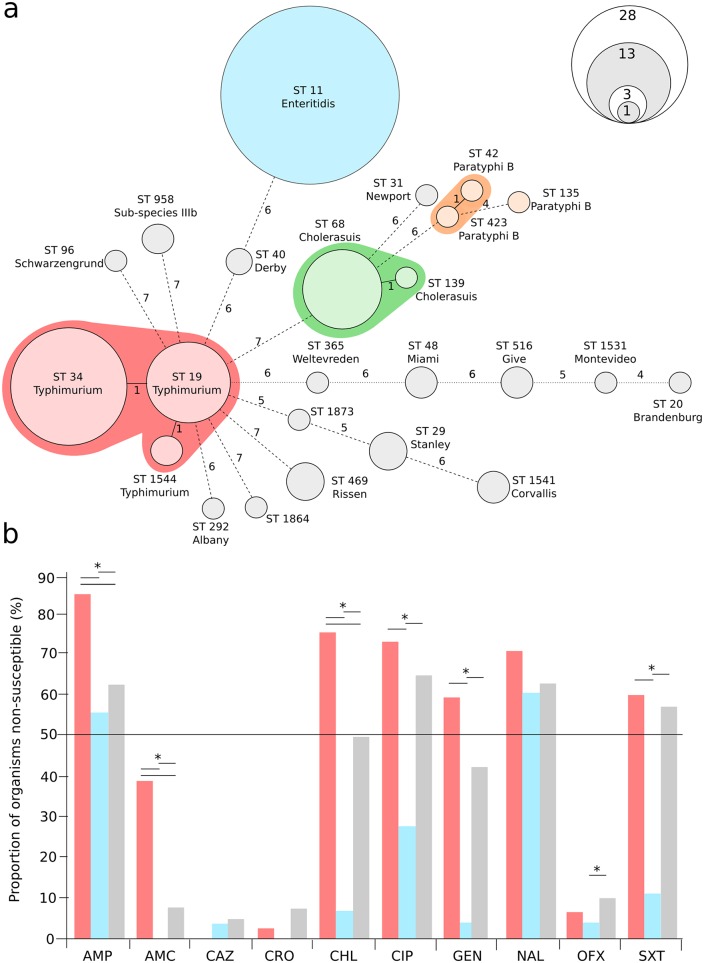
Invasive non-typhoidal Salmonella (iNTS) infections are now a well-described cause of morbidity and mortality in children and HIV-infected adults in sub-Saharan Africa. In contrast, the epidemiology and clinical manifestations of iNTS disease in Asia are not well documented. We retrospectively identified >100 cases of iNTS infections in an infectious disease hospital in Southern Vietnam between 2008 and 2013. Clinical records were accessed to evaluate demographic and clinical factors associated with iNTS infection and to identify risk factors associated with death. Multi-locus sequence typing and antimicrobial susceptibility testing was performed on all organisms. Of 102 iNTS patients, 71% were HIV-infected, >90% were adults, 71% were male and 33% reported intravenous drug use. Twenty-six/92 (28%) patients with a known outcome died; HIV infection was significantly associated with death (p = 0.039). S. Enteritidis (Sequence Types (ST)11) (48%, 43/89) and S. Typhimurium (ST19, 34 and 1544) (26%, 23/89) were the most commonly identified serovars; S. Typhimurium was significantly more common in HIV-infected individuals (p = 0.003). Isolates from HIV-infected patients were more likely to exhibit reduced susceptibility against trimethoprim-sulfamethoxazole than HIV-negative patients (p = 0.037). We conclude that iNTS disease is a severe infection in Vietnam with a high mortality rate. As in sub-Saharan Africa, HIV infection was a risk factor for death, with the majority of the burden in this population found in HIV-infected adult men.
Conflict of interest statement
The authors have declared that no competing interests exist.
Figures
References
-
- Popoff MY, Bockemühl J, Gheesling LL (2004) Supplement 2002 (no. 46) to the Kauffmann-White scheme. Res Microbiol 155: 568–570. - PubMed
Publication types
MeSH terms
Substances
Grants and funding
LinkOut - more resources
Full Text Sources
Other Literature Sources
Medical
Research Materials