


A Conceptualization of the Utility of Subjective Cognitive Decline in Clinical Trials of Preclinical Alzheimer's Disease
- PMID: 27514526
- PMCID: PMC5241130
- DOI: 10.1007/s12031-016-0810-z
A Conceptualization of the Utility of Subjective Cognitive Decline in Clinical Trials of Preclinical Alzheimer's Disease
Abstract
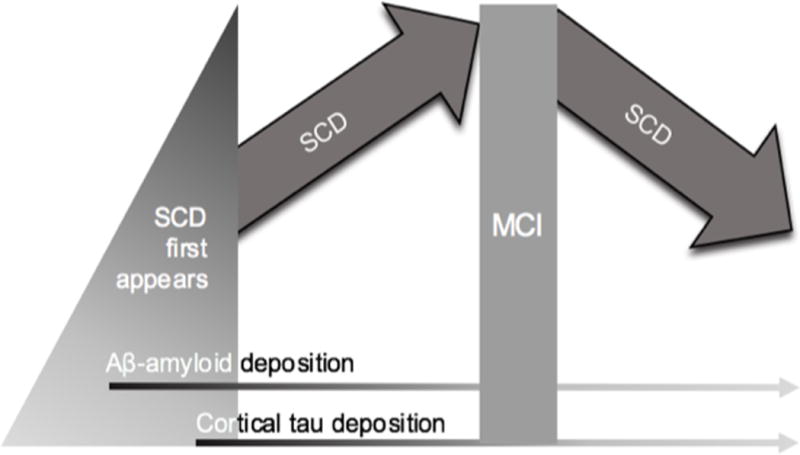
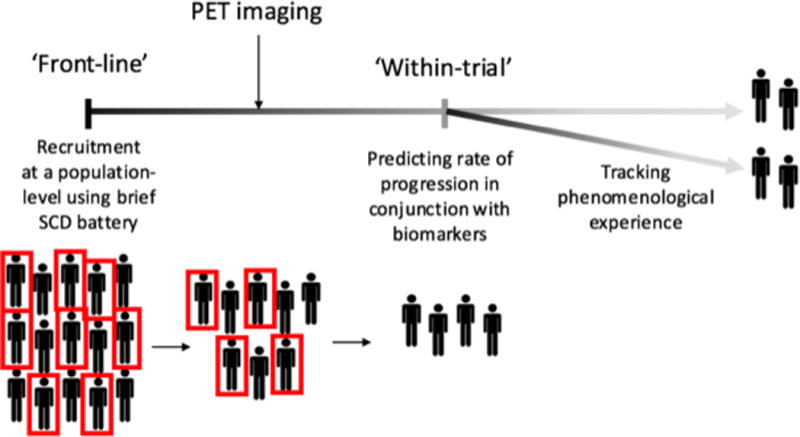
This commentary outlines a conceptual model for subjective cognitive decline (SCD) in relation to Alzheimer's disease (AD) biomarkers in the preclinical stages of disease and a framework for effectively utilizing SCD in secondary prevention clinical trials. Mounting evidence supports the notion that SCD is sensitive to encroaching Aβ-amyloid and neurodegeneration. SCD has also been shown to provide additive information of AD-dementia risk beyond what is known about the biomarker status of the individual. Thus, we provide recommendations for the implementing SCD measurement in clinical trials. We argue that SCD can be measured at three catch points within the course of the clinical trial: firstly, at the initial recruitment and screening phase; secondly, to create more robust estimates of rates of AD-dementia progression; and finally, to measure subjective experiences of cognitive change and quality of life over the course of the trial as a proxy of clinically meaningful functional improvement. We provide recommendations of how SCD can be approached at each of these points. SCD is an important component of the preclinical AD-dementia trajectory. Future studies need to elucidate the interactive influence of Aβ-amyloid and tau on SCD from a spatiotemporal perspective. Even as this evidence accrues, it is clear that SCD can provide unique and additive information about rates of progression and subjectively experienced cognitive change within clinical trials.
Keywords: Alzheimer’s disease; Amyloid; Cognition; Preclinical; Subjective cognitive decline; Tau.
Figures
References
-
- Amariglio RE, Donohue MC, Marshall GA, et al. Tracking early decline in cognitive function in older individuals at risk for alzheimer disease dementia: The alzheimer’s disease cooperative study cognitive function instrument. JAMA Neurology. 2015a;72:446–454. doi: 10.1001/jamaneurol.2014.3375. - DOI - PMC - PubMed
Publication types
MeSH terms
Substances
Grants and funding
LinkOut - more resources
Full Text Sources
Other Literature Sources
Medical
