Predictors of Inflammation in a Cohort of Bolivian Infants and Toddlers
- PMID: 27527627
- PMCID: PMC5062806
- DOI: 10.4269/ajtmh.16-0292
Predictors of Inflammation in a Cohort of Bolivian Infants and Toddlers
Abstract
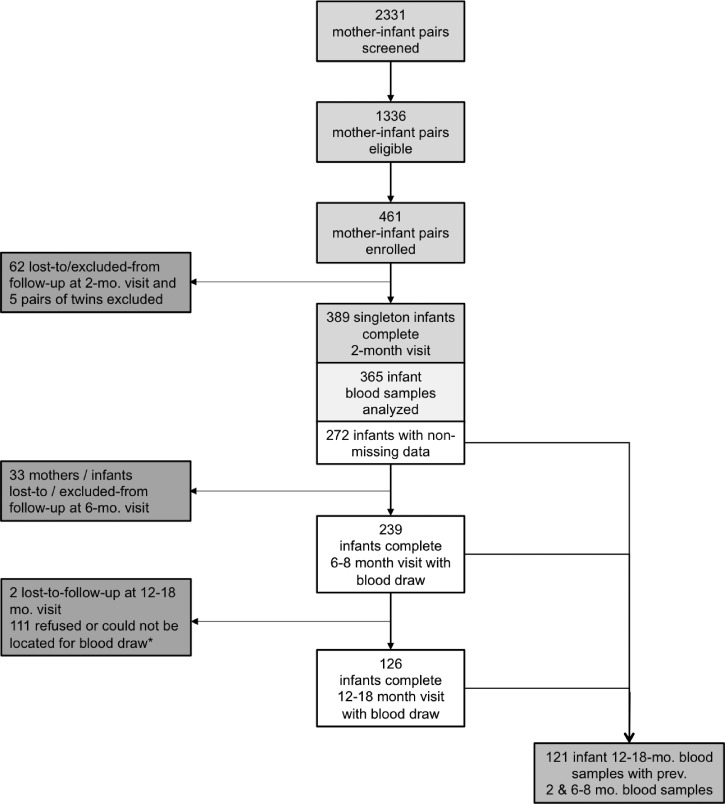
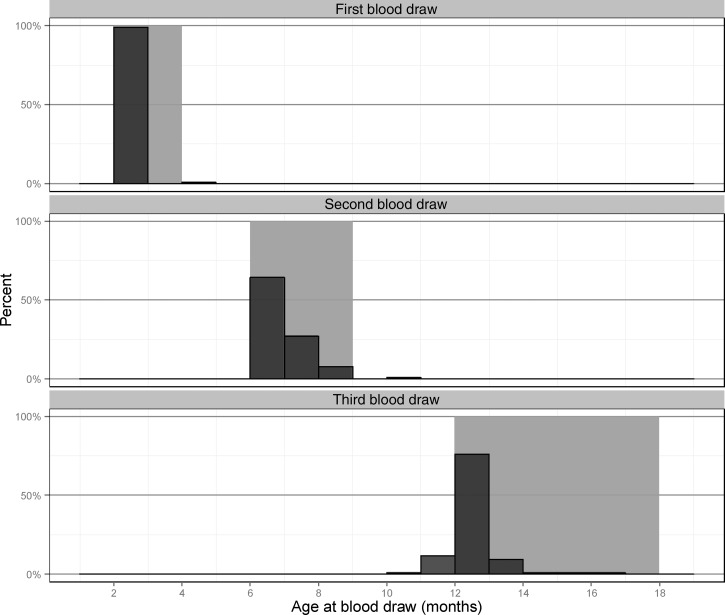
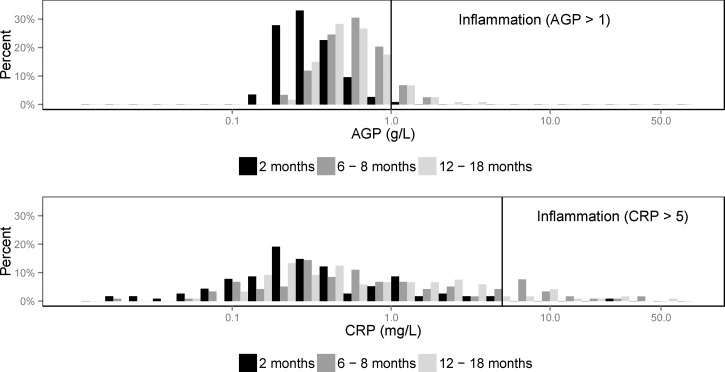
Inflammation has been associated with cardiovascular disease and other health outcomes in children and adults, yet few longitudinal data are available on prevalence and predictors of inflammation in infants. We aimed to identify the prevalence of inflammation in a cohort of Bolivian infants and estimate its association with acute (recent illnesses) and chronic (overweight, stunting) morbidities and potential pathogen exposure (represented by water, sanitation, and hygiene [WASH] resources). We measured plasma concentrations of two acute phase proteins (C-reactive protein [CRP], marking acute inflammation, and alpha(1)-acid-glycoprotein [AGP], marking chronic inflammation) at three time points (target 2, 6-8, and 12-18 months). Of 451 singleton infants enrolled in the parent study, 272 had the first blood draw and complete data. Anthropometry and sociodemographic and recent illness data (2-week recall of cough, diarrhea, and fever) were collected at each visit. Inflammation was defined as CRP > 5 mg/L or AGP > 1 g/L. The prevalence of inflammation increased from early infancy (3% at first blood draw) to later infancy (15-22% at later blood draws). Recent cough, recent fever, and age in months were significantly associated with relative increases in CRP (7-44%) and AGP (5-23%), whereas recent diarrhea was only significantly associated with an increase in CRP (48%). Neither anthropometry nor WASH was significantly associated with inflammation. Results confirm the role of recent acute illness in inflammation in infants, and indicate that adiposity and WASH are not as important to inflammation in this age category.
© The American Society of Tropical Medicine and Hygiene.
Figures
References
-
- Pai JK, Pischon T, Ma J, Manson JE, Hankinson SE, Joshipura K, Curhan GC, Rifai N, Cannuscio CC, Stampfer MJ, Rimm EB. Inflammatory markers and the risk of coronary heart disease in men and women. N Engl J Med. 2004;351:2599–2610. - PubMed
-
- Koenig W. High-sensitivity C-reactive protein and atherosclerotic disease: from improved risk prediction to risk-guided therapy. Int J Cardiol. 2013;168:5126–5134. - PubMed
-
- Reus GZ, Fries GR, Stertz L, Badawy M, Passos IC, Barichello T, Kapczinski F, Quevedo J. The role of inflammation and microglial activation in the pathophysiology of psychiatric disorders. Neuroscience. 2015;300:141–154. - PubMed
-
- Furtado M, Katzman MA. Examining the role of neuroinflammation in major depression. Psychiatry Res. 2015;229:27–36. - PubMed
MeSH terms
Substances
Grants and funding
LinkOut - more resources
Full Text Sources
Other Literature Sources
Medical
Research Materials
Miscellaneous