


Patient experience and anxiety during and after treatment for an HPV-related oropharyngeal cancer
- PMID: 27531878
- PMCID: PMC5759043
- DOI: 10.1016/j.oraloncology.2016.06.009
Patient experience and anxiety during and after treatment for an HPV-related oropharyngeal cancer
Abstract
Objectives: Diagnosis with an HPV-related oropharyngeal cancer includes unique social issues. However, it is unknown how common these psychosocial issues are for patients and whether they continue after treatment.
Materials and methods: Patients with pathologically confirmed HPV-positive oropharyngeal cancer (HPV-OPC, n=48) were recruited from two medical centers. Participants completed a computer assisted self interview that explored their psychosocial experiences during and after treatment. We examined responses overall and by age.
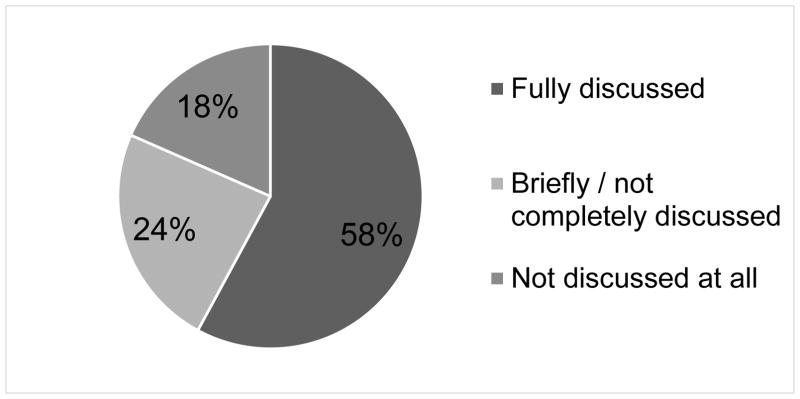
Results: The majority of participants with confirmed HPV-OPC, reported being told that HPV could have (90%) or did cause (77%) their malignancy, but only 52% believed that HPV was the main cause of their OPC. Participants over 65years were less likely than younger participants to report that their doctors told them their tumor was HPV-positive (50% vs 84%, p=0.03). Anxiety that their tumor was HPV-related was a major issue among participants when first diagnosed (93%). However, only 17% still reported anxiety after treatment was complete. While many patients reported that providers discussed the emotional effects of diagnosis and treatment adequately (58%), almost half reported discussing these emotional effects inadequately (24%), or not at all (18%). Further, 18% reported that their families still wondered about some questions that they had never asked.
Conclusion: After treatment, some HPV-OPC patients remain concerned about HPV and have unanswered questions about HPV. Older patients had lower awareness of the role of HPV in their cancer.
Keywords: Anxiety; HPV; OPC; Patient experience.
Copyright © 2016 Elsevier Ltd. All rights reserved.
Figures
References
-
- Institute of Medicine (US) Committee on Psychosocial Services to Cancer Patients/Families in a Community Setting. Cancer Care for the Whole Patient: Meeting Psychosocial Health Needs. Washington (DC): National Academies Press (US); 2008.
-
- Adelstein DJ, Ridge JA, Brizel DM, Holsinger FC, Haughey BH, O’Sullivan B, et al. Transoral resection of pharyngeal cancer: summary of a National Cancer Institute Head and Neck Cancer Steering Committee Clinical Trials Planning Meeting, November 6–7, 2011, Arlington, Virginia. Head Neck. 2012;34:1681–703. doi: 10.1002/hed.23136. - DOI - PMC - PubMed
Publication types
MeSH terms
Grants and funding
LinkOut - more resources
Full Text Sources
Other Literature Sources
Medical
