


Diagnosis and Anti-Reflux Therapy for GERD with Respiratory Symptoms: A Study Using Multichannel Intraluminal Impedance-pH Monitoring
- PMID: 27532103
- PMCID: PMC4988652
- DOI: 10.1371/journal.pone.0160139
Diagnosis and Anti-Reflux Therapy for GERD with Respiratory Symptoms: A Study Using Multichannel Intraluminal Impedance-pH Monitoring
Abstract
Background/aims: Respiratory symptoms are often associated with gastroesophageal reflux disease (GERD). Although the role of multichannel intraluminal impedance-pH (MII-pH) monitoring in GERD is clear, little is known regarding the characteristics of patients with respiratory symptoms based on MII-pH monitoring and anti-reflux therapy. We evaluated a cohort of GERD patients to identify the MII-pH parameters of GERD-related respiratory symptoms and to assess the anti-reflux therapy outcomes.
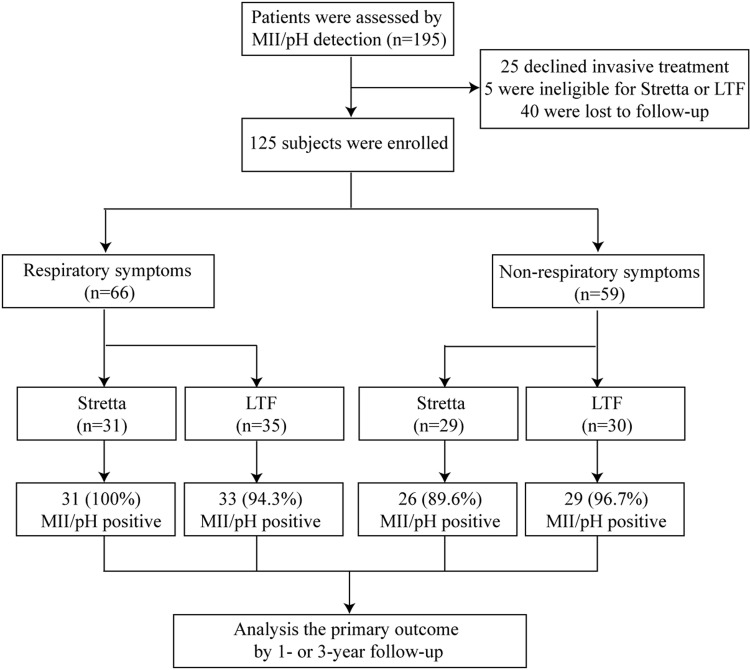
Methods: We undertook a prospective study of patients who were referred for GERD evaluation from January 2011 to January 2012. One hundred ninety-five patients underwent MII-pH monitoring and esophageal manometry, and one hundred sixty-five patients underwent invasive anti-reflux therapy that included laparoscopic Toupet fundoplication (LTF) and the Stretta procedure. The patient characteristics and MII-pH parameters were analyzed, and the symptom scores were assessed at baseline and at 1- and 3-year follow-up evaluations.
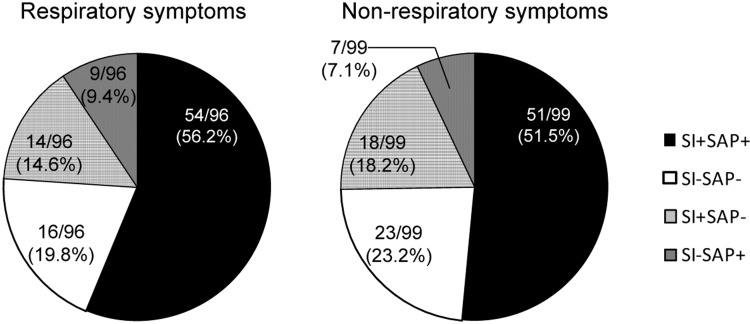
Results: Of the 195 patients, 96 (49.2%) exhibited respiratory symptoms and significantly more reflux episodes (70.7±29.3) than patients without respiratory symptoms (64.7±24.4, p = 0.044) based on the MII-pH monitoring results. Moreover, the group of patients with respiratory symptoms exhibited more proximal reflux episodes (35.2±21.3) than the non-respiratory symptomatic group (28.3±17.9, p = 0.013). One hundred twenty-five patients following the Stretta procedure (n = 60, 31 with respiratory symptoms) or LTF (n = 65, 35 with respiratory symptoms) completed the designated 3-year follow-up period and were included in the final analysis. The symptom scores after anti-reflux therapy all decreased relative to the corresponding baseline values (p<0.05), and there were no significant differences in the control of respiration between the Stretta procedure and LTF (p>0.05). However, LTF significantly reduced the recurrence (re-operation) rate compared with the Stretta procedure (0 vs. 19.4%, p = 0.006).
Conclusions: MII-pH monitoring effectively detected respiratory-related predictive parameters, including total/proximal reflux episodes and symptom correlations. We found that GERD patients with respiratory symptoms exhibited more proximal and total reflux episodes but not more acid-related episodes, as determined by MII-pH monitoring. Thus, such monitoring could be useful for diagnosing atypical GERD patients with respiratory symptoms. Furthermore, LTF exhibited a more significant effect on controlling typical symptoms in all GERD patients and reducing the recurrence rate than the Stretta procedure in patients with respiratory symptoms.
Conflict of interest statement
Figures
References
Publication types
MeSH terms
LinkOut - more resources
Full Text Sources
Other Literature Sources
Medical
Miscellaneous
