


20 Years of Pediatric Benchmarking in Germany and Austria: Age-Dependent Analysis of Longitudinal Follow-Up in 63,967 Children and Adolescents with Type 1 Diabetes
- PMID: 27532627
- PMCID: PMC4988648
- DOI: 10.1371/journal.pone.0160971
20 Years of Pediatric Benchmarking in Germany and Austria: Age-Dependent Analysis of Longitudinal Follow-Up in 63,967 Children and Adolescents with Type 1 Diabetes
Abstract
Background: To investigate changes in diabetes treatment over the last two decades in three age-groups of children and adolescents with type 1 diabetes (T1D) from Germany and Austria.
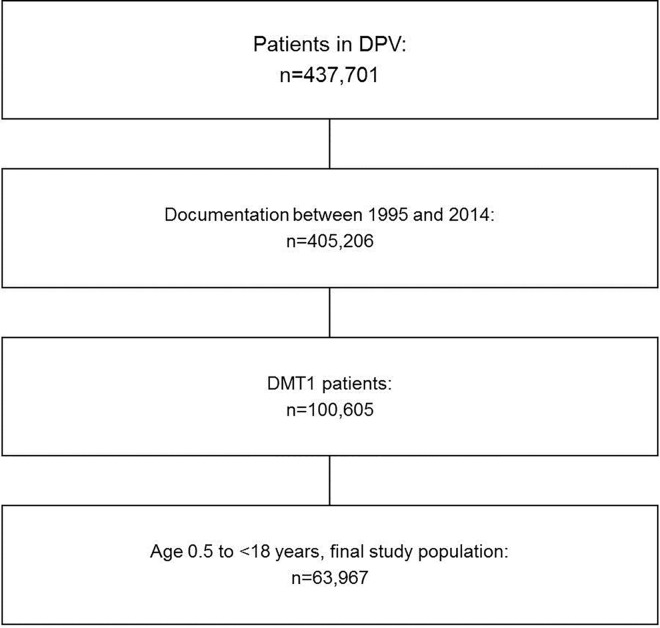
Methods: 63,967 subjects (<18yr) with T1D documented between 1995 and 2014 from the DPV-database were included and stratified according to age (0.5-<6, 6-<12, 12-<18yr). Regression models were applied for insulin regimens (<3 and ≥4 injection time points/day, or continuous subcutaneous insulin infusion (CSII)), use of rapid- and long acting insulin analogues, NPH insulin, and frequency of self-monitoring of blood glucose (SMBG)/day. Models were adjusted for sex, diabetes duration, and migration background. P-value for trend was given.
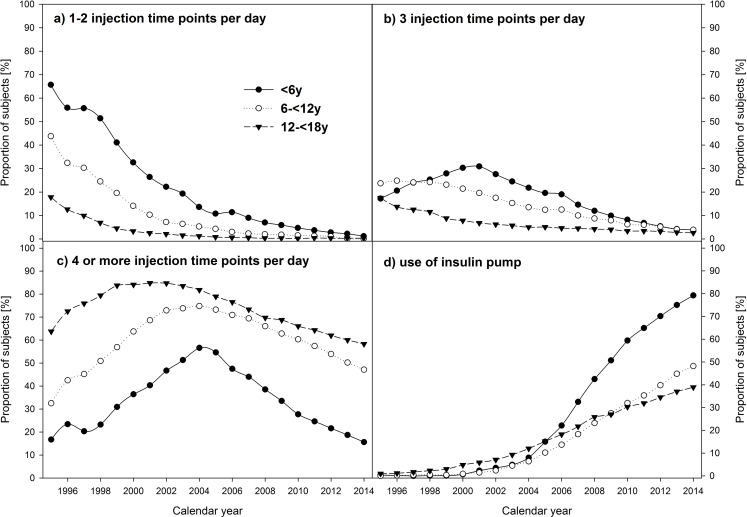
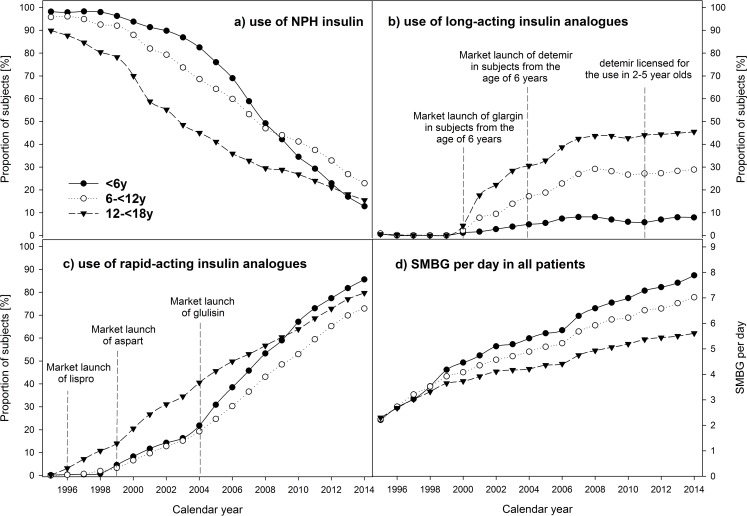
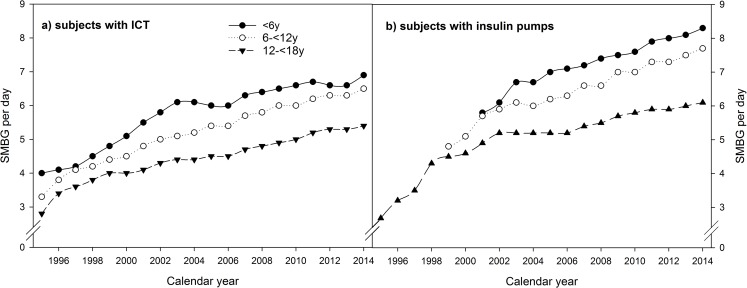
Findings: The number of subjects with <3 injection time points/day decreased from 1995 to 2014 to <5% in all age-groups (p<0.0001). Proportion of patients with ≥4 injections/day increased until the early 2000s, and then declined until 2014. This trend was not found in 6-<12yr olds (p = 0.3403). CSII increased in all age-groups (p<0.0001) with the highest increase in children <6 years (from 0.4% to 79.2%), and the lowest increase in 12-<18 year olds (from 1.0% to 38.9%). NPH insulin decreased in all age-groups (p<0.0001). Insulin analogues, especially rapid-acting, became more frequent in all age-groups (p<0.0001), accounting for 78.4% in 2014 for all subjects. The highest use was found in the youngest children (in 2014: 85.6%), the lowest use in 6-<12 year olds (in 2014: 72.9%). The number of SMBG/day increased from 2.2 to 6.4 with a similar rise in all age-groups (p<0.0001). Frequency was highest in subjects <6yr.
Conclusions: In all age-groups, T1D treatment was intensified over the last 20 years. Age-specific differences in trends were particularly observed in the number of patients on CSII, in the number of patients with 4 or more injections/day, and in the frequency of SMBG/day.
Conflict of interest statement
Figures
References
-
- Grabert M, Schweiggert F, Holl RW. A framework for diabetes documentation and quality management in Germany: 10 years of experience with DPV. Comput Methods Programs Biomed. 2002;69: 115–121. - PubMed
-
- Karges B, Rosenbauer J, Kapellen T, Wagner VM, Schober E, Karges W, et al. Hemoglobin A1c levels and risk of severe hypoglycemia in children and young adults with type 1 diabetes from Germany and Austria: a trend analysis in a cohort of 37,539 patients between 1995 and 2012. PLoS Med. 2014;11: e1001742 10.1371/journal.pmed.1001742 - DOI - PMC - PubMed
-
- Rohrer TR, Wolf J, Liptay S, Zimmer KP, Fröhlich-Reiterer E, Scheuing N, et al. Microvascular complications in childhood-onset type 1 diabetes and celiac disease: A multicenter longitudinal analysis of 56,514 patients from the German-Austrian DPV database. Diabetes Care. 2015;38: 801–807. 10.2337/dc14-0683 - DOI - PubMed
MeSH terms
Substances
LinkOut - more resources
Full Text Sources
Other Literature Sources
Medical
