


Sensitivity to PRIMA-1MET is associated with decreased MGMT in human glioblastoma cells and glioblastoma stem cells irrespective of p53 status
- PMID: 27533246
- PMCID: PMC5312382
- DOI: 10.18632/oncotarget.11197
Sensitivity to PRIMA-1MET is associated with decreased MGMT in human glioblastoma cells and glioblastoma stem cells irrespective of p53 status
Abstract
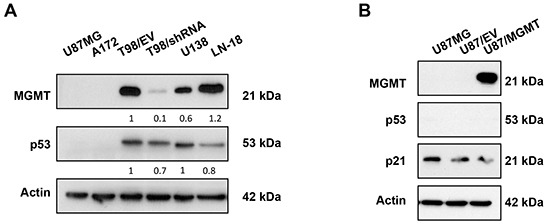
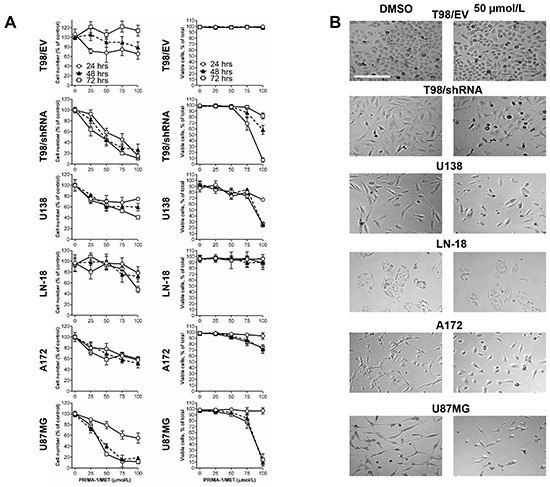
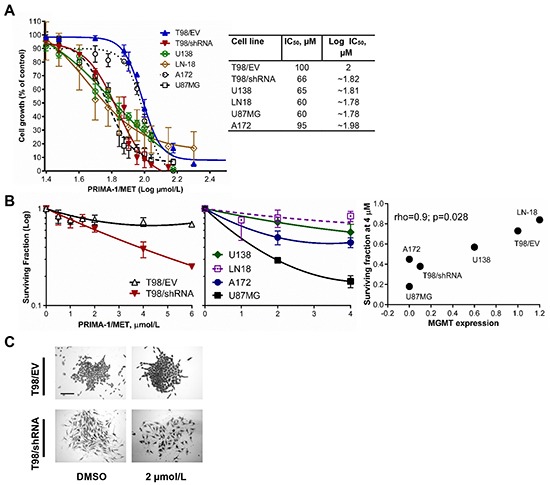
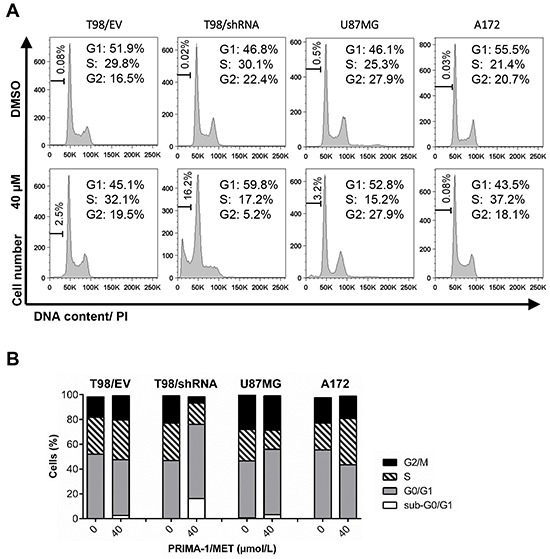
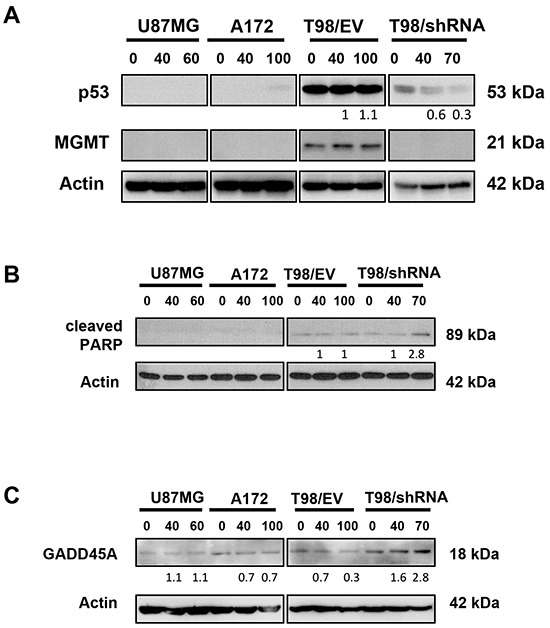
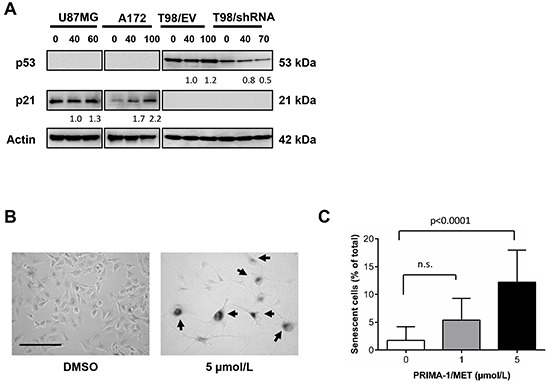
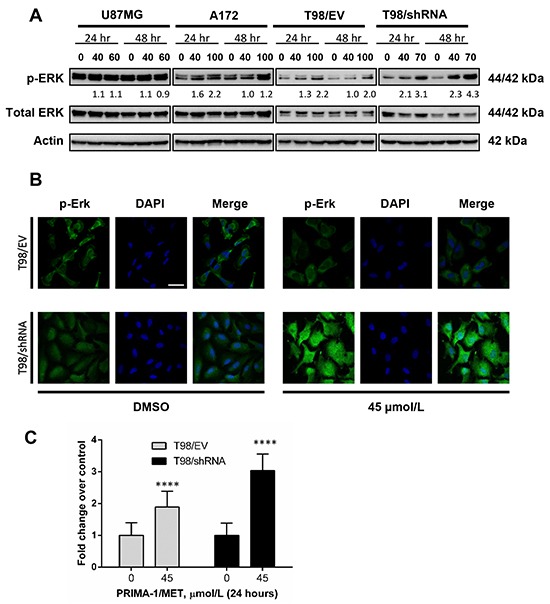
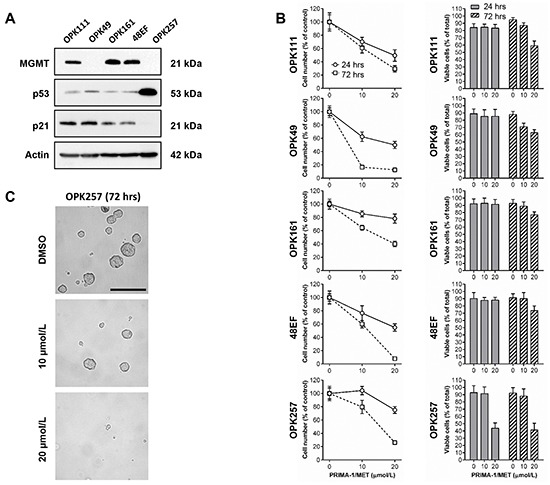
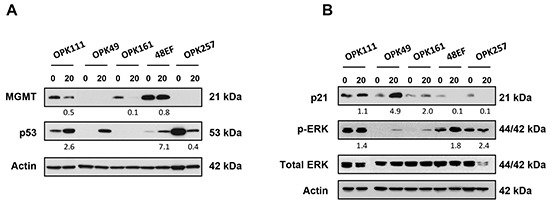
Alterations of the TP53 tumor suppressor gene occur in ~30% of primary glioblastoma (GBM) with a high frequency of missense mutations associated with the acquisition of oncogenic "gain-of-function" (GOF) mutant (mut)p53 activities. PRIMA-1MET/APR-246, emerged as a promising compound to rescue wild-type (wt)p53 function in different cancer types. Previous studies suggested the role of wtp53 in the negative regulation of the DNA repair protein O6-methylguanine-DNA methyltransferase (MGMT), a major determinant in resistance to therapy in GBM treatment. The potential role of MGMT in expression of p53 and the efficacy of PRIMA-1MET with respect to TP53 status and expression of MGMT in GBM remain unknown. We investigated response to PRIMA-1MET of wtp53/MGMT-negative (U87MG, A172), mutp53/MGMT-positive U138, LN-18, T98/Empty vector (T98/EV) and its isogenic MGMT/shRNA gene knockdown counterpart (T98/shRNA). We show that MGMT silencing decreased expression of mutp53/GOF in T98/shRNA. PRIMA-1MET further cleared T98/shRNA cells of mutp53, decreased proliferation and clonogenic potential, abrogated the G2 checkpoint control, increased susceptibility to apoptotic cell death, expression of GADD45A and sustained expression of phosphorylated Erk1/2. PRIMA-1MET increased expression of p21 protein in U87MG and A172 and promoted senescence in U87MG cell line. Importantly, PRIMA-1MET decreased relative cell numbers, disrupted the structure of neurospheres of patient-derived GBM stem cells (GSCs) and enabled activation of wtp53 with decreased expression of MGMT in MGMT-positive GSCs or decreased expression of mutp53. Our findings highlight the cell-context dependent effects of PRIMA-1MET irrespective of p53 status and suggest the role of MGMT as a potential molecular target of PRIMA-1MET in MGMT-positive GSCs.
Keywords: MGMT; PRIMA-1MET/APR-246; glioblastoma; glioblastoma stem cells; p53 mutation.
Conflict of interest statement
The authors declare no conflict of interest.
Figures
References
-
- Goodenberger ML, Jenkins RB. Genetics of adult glioma. Cancer Genet. 2012;205:613–621. - PubMed
-
- Louis DN, Perry A, Reifenberger G, von Deimling A, Figarella-Branger D, Cavenee WK, Ohgaki H, Wiestler OD, Kleihues P, Ellison DW. The 2016 World Health Organization Classification of Tumors of the Central Nervous System: a summary. Acta Neuropathol. 2016;131:803–820. - PubMed
-
- Zhang J, Stevens M, Bradshaw T. Temozolomide: mechanisms of action, repair and resistance. Curr Mol Pharmacol. 2012;5:102–114. - PubMed
-
- Anton K, Baehring JM, Mayer T. Glioblastoma multiforme: overview of current treatment and future perspectives. Hematol Oncol Clin North Am. 2012;26:825–853. - PubMed
MeSH terms
Substances
LinkOut - more resources
Full Text Sources
Other Literature Sources
Molecular Biology Databases
Research Materials
Miscellaneous
