


Novel biomarkers of resistance of pancreatic cancer cells to oncolytic vesicular stomatitis virus
- PMID: 27533247
- PMCID: PMC5308675
- DOI: 10.18632/oncotarget.11202
Novel biomarkers of resistance of pancreatic cancer cells to oncolytic vesicular stomatitis virus
Abstract
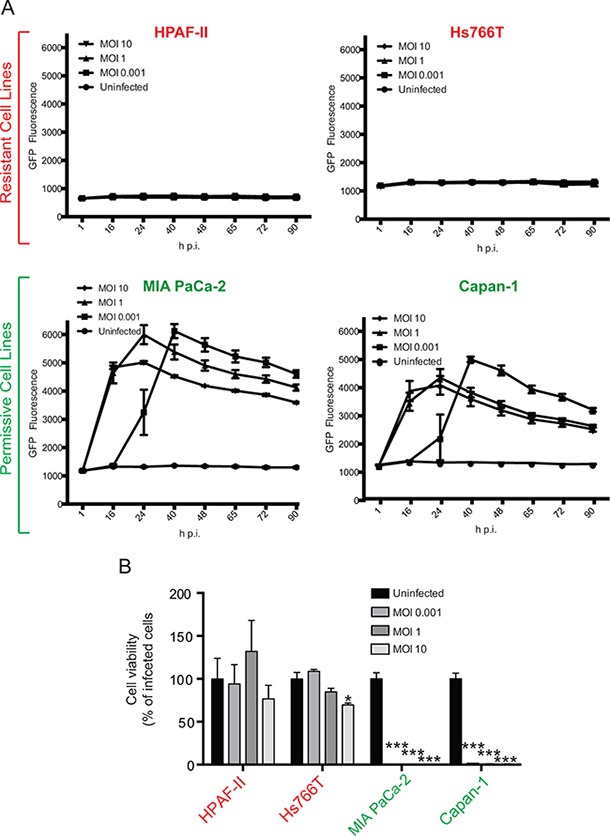
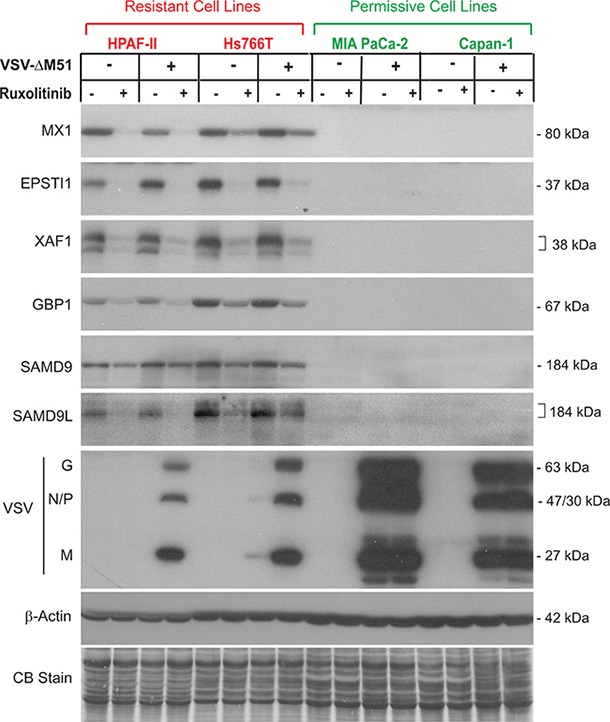
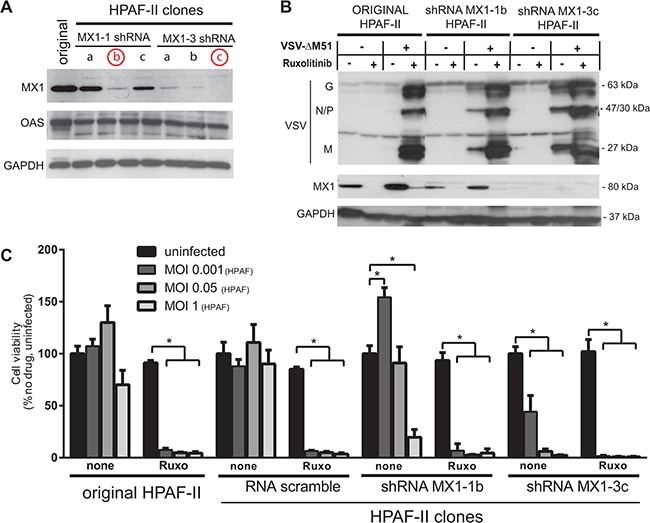
Vesicular stomatitis virus (VSV) based recombinant viruses (such as VSV-ΔM51) are effective oncolytic viruses (OVs) against a majority of pancreatic ductal adenocarcinoma (PDAC) cell lines. However, some PDAC cell lines are highly resistant to VSV-ΔM51. We recently showed that treatment of VSV-resistant PDAC cells with ruxolitinib (JAK1/2 inhibitor) or TPCA-1 (IKK-β inhibitor) breaks their resistance to VSV-ΔM51. Here we compared the global effect of ruxolitinib or TPCA-1 treatment on cellular gene expression in PDAC cell lines highly resistant to VSV-ΔM51. Our study identified a distinct subset of 22 interferon-stimulated genes (ISGs) downregulated by both ruxolitinib and TPCA-1. Further RNA and protein analyses demonstrated that 4 of these genes (MX1, EPSTI1, XAF1, and GBP1) are constitutively co-expressed in VSV-resistant, but not in VSV-permissive PDACs, thus serving as potential biomarkers to predict OV therapy success. Moreover, shRNA-mediated knockdown of one of such ISG, MX1, showed a positive effect on VSV-ΔM51 replication in resistant PDAC cells, suggesting that at least some of the identified ISGs contribute to resistance of PDACs to VSV-ΔM51. As certain oncogene and tumor suppressor gene variants are often associated with increased tropism of OVs to cancer cells, we also analyzed genomic DNA in a set of PDAC cell lines for frequently occurring cancer associated mutations. While no clear correlation was found between such mutations and resistance of PDACs to VSV-ΔM51, the analysis generated valuable genotypic data for future studies.
Keywords: biomarker of resistance; interferon-stimulated gene; oncolytic virus; pancreatic cancer; vesicular stomatitis virus.
Conflict of interest statement
The authors declare no conflicts of interest.
Figures


References
-
- Donina S, Strele I, Proboka G, Auzins J, Alberts P, Jonsson B, Venskus D, Muceniece A. Adapted ECHO-7 virus Rigvir immunotherapy (oncolytic virotherapy) prolongs survival in melanoma patients after surgical excision of the tumour in a retrospective study. Melanoma Res. 2015;25:421–426. - PMC - PubMed
-
- Zhang SX. Turning killer into cure - the story of oncolytic herpes simplex viruses. Discovery Med. 2015;20:303–309. - PubMed
-
- Garber K. China approves world's first oncolytic virus therapy for cancer treatment. J Natl Cancer Inst. 2006;98:298–300. - PubMed
Publication types
MeSH terms
Substances
Grants and funding
LinkOut - more resources
Full Text Sources
Other Literature Sources
Medical
Research Materials
Miscellaneous
