


Upregulations of CRH and CRHR1 in the Epileptogenic Tissues of Patients with Intractable Infantile Spasms
- PMID: 27534449
- PMCID: PMC6492682
- DOI: 10.1111/cns.12598
Upregulations of CRH and CRHR1 in the Epileptogenic Tissues of Patients with Intractable Infantile Spasms
Abstract
Aim: Infantile spasms (IS) are an age-specific epileptic syndrome with specific clinical symptom and electroencephalogram (EEG) features, lacking treatment options, and a poor prognosis. Excessive endogenous corticotropin-releasing hormone (CRH) in infant brain might result in IS. However, the data from human IS are limited. In our study, we investigated the expressions of CRH and its receptor type 1 (CRHR1) in surgical tissues from patients with IS and autopsy controls.
Methods: Specimens surgically removed from 17 patients with IS, and six autopsy controls were included in the study. Real-time PCR, Western blotting, and immunostaining were used to detect the expressions of mRNA, protein expression, and distribution. The correlation between variates was analyzed by Spearman rank correlation.
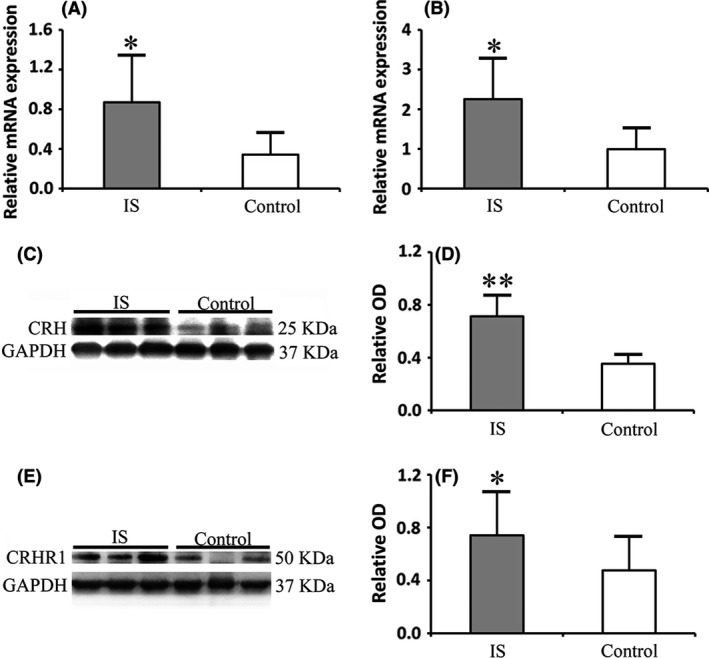
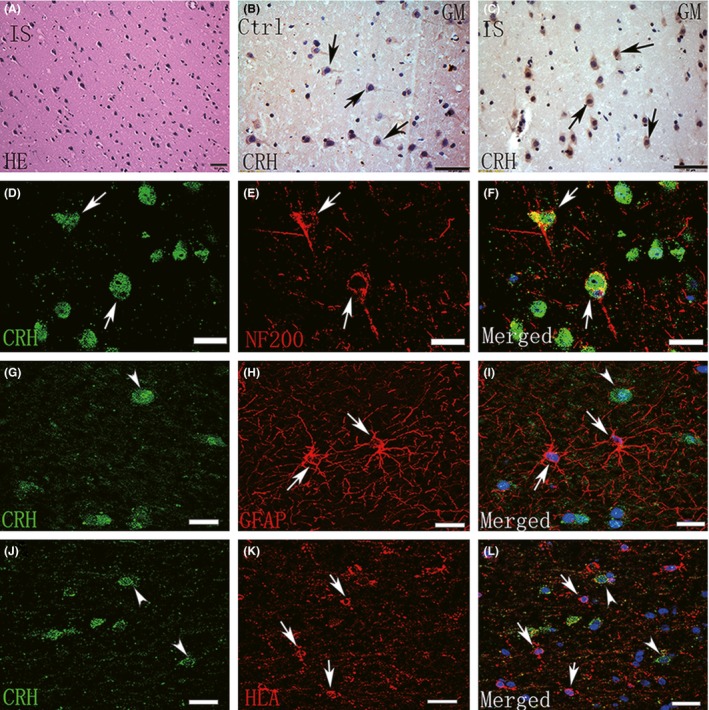
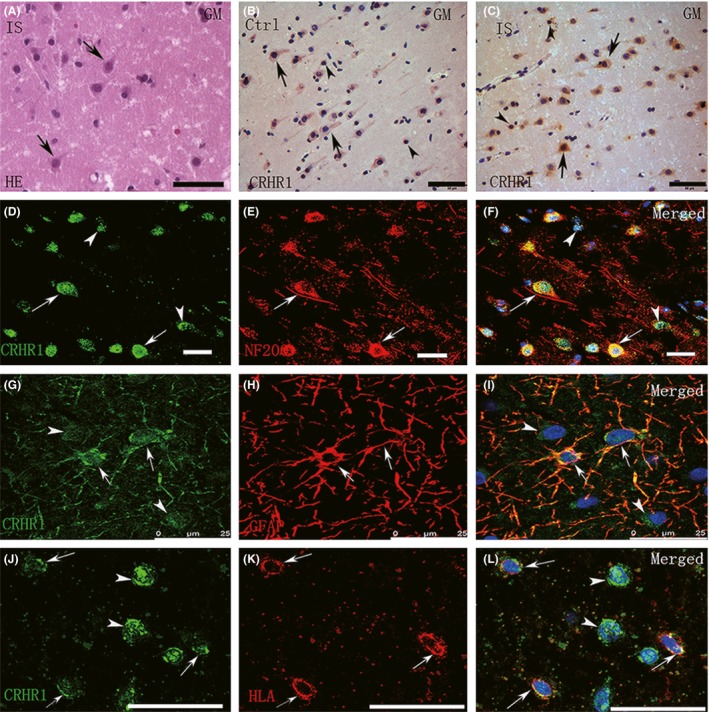
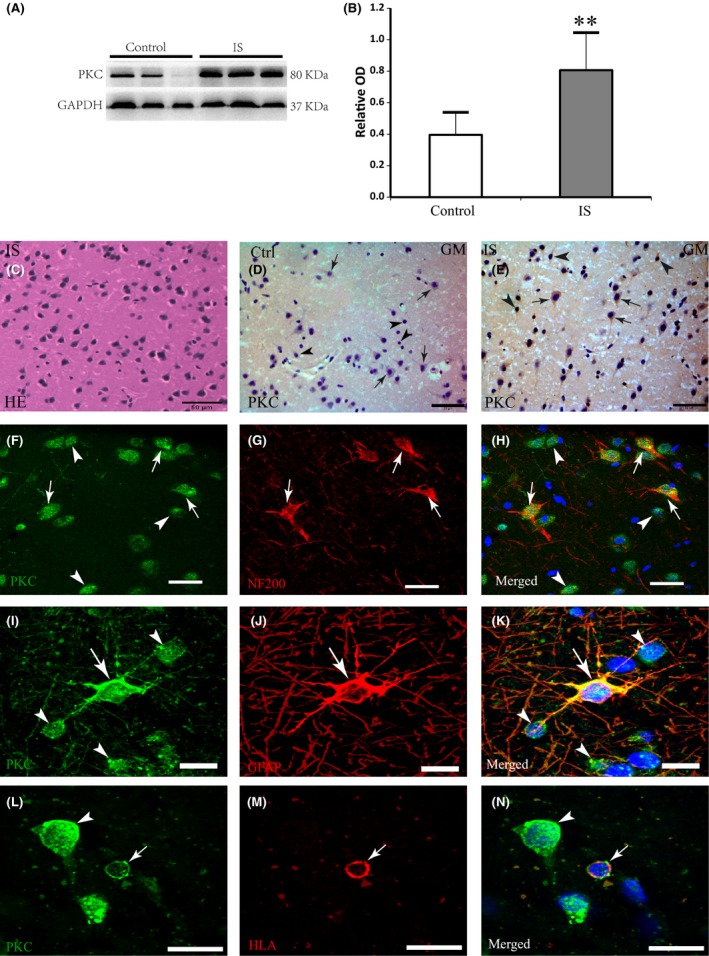
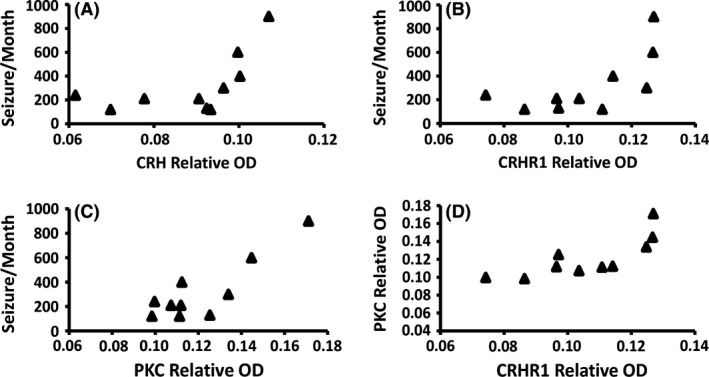
Results: The expressions of CRH and CRHR1 were significantly upregulated in the epileptogenic tissues of IS patients compared with the control group. CRH was distributed mainly in neurons, while CRHR1 was distributed in neurons, astrocytes, and microglia. The expression levels of CRH and CRHR1 were positively correlated with the frequency of epileptic spasms. Moreover, the expression of protein kinase C (PKC), which was an important downstream factor of CRHR1, was significantly upregulated in the epileptogenic tissues of patients with IS and was positively correlated with the CRHR1 expression levels and the frequency of epileptic spasms.
Conclusion: These results suggest that the CRH signal transduction pathway might participate in the epileptogenesis of IS, supporting the hypothesis that CRH is related to the pathogenesis of IS.
Keywords: Corticotrophin-releasing hormone receptor 1 (CRHR1); Corticotropin-releasing hormone (CRH); Infantile spasms (IS); Protein Kinase C (PKC).
© 2016 John Wiley & Sons Ltd.
Conflict of interest statement
The authors declare no conflict of interest.
Figures
References
-
- Sorel L, Dusaucy‐Bauloye A. Findings in 21 cases of Gibbs’ hypsarrhythmia; spectacular effectiveness of ACTH. Acta Neurol Psychiatr Belg 1958;58:130–141. - PubMed
-
- Ehlers CL, Henriksen SJ, Wang M, Rivier J, Vale W, Bloom FE. Corticotropin releasing factor produces increases in brain excitability and convulsive seizures in rats. Brain Res 1983;278:332–336. - PubMed
MeSH terms
Substances
LinkOut - more resources
Full Text Sources
Other Literature Sources
