


Metallaphotoredox-catalysed sp(3)-sp(3) cross-coupling of carboxylic acids with alkyl halides
- PMID: 27535536
- PMCID: PMC5695702
- DOI: 10.1038/nature19056
Metallaphotoredox-catalysed sp(3)-sp(3) cross-coupling of carboxylic acids with alkyl halides
Abstract
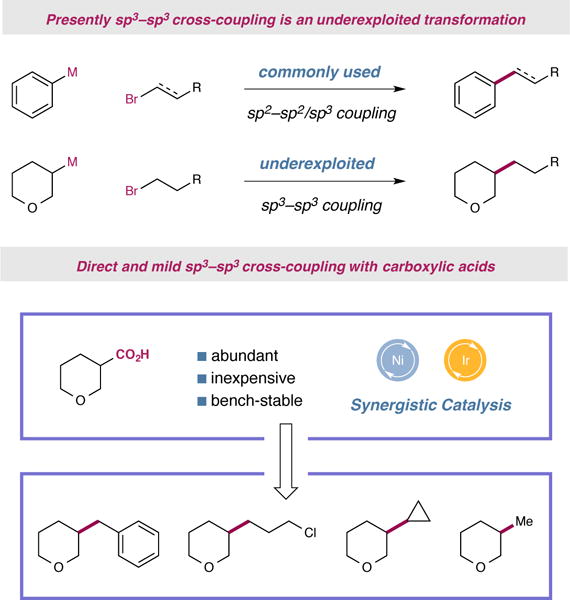
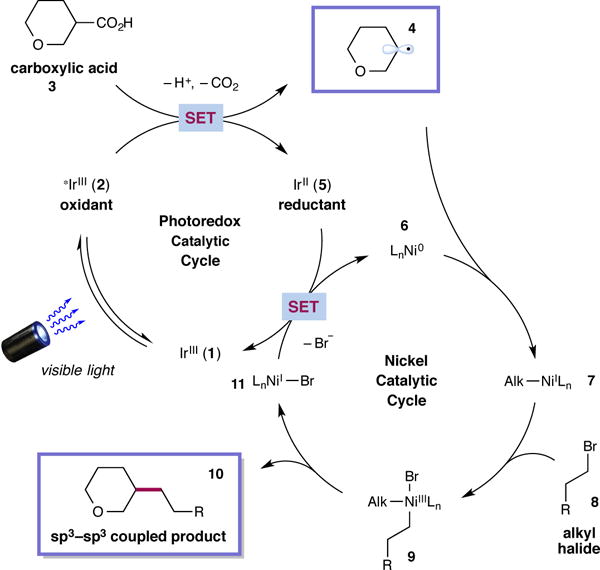
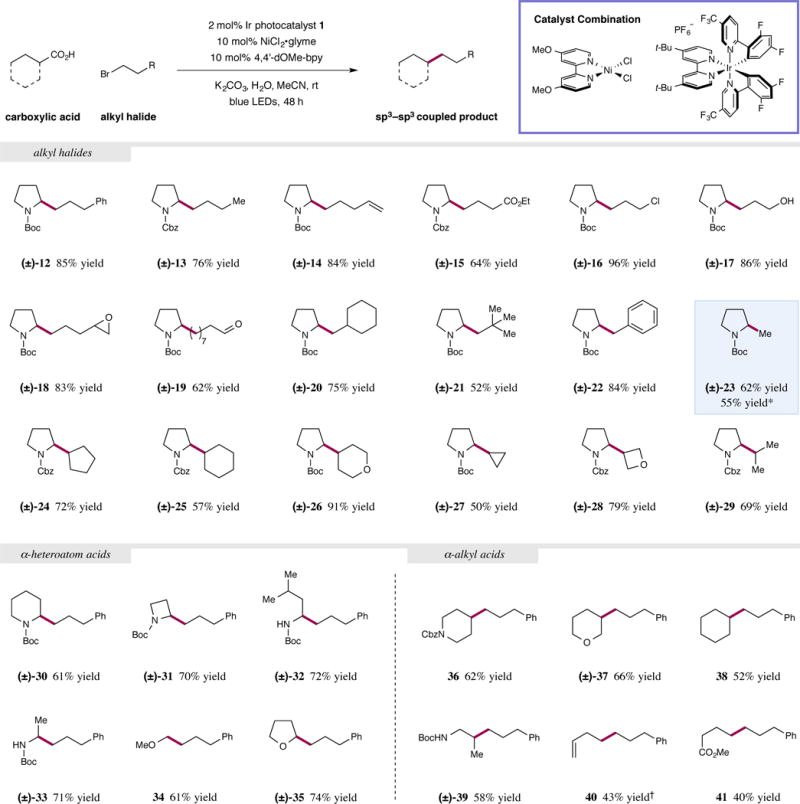
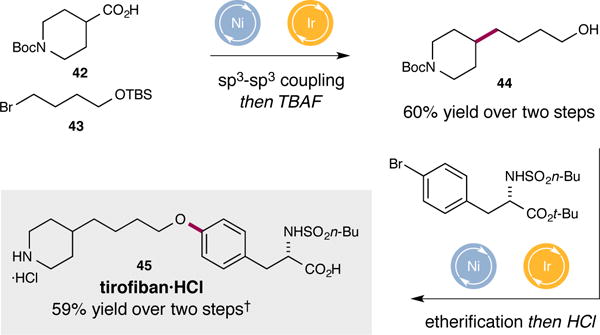
In the past 50 years, cross-coupling reactions mediated by transition metals have changed the way in which complex organic molecules are synthesized. The predictable and chemoselective nature of these transformations has led to their widespread adoption across many areas of chemical research. However, the construction of a bond between two sp(3)-hybridized carbon atoms, a fundamental unit of organic chemistry, remains an important yet elusive objective for engineering cross-coupling reactions. In comparison to related procedures with sp(2)-hybridized species, the development of methods for sp(3)-sp(3) bond formation via transition metal catalysis has been hampered historically by deleterious side-reactions, such as β-hydride elimination with palladium catalysis or the reluctance of alkyl halides to undergo oxidative addition. To address this issue, nickel-catalysed cross-coupling processes can be used to form sp(3)-sp(3) bonds that utilize organometallic nucleophiles and alkyl electrophiles. In particular, the coupling of alkyl halides with pre-generated organozinc, Grignard and organoborane species has been used to furnish diverse molecular structures. However, the manipulations required to produce these activated structures is inefficient, leading to poor step- and atom-economies. Moreover, the operational difficulties associated with making and using these reactive coupling partners, and preserving them through a synthetic sequence, has hindered their widespread adoption. A generically useful sp(3)-sp(3) coupling technology that uses bench-stable, native organic functional groups, without the need for pre-functionalization or substrate derivatization, would therefore be valuable. Here we demonstrate that the synergistic merger of photoredox and nickel catalysis enables the direct formation of sp(3)-sp(3) bonds using only simple carboxylic acids and alkyl halides as the nucleophilic and electrophilic coupling partners, respectively. This metallaphotoredox protocol is suitable for many primary and secondary carboxylic acids. The merit of this coupling strategy is illustrated by the synthesis of the pharmaceutical tirofiban in four steps from commercially available starting materials.
Conflict of interest statement
The authors declare no competing financial interests. Readers are welcome to comment on the online version of this article at
Figures
References
-
- de Meijere A, Diederich F. Metal-catalyzed cross-coupling reactions. Wiley-VCH; 2004.
-
- Geist E, Kirschning A, Schmidt T. sp3-sp3 Coupling reactions in the synthesis of natural products and biologically active molecules. Nat Prod Rep. 2014;31:441. - PubMed
-
- Haas D, Hammann JM, Greiner R, Knochel P. Recent developments in Negishi cross-coupling reactions. ACS Catal. 2016;6:1540–1552.
-
- Phapale VB, Cárdenas DJ. Nickel-catalysed Negishi cross-coupling reactions: scope and mechanisms. Chem Soc Rev. 2009;38:1598. - PubMed
Publication types
MeSH terms
Substances
Grants and funding
LinkOut - more resources
Full Text Sources
Other Literature Sources
Miscellaneous
