


Effects of the Non-Nutritive Sweeteners on Glucose Metabolism and Appetite Regulating Hormones: Systematic Review of Observational Prospective Studies and Clinical Trials
- PMID: 27537496
- PMCID: PMC4990242
- DOI: 10.1371/journal.pone.0161264
Effects of the Non-Nutritive Sweeteners on Glucose Metabolism and Appetite Regulating Hormones: Systematic Review of Observational Prospective Studies and Clinical Trials
Abstract
Background: The effects of non-nutritive sweeteners (NNS) on glucose metabolism and appetite regulating hormones are not clear. There is an ongoing debate concerning NNS use and deleterious changes in metabolism.
Objectives: The aim of this review is to analyze the scientific available evidence regarding the effects of NNS on glucose metabolism and appetite regulating hormones.
Data sources and study eligibility criteria: We identified human observational studies evaluating the relation between NNS consumption and obesity, diabetes, and metabolic syndrome, in addition to clinical trials evaluating the effects of NNS in glucose metabolism and appetite regulating hormones.
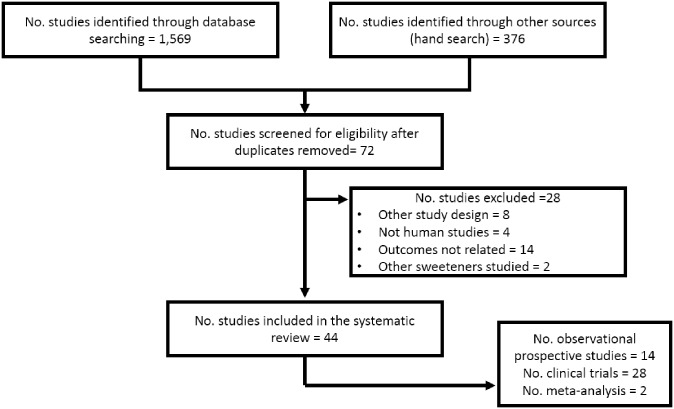
Results: Fourteen observational studies evaluating the association between NNS consumption and the development of metabolic diseases and twenty-eight clinical trials studying the effects of NNS on metabolism were included. Finally, two meta-analyses evaluating the association between the consumption of NNS-containing beverages and the development of type 2 diabetes were identified.
Conclusions: Some observational studies suggest an association between NNS consumption and development of metabolic diseases; however, adiposity is a confounder frequently found in observational studies. The effects of the NNS on glucose metabolism are not clear. The results of the identified clinical trials are contradictory and are not comparable because of the major existing differences between them. Studies evaluating specific NNS, with an adequate sample size, including a homogeneous study group, identifying significant comorbidities, with an appropriate control group, with an appropriate exposure time, and considering adjustment for confounder variables such as adiposity are needed.
Conflict of interest statement
Figures
References
-
- Food U.S. and Drug Administration. Additional Information about High-Intensity Sweeteners Permitted for use in Food in the United States 2015 [updated 05/25/2015; cited 2016 02/01/2016]. Available: http://www.fda.gov/food/ingredientspackaginglabeling/foodadditivesingred....
-
- European Food Safety Authority [Internet]. Sweetners [cited 2016 Feb 01]. Available: http://www.efsa.europa.eu/en/topics/topic/sweeteners.
Publication types
MeSH terms
Substances
LinkOut - more resources
Full Text Sources
Other Literature Sources
Medical
