


Is age a prognostic biomarker for survival among women with locally advanced cervical cancer treated with chemoradiation? An NRG Oncology/Gynecologic Oncology Group ancillary data analysis
- PMID: 27542967
- PMCID: PMC5693242
- DOI: 10.1016/j.ygyno.2016.08.317
Is age a prognostic biomarker for survival among women with locally advanced cervical cancer treated with chemoradiation? An NRG Oncology/Gynecologic Oncology Group ancillary data analysis
Abstract
Objective: To determine the effect of age on completion of and toxicities following treatment of local regionally advanced cervical cancer (LACC) on Gynecologic Oncology Group (GOG) Phase I-III trials.
Methods: An ancillary data analysis of GOG protocols 113, 120, 165, 219 data was performed. Wilcoxon, Pearson, and Kruskal-Wallis tests were used for univariate and multivariate analysis. Log rank tests were used to compare survival lengths.
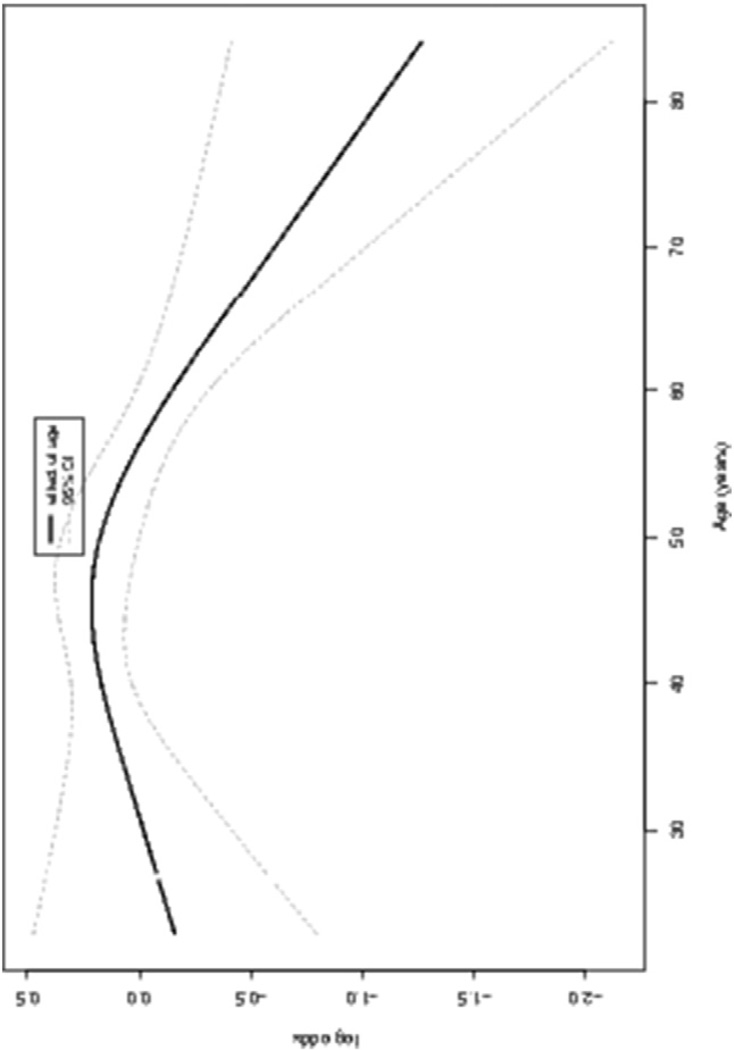
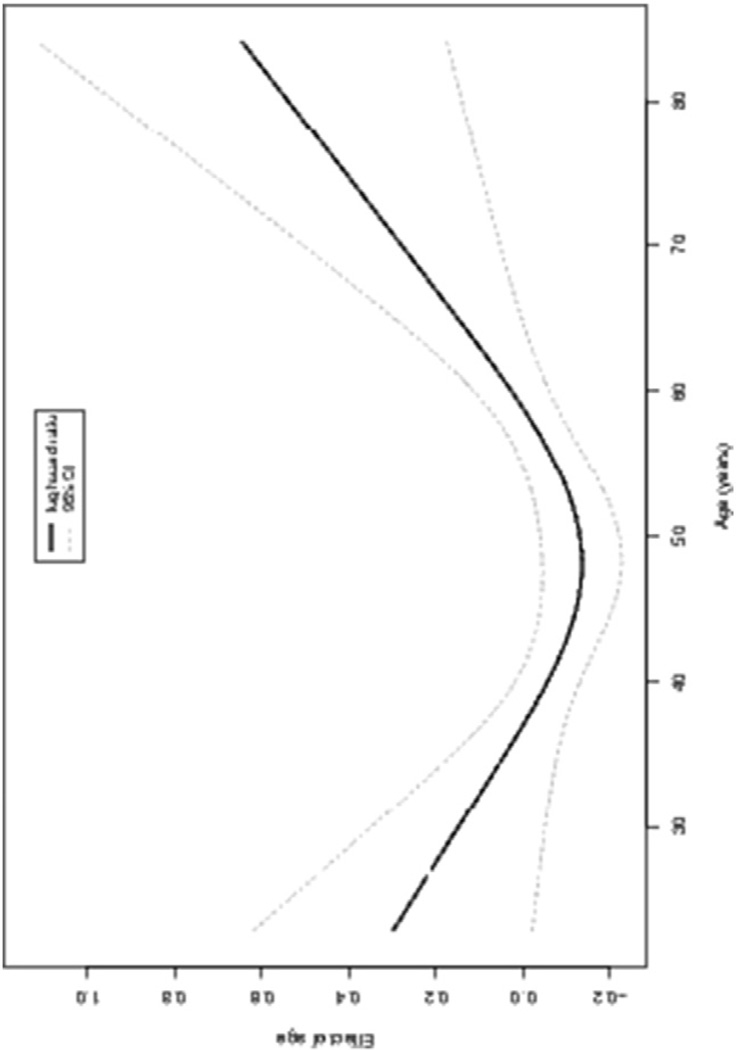
Results: One-thousand-three-hundred-nineteen women were included; 60.7% were Caucasian, 15% were age 60-70years and an additional 5% were >70; 87% had squamous histology, 55% had stage IIB disease and 34% had IIIB disease. Performance status declined with age (p=0.006). Histology and tumor stage did not significantly differ. Number of cycles of chemotherapy received, radiation treatment time, nor dose modifications varied with age. Notably, radiation protocol deviations and failure to complete brachytherapy (BT) did increase with age (p=0.022 and p<0.001 respectively). Only all grade lymphatic (p=0.006) and grade≥3 cardiovascular toxicities (p=0.019) were found to vary with age. A 2% increase in the risk of death for every year increase >50 for all-cause mortality (HR 1.02; 95% CI, 1.01-1.04) was found, but no association between age and disease specific mortality was found.
Conclusion: This represents a large analysis of patients treated for LACC with chemo/radiation, approximately 20% of whom were >60years of age. Older patients, had higher rates of incomplete brachytherapy which is not explained by collected toxicity data. Age did not adversely impact completion of chemotherapy and radiation or toxicities.
Keywords: Biomarkers; Cervical cancer; Chemoradiation.
Copyright © 2016. Published by Elsevier Inc.
Conflict of interest statement
Dr. Kathleen Moore has consultancy positions with Astra Zeneca, Clovis, Genentech/Roche, Immunogen, and Merrimack. She also receives payment for development of educational presentations from Genentech.
Dr. Junzo Chino has a Board Membership at NanoScint, Inc. He also has Grants/grant pending, as well as payment for lectures including service on speakers’ bureaus with Varian Medical Systems. He also has patents (planned, pending or issued) and stock/stock options with NanoScint, Inc.
Dr. David Miller receives grant monies from the Gynecologic Oncology Group.
Dr. David Moore receives payment for lectures including service on speakers’ bureaus from AstraZeneca.
Dr. Frederick Stehman receives grant monies from NCI/NIH and Gynecologic Oncology Group.
All other co-authors have no conflicts to declare.
Figures
Comment in
-
Defining Prognostic Biomarkers and Optimal Adjuvant Treatment for Gynecologic Cancer.Int J Radiat Oncol Biol Phys. 2017 May 1;98(1):1-4. doi: 10.1016/j.ijrobp.2017.01.014. Int J Radiat Oncol Biol Phys. 2017. PMID: 28586944 No abstract available.
References
-
- U.S. Census Bureau, C.R.N. 2012 from http://www.aoa.gov/AoARoot/Aging_Statis-tics/Census_Population/census201....
-
- A.C. Socity, American Cancer Society. Atlanta: Cancer Facts & Figures; 2016.
-
- Apostolides AD, Apostolides IK. The US Cancer Program and specific types of cancer, 1975–2007. A Failure. Townsend Lett. 2011
-
- Kunos C, et al. Retrospective analysis of concomitant Cisplatin during radiation in patients aged 55 years or older for treatment of advanced cervical cancer: a gynecologic oncology group study. Int. J. Gynecol. Cancer. 2009;19(7):1258–1263. - PubMed
-
- Landoni F, et al. Randomised study of radical surgery versus radiotherapy for stage Ib-IIa cervical cancer. Lancet. 1997;350(9077):535–540. - PubMed
MeSH terms
Substances
Grants and funding
LinkOut - more resources
Full Text Sources
Other Literature Sources
Medical
