. 2016 Oct 15;52(76):11318-34.
doi: 10.1039/c6cc04640a. Epub 2016 Aug 22.

Molecular tweezers for lysine and arginine - powerful inhibitors of pathologic protein aggregation

Affiliations

Molecular tweezers for lysine and arginine - powerful inhibitors of pathologic protein aggregation

Thomas Schrader et al. Chem Commun (Camb). .

Abstract

Molecular tweezers represent the first class of artificial receptor molecules that have made the way from a supramolecular host to a drug candidate with promising results in animal tests. Due to their unique structure, only lysine and arginine are well complexed with exquisite selectivity by a threading mechanism, which unites electrostatic, hydrophobic and dispersive attraction. However, tweezer design must avoid self-dimerization, self-inclusion and external guest binding. Moderate affinities of molecular tweezers towards sterically well accessible basic amino acids with fast on and off rates protect normal proteins from potential interference with their biological function. However, the early stages of abnormal Aβ, α-synuclein, and TTR assembly are redirected upon tweezer binding towards the generation of amorphous non-toxic materials that can be degraded by the intracellular and extracellular clearance mechanisms. Thus, specific host-guest chemistry between aggregation-prone proteins and lysine/arginine binders rescues cell viability and restores animal health in models of AD, PD, and TTR amyloidosis.


Figures
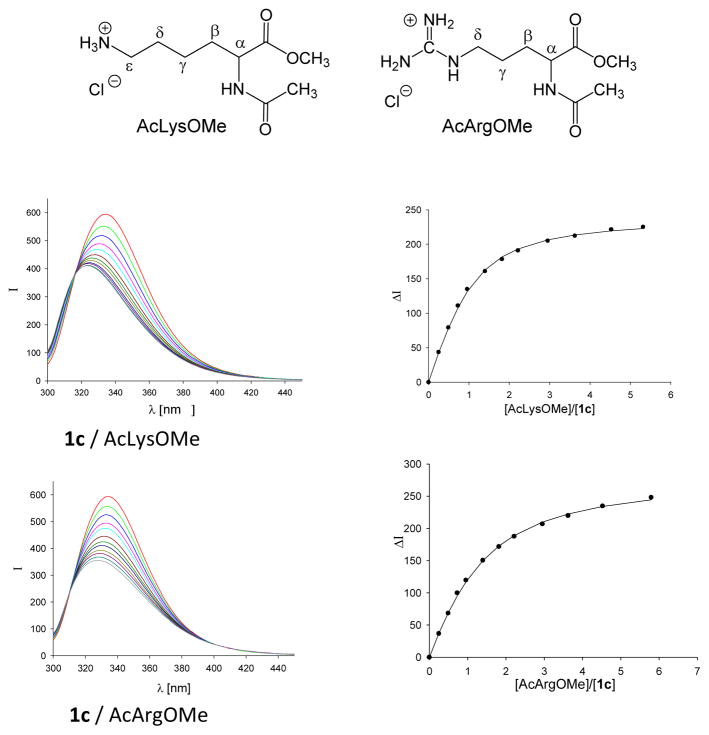
Figure 1
Figure 1
Dependence of the emission bands at λem = 336 nm of phosphate tweezer 1cexc = 285 nm) on the concentration [AcLysOMe] or [AcArgOMe] in aqueous phosphate buffer (10 mM, pH = 7.6). Reprinted with permission from J. Org. Chem. 2013, 78, 6721–6734. Copyright 2016 American Chemical Society.
Figure 2
Figure 2
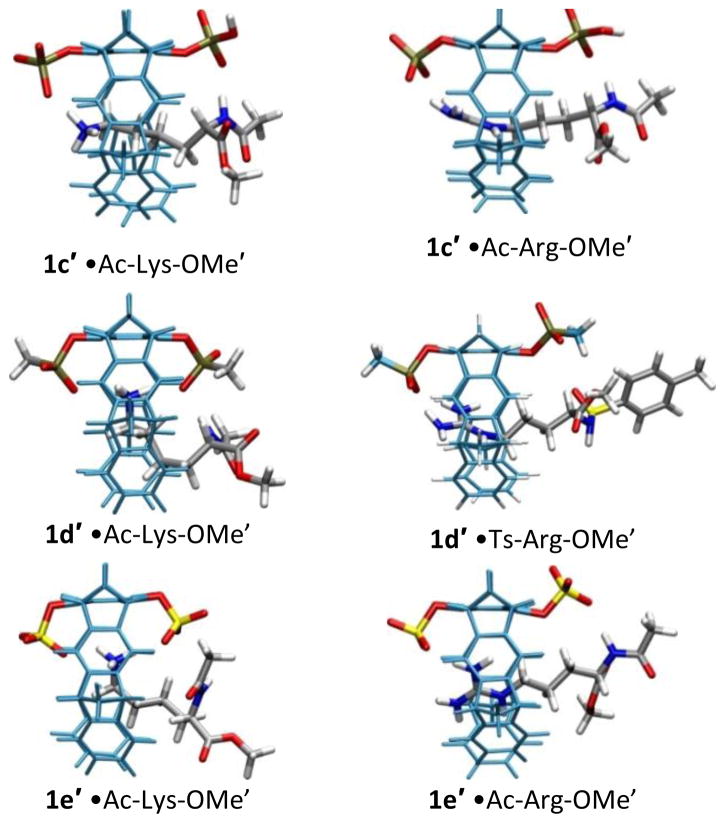
Host-guest complex structures of the phosphate, phosphonate, and sulfate tweezers 1c′, 1d′ and 1e′ with lysine and arginine derivatives, optimized by QM/MM calculations without counter-ions. Each structure contains a 60Å water layer (not shown). Reprinted with permission from J. Org. Chem. 2013, 78, 6721–6734. Copyright 2016 American Chemical Society.
Figure 3
Figure 3
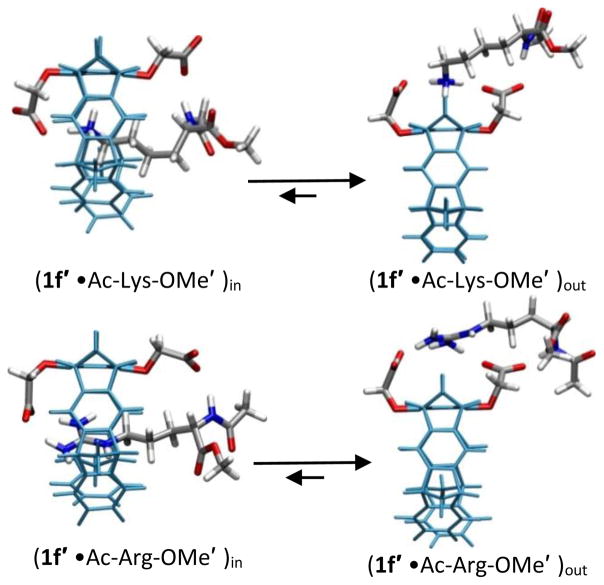
Host-guest complex structures of OCH2CO2-substituted tweezer 1f′ with lysine and arginine derivatives optimized by QM/MM calculations without counter-ions. Each structure contains a 60Å water layer (not shown). Reprinted with permission from J. Org. Chem. 2013, 78, 6721–6734. Copyright 2016 American Chemical Society.
Figure 4
Figure 4
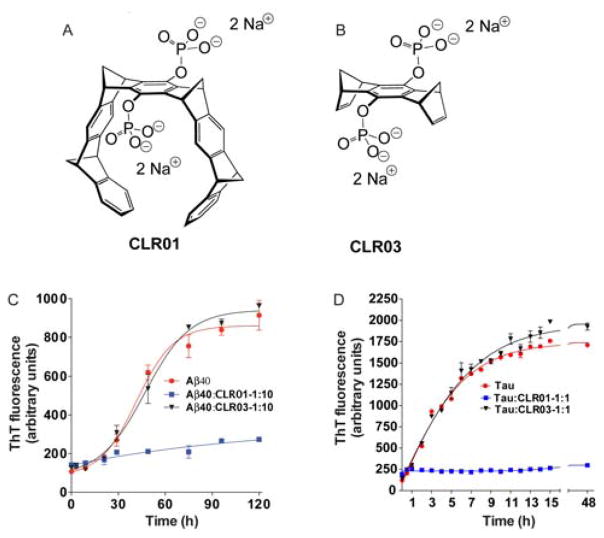
The active compound, CLR01 versus the negative control, CLR03. A) Structure of tweezer 1c ≡ CLR01. B) Structure of bridge CLR03 (each compound contains two disodium phosphate groups). C, D) The effect of CLR01 and CLR03 on β-sheet formation by (C) Aβ40 or (D) the embryonic isoform of tau was assessed by measuring Thioflavin T fluorescence. Reprinted with permission from J. Am. Chem. Soc., 2011, 133, 16958–16969. Copyright 2011 American Chemical Society.
Figure 5
Figure 5
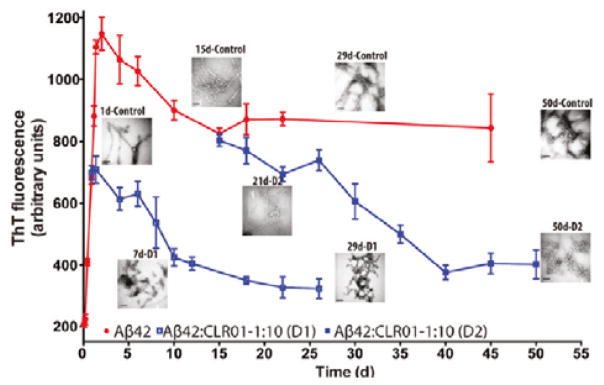
CLR01 disaggregates Aβ fibrils. Disaggregation of preformed Aβ42 fibrils by CLR01 was studied by adding a 10-fold excess of CLR01 to aggregating solutions of 10 μM Aβ42 at 21 h (disaggregation reaction D1) or 15 days (D2) after initiation of aggregation. The reactions were monitored using ThT fluorescence and TEM. Reprinted with permission from J. Am. Chem. Soc., 2011, 133, 16958–16969. Copyright 2011 American Chemical Society.
Figure 6
Figure 6
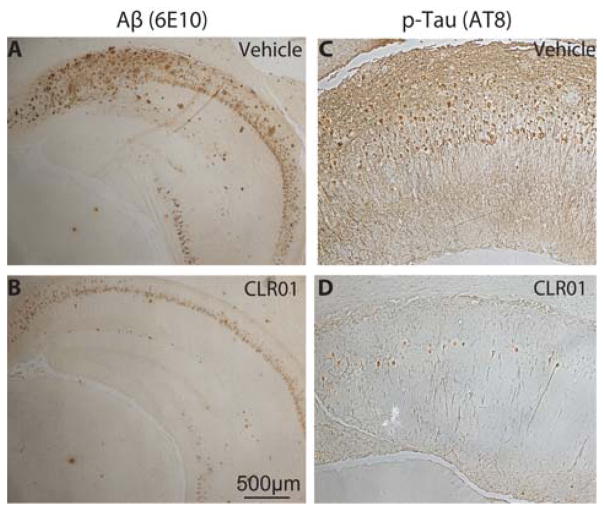
CLR01 decreases amyloid-β protein and p-tau deposition. Triple-transgenic mice were treated with 0.04 mg/kg per day CLR01 or vehicle. A, C) Vehicle-treated transgenic mouse hippocampus. B, D) CLR01-treated transgenic mouse hippocampus. A, B) transgenic mouse brain stained with mAb 6E10 showing amyloid plaque deposition. C, D) transgenic mouse brain showing AT8-positive neurofibrillary tangles in the CA1 region. Reprinted with permission from Brain 2012, 135, 3735–3748. Copyright 2012 Oxford Journals.
Figure 7
Figure 7
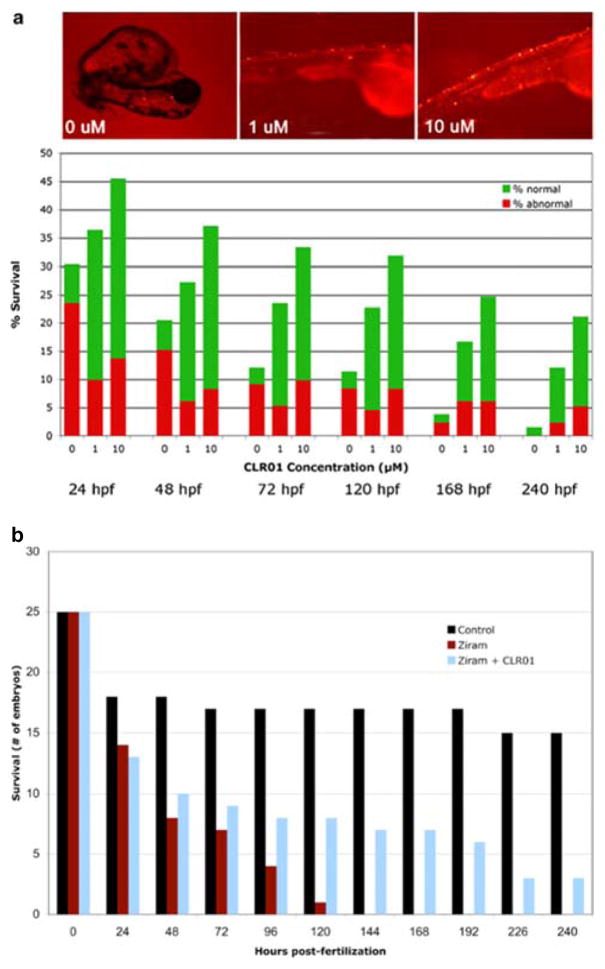
CLR01 ameliorates α-synuclein (α-syn) neurotoxicity in zebrafish (ZF) and protects against Ziram toxicity. (a) ZF embryos expressing human, wild-type α-synuclein were treated with CLR01 at 8 hpf (hours post fertilization) and were monitored for abnormal appearance and survival. Bright-field and fluorescent overlay images were taken at 72 hpf (Figure 7A, top). Green bars represent normal-appearing embryos and red bars represent abnormal embryos (Figure 7A, bottom). Reprinted with Permission from Neurotherapeutics 2012, 9, 464–476. Copyright 2012 Springer. (b) ZF embryos were treated with 1 μM Ziram in the absence or presence of 10 μM CLR01 and survival was monitored up to 10 days (S. Prabhudesai and J. M. Bronstein, personal communication).
Figure 8
Figure 8
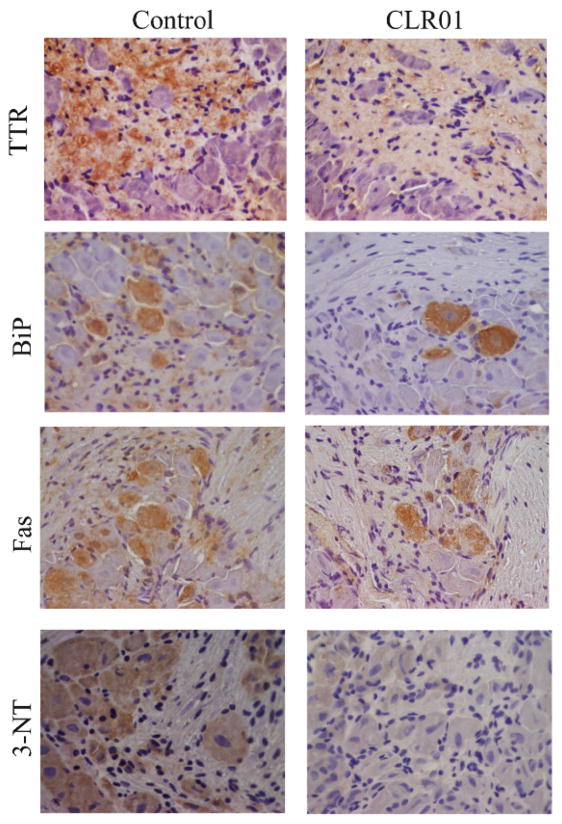
CLR01 decreases TTR burden and associated toxicity in the dorsal root ganglia (DRG) of hTTR V30M/HSF mice. Representative immunohistochemistry analysis of TTR, binding immunoglobulin protein (BiP), Fas, and 3-nitrotyrosine in DRG of mice treated with CLR01 (right panels; n=14) and age-matched controls (left panels; n=12); 20× magnification. Reprinted with Permission from Neurotherapeutics 2014, 11, 450–461. Copyright 2014 Springer.
Figure 9
Figure 9
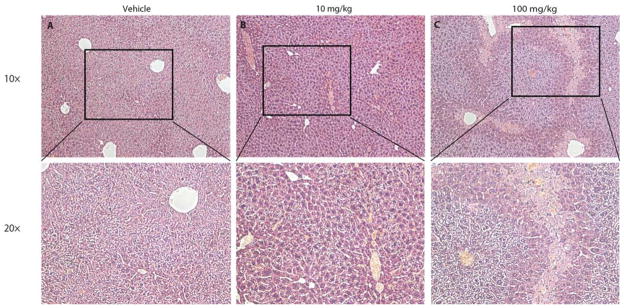
Liver histopatholologic analysis of mice 24 h following a single intraperitoneal injection of CLR01. Hepatocytes from A) vehicle-treated, and B) 10-mg/kg-treated mice show moderate amounts of glycogen vacuolation. C) Zone-1 hepatocytes from 100-mg/kg-treated mice show glycogen vacuolation. Zone-2 hepatocytes are normal sized. Zone-3 hepatocytes are pale with granular eosinophilic cytoplasm and some nuclei show pyknosis. Reprinted with permission from BMC Pharmacol. Toxicol. 2014, 15, 23. Copyright 2014 BioMed Central.
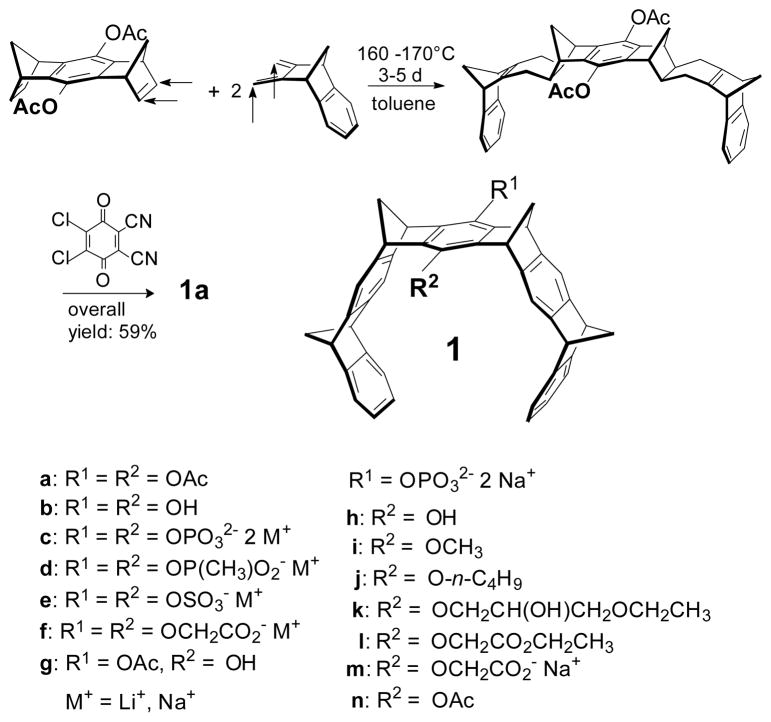
Scheme 1
Scheme 1
Synthesis of molecular tweezers of type 1

References

    1. Chen CW, Whitlock HW. J Am Chem Soc. 1978;100:4921–4922.
    1. Zimmerman SC, Vanzyl CM. J Am Chem Soc. 1987;109:7894–7896.
    1. Fleischhauer J, Harmata M, Kahraman M, Koslowski A, Welch CJ. Tetrahedron Lett. 1997;38:8655–8658.
    1. Hof F, Craig SL, Nuckolls C, Rebek J., Jr Angew Chem Int Ed Engl. 2002;41:1488–1508. - PubMed
    1. Rowan AE, Elemans JAAW, Nolte RJM. Acc Chem Res. 1999;32:995–1006.

MeSH terms