. 2016 Jul 26:4:e2261.
doi: 10.7717/peerj.2261. eCollection 2016.

Phage on tap-a quick and efficient protocol for the preparation of bacteriophage laboratory stocks

Affiliations

Phage on tap-a quick and efficient protocol for the preparation of bacteriophage laboratory stocks

Natasha Bonilla et al. PeerJ. .

Abstract

A major limitation with traditional phage preparations is the variability in titer, salts, and bacterial contaminants between successive propagations. Here we introduce the Phage On Tap (PoT) protocol for the quick and efficient preparation of homogenous bacteriophage (phage) stocks. This method produces homogenous, laboratory-scale, high titer (up to 10(10-11) PFU·ml(-1)), endotoxin reduced phage banks that can be used to eliminate the variability between phage propagations and improve the molecular characterizations of phage. The method consists of five major parts, including phage propagation, phage clean up by 0.22 μm filtering and chloroform treatment, phage concentration by ultrafiltration, endotoxin removal, and the preparation and storage of phage banks for continuous laboratory use. From a starting liquid lysate of > 100 mL, the PoT protocol generated a clean, homogenous, laboratory phage bank with a phage recovery efficiency of 85% within just two days. In contrast, the traditional method took upwards of five days to produce a high titer, but lower volume phage stock with a recovery efficiency of only 4%. Phage banks can be further purified for the removal of bacterial endotoxins, reducing endotoxin concentrations by over 3,000-fold while maintaining phage titer. The PoT protocol focused on T-like phages, but is broadly applicable to a variety of phages that can be propagated to sufficient titer, producing homogenous, high titer phage banks that are applicable for molecular and cellular assays.

Keywords: Bacteriophage; Cesium chloride; Dialysis; Endotoxin; Phage bank; Speed vacuum; Top agar; Ultrafiltration.


Conflict of interest statement

The authors declare that they have no competing interests.

Figures
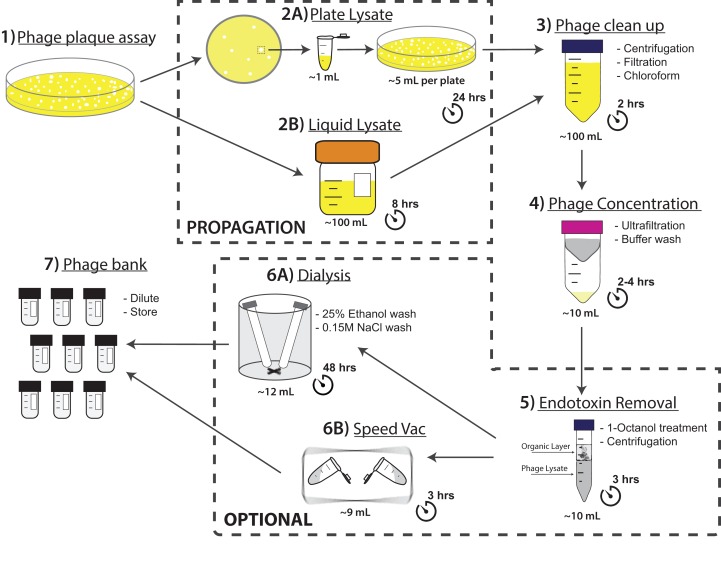
Figure 1
Figure 1. Flow chart of the PoT protocol for the production of high titer, homogenous, endotoxin reduced phage banks within two days.
Phage titers (PFU·ml−1) and volumes (mL) were recorded after each step. Endotoxin removal is adapted from Szermer-Olearnik & Boratyński (2015).
Figure 2
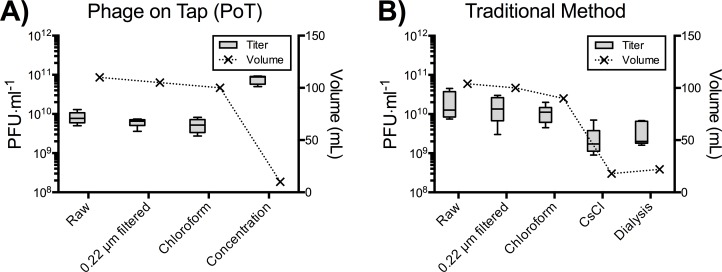
Figure 2. A comparison between the PoT protocol and traditional method for the purification and concentration of laboratory phage stocks.
(A) The PoT protocol generated a 10 mL phage stock (7.7 × 10¹⁰ PFU·ml−1) with a phage recovery efficiency of 85% within two days. (B) The traditional method generated a 22 mL phage lysate (3.7 × 10⁹ PFU·ml−1) with a phage recovery efficiency of 4% in five days.
Figure 3
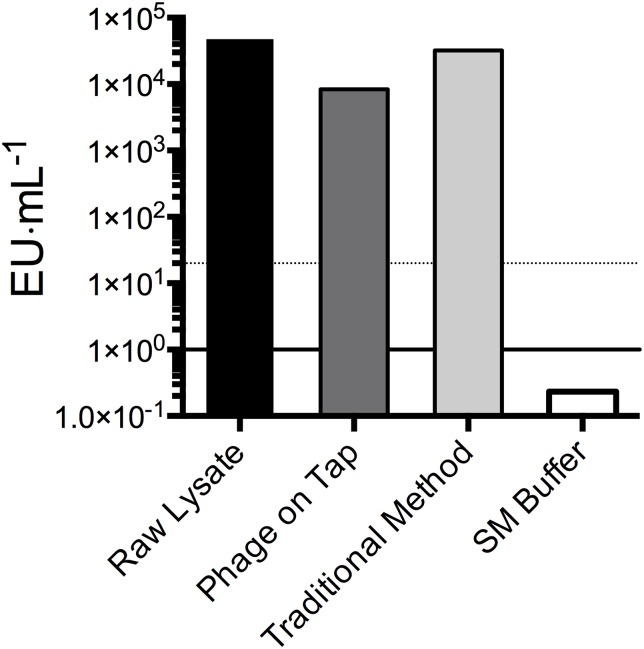
Figure 3. Endotoxin concentration (EU·ml−1) of phage preparations as measured by the Pierce™ LAL Chromogenic Endotoxin Quantitation Kit.
Raw lysates had starting endotoxin concentration of 4.7 × 10⁴ EU·ml−1. The PoT protocol and traditional method reduced endotoxin concentrations to 8.3 × 10³ and 3.2 × 10⁴ EU·ml−1, respectively. Filter-sterilized SM buffer (0.2 EU·ml−1) is shown as a negative control, dotted line represent the desired 20 EU·ml−1 cut off. Endotoxin concentration data shown are averages of triplicates from a single experiment.
Figure 4
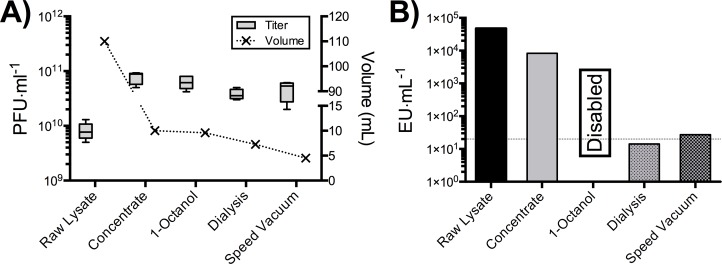
Figure 4. PoT protocol processed for the removal of bacterial endotoxins by 1-Octanol and solvent removal by dialysis and speed vacuum.
(A) The PoT protocol processed for endotoxin removal by the dialysis and speed vacuum methods generated a 7.2 mL (3.8 × 10¹⁰ PFU·ml−1) and 4.2 mL (4.7 × 10¹⁰ PFU·ml−1) phage banks, respectively. (B) Endotoxin concentrations of dialysis (14 EU·ml−1) and speed vacuum (27 EU·ml−1) processed PoT phage banks. Quantification of 1-Octanol treated concentrate was not possible due to residual solvent disabling the LAL quantification test, dotted line represent the desired 20 EU·ml−1 cut off.
Figure 5
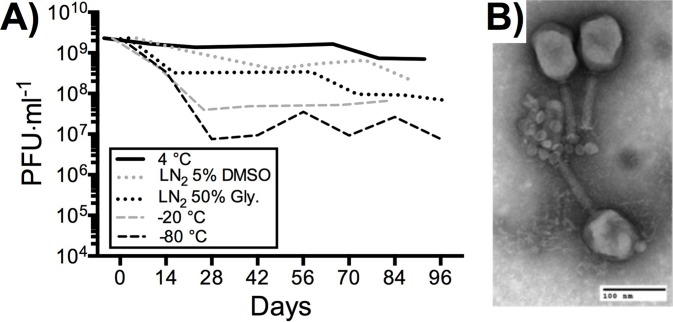
Figure 5. Stability of T4 phage processed through PoT under high-use laboratory conditions.
(A) The mean titer of T4 phage stored at 4 °C in SM buffer, liquid nitrogen (LN2) in 5% (v/v) DMSO, LN2 in 50% (v/v) glycerol, −20 °C in 50% glycerol and −80 °C in 50% glycerol. Phage stocks were tittered in duplicate under high-use conditions (full titers Fig. S4). (B) Negative stain transmission electron micrograph of T4 phage processed through the PoT protocol (scale bar = 100 nm).
Figure 6
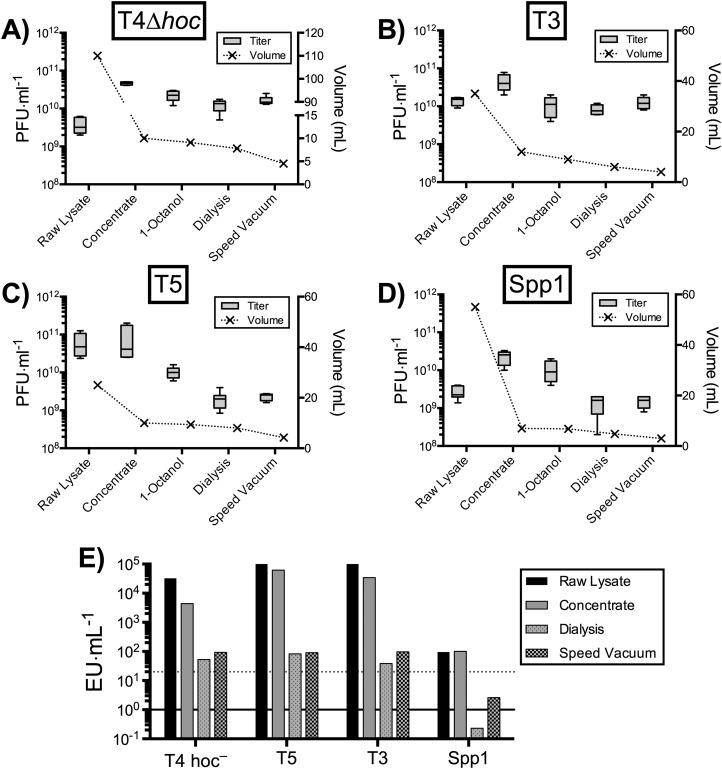
Figure 6. Applicability of PoT for the generation of high-titer, homogenous, endotoxin reduced phage banks from diverse phages.
(A) T4Δhoc phage that infects E. coli bacterial host propagated by liquid lysate (2.2 × 10¹⁰ PFU·ml−1). (B) T3 phage that infects E. coli bacterial host propagated by plate lysate (1.1 × 10¹⁰ PFU·ml−1). (C) T5 phage that infects E. coli bacterial host propagated by plate lysate (2 × 10⁹ PFU·ml−1). (D) Spp1 phage that infects B. subtilis Gram-positive bacterial host propagated by plate lysate (1.5 × 10⁹ PFU·ml−1). (E) Endotoxin concentrations of raw lysates, PoT concentrate, dialysis and speed vacuum treated phage banks, dotted line represent the desired 20 EU·ml−1 cut off. Overall, a decrease in volume (ml) of the lysates was observed after each step of the procedure.

References

    1. Abedon ST, Kuhl SJ, Blasdel BG, Kutter EM. Phage treatment of human infections. Bacteriophage. 2011;1(2):66–85. doi: 10.4161/bact.1.2.15845. - DOI - PMC - PubMed
    1. Ackermann H-W, Tremblay D, Moineau S. Long-term bacteriophage preservation. WFCC Newsletter. 2004;38:35–40.
    1. Adams MH. Bacteriophages. New York: Interscience; 1959.
    1. Alexander C, Rietschel ET. Invited review: bacterial lipopolysaccharides and innate immunity. Journal of Endotoxin Research. 2001;7(3):167–202. doi: 10.1177/09680519010070030101. - DOI - PubMed
    1. Barr JJ, Auro R, Furlan M, Whiteson KL, Erb ML, Pogliano J, Stotland A, Wolkowicz R, Cutting AS, Doran KS, Salamon P, Youle M, Rohwer F. Bacteriophage adhering to mucus provide a non-host-derived immunity. Proceedings of the National Academy of Sciences of the United States of America. 2013;110(26):10771–10776. doi: 10.1073/pnas.1305923110. - DOI - PMC - PubMed