


Cardiovascular Risk and Disease Among Masters Endurance Athletes: Insights from the Boston MASTER (Masters Athletes Survey To Evaluate Risk) Initiative
- PMID: 27547715
- PMCID: PMC4978752
- DOI: 10.1186/s40798-016-0053-0
Cardiovascular Risk and Disease Among Masters Endurance Athletes: Insights from the Boston MASTER (Masters Athletes Survey To Evaluate Risk) Initiative
Abstract
Background: Masters athletes (MAs), people over the age of 35 that participate in competitive sports, are a rapidly growing population that may be uniquely at risk for cardiovascular (CV) disease. The objective of this study was to develop a comprehensive clinical CV profile of MA.
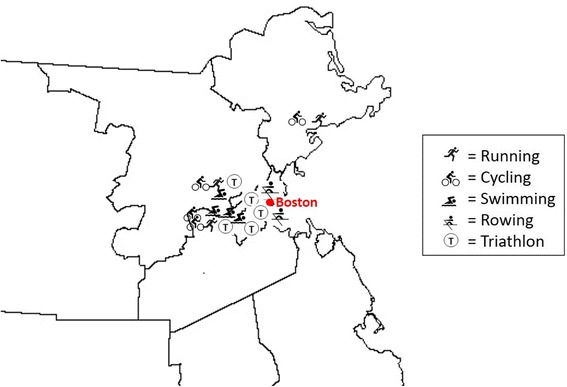
Methods: An electronic Internet-based survey (survey response rate = 66 %) was used to characterize a community cohort of MAs residing in Eastern Massachusetts, USA. Clinical and lifestyle factors associated with prevalent CV disease were determined using logistic regression.
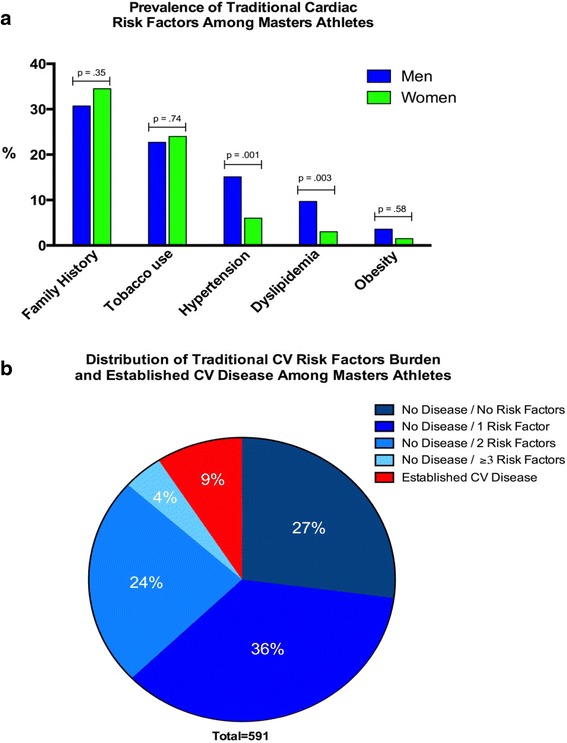
Results: Among 591 MAs (66 % men, age = 50 ± 9 years) with 21.3 ± 5.5 years of competitive endurance sport exposure, at least one CV risk factor was present in 64 % including the following: family history of premature atherosclerosis (32 %), prior/current tobacco exposure (23 %), hypertension (12.0 %), and dyslipidemia (7.4 %). There was a 9 % (54/591) prevalence of established CV disease which was accounted for largely by atrial fibrillation (AF) and coronary atherosclerosis (CAD). Prevalent AF was associated with years of exercise exposure [adjusted odds ratio, OR (95 % confidence intervals); OR = 1.10 (1.06, 1.21)] and hypertension [OR = 1.05 (1.01, 1.10)] while CAD was associated with dyslipidemia [OR = 9.09 (2.40, 34.39)] and tobacco use [OR = 1.78 (1.34, 3.10)] but was independent of exercise exposure.
Conclusions: Among MAs, AF is associated with prior exercise exposure whereas CAD is associated with typical risk factors including dyslipidemia and prior tobacco use. These findings suggest that there are numerous opportunities to improve disease prevention and clinical care in this population.
Keywords: Cardiovascular risk factors; Exercise; Masters athlete; Sports cardiology.
Figures
References
-
- Maron BJ, Araujo CG, Thompson PD, Fletcher GF, de Luna AB, Fleg JL, et al. Recommendations for preparticipation screening and the assessment of cardiovascular disease in masters athletes: an advisory for healthcare professionals from the working groups of the World Heart Federation, the International Federation of Sports Medicine, and the American Heart Association Committee on Exercise, Cardiac Rehabilitation, and Prevention. Circulation. 2001;103(2):327–34. doi: 10.1161/01.CIR.103.2.327. - DOI - PubMed
Grants and funding
LinkOut - more resources
Full Text Sources
Other Literature Sources
Miscellaneous
