


Genetic Analysis with the Immunochip Platform in Behçet Disease. Identification of Residues Associated in the HLA Class I Region and New Susceptibility Loci
- PMID: 27548383
- PMCID: PMC4993481
- DOI: 10.1371/journal.pone.0161305
Genetic Analysis with the Immunochip Platform in Behçet Disease. Identification of Residues Associated in the HLA Class I Region and New Susceptibility Loci
Abstract
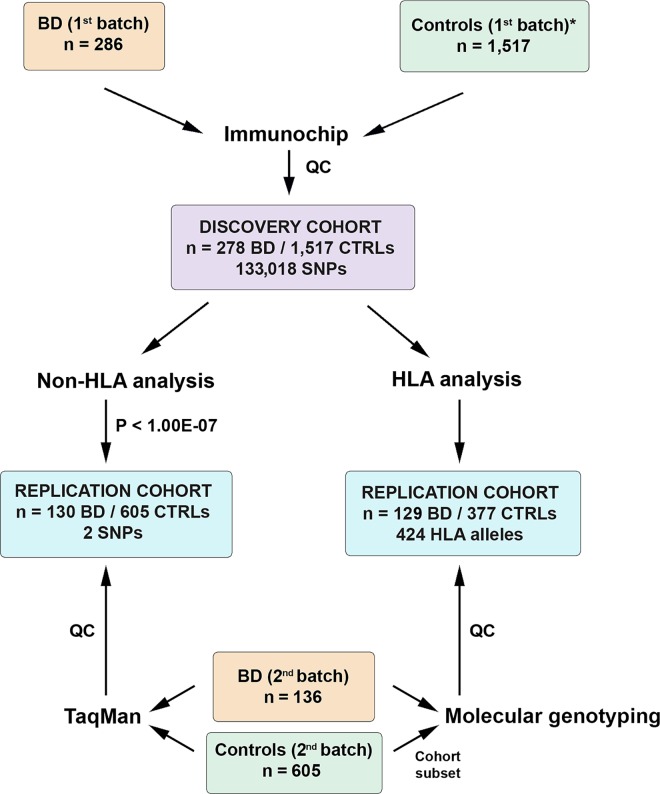
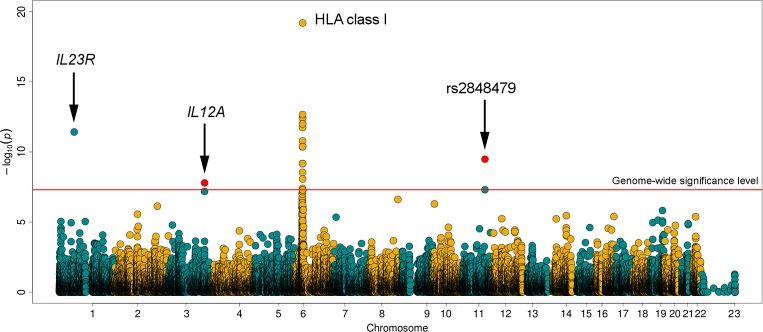
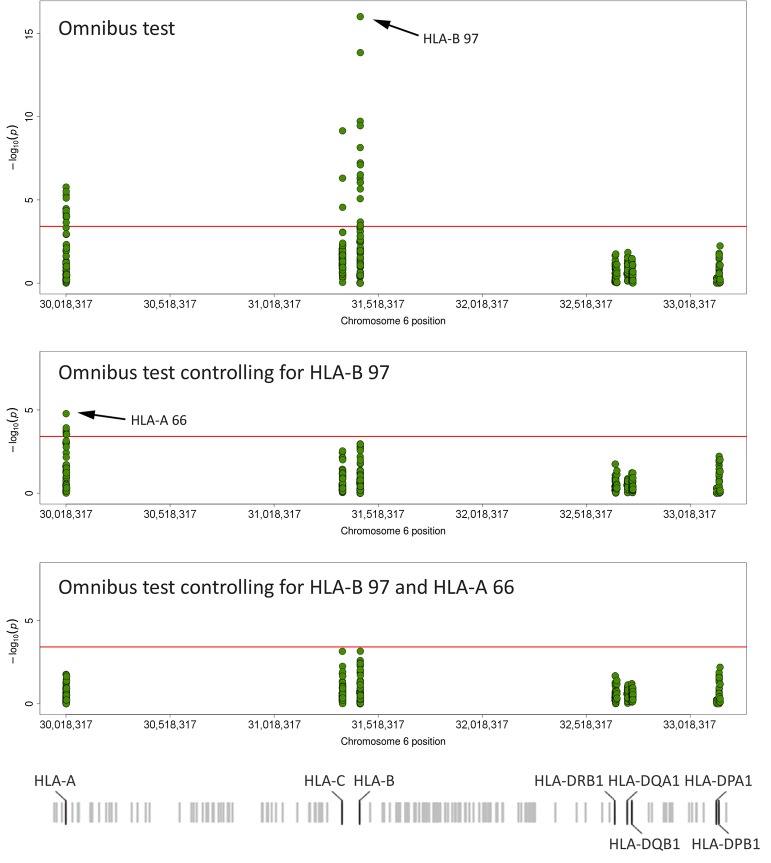
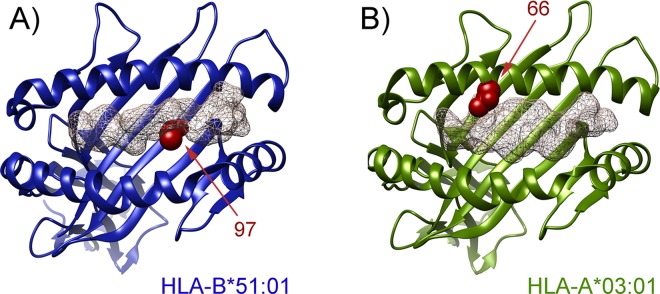
Behcet's disease (BD) is an immuno-mediated vasculitis in which knowledge of its etiology and genetic basis is limited. To improve the current knowledge, a genetic analysis performed with the Immunochip platform was carried out in a population from Spain. A discovery cohort comprising 278 BD cases and 1,517 unaffected controls were genotyped using the Immunochip platform. The validation step was performed on an independent replication cohort composed of 130 BD cases and 600 additional controls. The strongest association signals were observed in the HLA class I region, being HLA-B*51 the highest peak (overall P = 6.82E-32, OR = 3.82). A step-wise conditional logistic regression with classical alleles identified HLA-B*57 and HLA-A*03 as additional independent markers. The amino acid model that best explained the association, includes the position 97 of the HLA-B molecule and the position 66 of the HLA-A. Among the non-HLA loci, the most significant in the discovery analysis were: IL23R (rs10889664: P = 3.81E-12, OR = 2.00), the JRKL/CNTN5 region (rs2848479: P = 5.00E-08, OR = 1.68) and IL12A (rs1874886: P = 6.67E-08, OR = 1.72), which were confirmed in the validation phase (JRKL/CNTN5 rs2848479: P = 3.29E-10, OR = 1.66; IL12A rs1874886: P = 1.62E-08, OR = 1.61). Our results confirm HLA-B*51 as a primary-association marker in predisposition to BD and suggest additional independent signals within the class I region, specifically in the genes HLA-A and HLA-B. Regarding the non-HLA genes, in addition to IL-23R, previously reported in our population; IL12A, described in other populations, was found to be a BD susceptibility factor also in Spaniards; finally, a new associated locus was found in the JRKL/CNTN5 region.
Conflict of interest statement
The authors have declared that no competing interests exist.
Figures
References
-
- Sakane T, Takeno M, Suzuki N, Inaba G. Behcet's disease. The New England journal of medicine. 1999; 341:1284–1291. - PubMed
-
- Kone-Paut I, Geisler I, Wechsler B, Ozen S, Ozdogan H, Rozenbaum M, et al. Familial aggregation in Behcet's disease: high frequency in siblings and parents of pediatric probands. The Journal of pediatrics. 1999; 135:89–93. - PubMed
MeSH terms
Substances
LinkOut - more resources
Full Text Sources
Other Literature Sources
Medical
Research Materials
