. 2016 Aug 23:6:31904.
doi: 10.1038/srep31904.

Drone exposure to the systemic insecticide Fipronil indirectly impairs queen reproductive potential

Affiliations

Drone exposure to the systemic insecticide Fipronil indirectly impairs queen reproductive potential

Guillaume Kairo et al. Sci Rep. .

Abstract

A species that requires sexual reproduction but cannot reproduce is doomed to extinction. The important increasing loss of species emphasizes the ecological significance of elucidating the effects of environmental stressors, such as pesticides, on reproduction. Despite its special reproductive behavior, the honey bee was selected as a relevant and integrative environmental model because of its constant and diverse exposure to many stressors due to foraging activity. The widely used insecticide Fipronil, the use of which is controversial because of its adverse effects on honey bees, was chosen to expose captive drones in hives via syrup contaminated at 0.1 μg/L and gathered by foragers. Such environmental exposure led to decreased spermatozoa concentration and sperm viability coupled with an increased sperm metabolic rate, resulting in drone fertility impairment. Subsequently, unexposed queens inseminated with such sperm exhibited fewer spermatozoa with lower viability in their spermatheca, leaving no doubt about the detrimental consequences for the reproductive potential of queens, which are key for colony sustainability. These findings suggest that pesticides could contribute to declining honey bee populations through fertility impairment, as exemplified by Fipronil. More broadly, reproductive disorders should be taken into consideration when investigating the decline of other species.


Figures
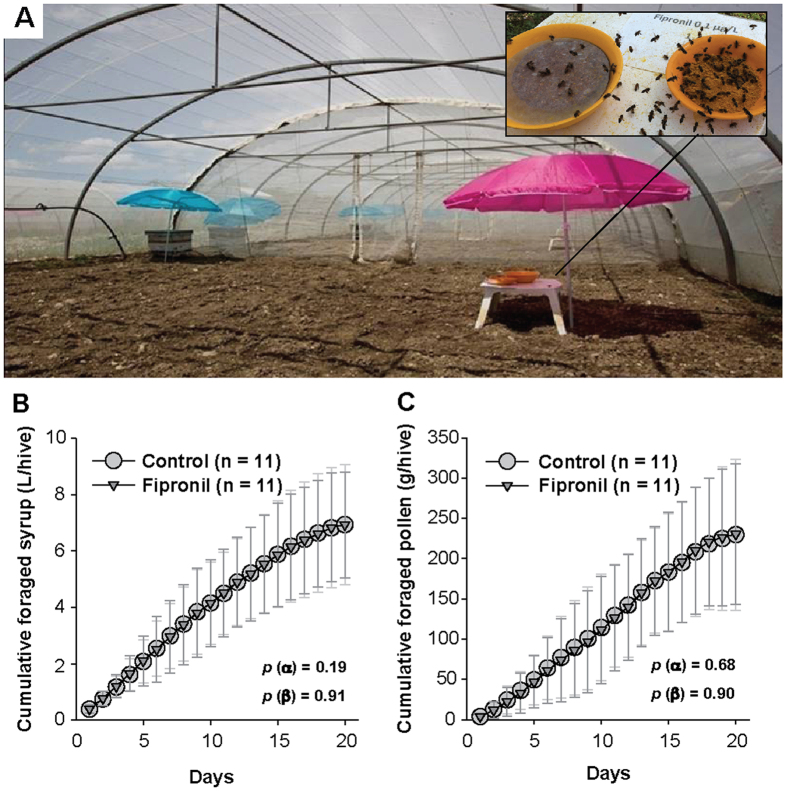
Figure 1
Figure 1. Foraging behavior in colonies.
For 20 days, from drone emergence to sexual maturity, colonies were supplied daily with sugar syrup (50% w/v) ad libitum using a feeder, for harvesting by foragers from 8:30 a.m. to 11:30 a.m.; the syrup was replaced with crushed pollen and water for the remainder of the day. While the hives were fed during the exposure period, foraging behavior was monitored in 44 colonies from 22 tunnel compartments. (A) Illustration of the experimental platform; (B) cumulative foraged syrup; and (C) cumulative foraged pollen. The data represent the mean± the standard deviation of the daily cumulative foraged quantity observed in each compartment (1 feeder for 2 hives). For each treatment, the data correspond to the set of values from 4 experiments conducted between 2012 and 2014 (n = 11). Statistical analyses of the growth rates of cumulative foraging (α) and maximum cumulative quantities (β) were performed using a generalized linear mixed model with a random effect on the different experiments.
Figure 2
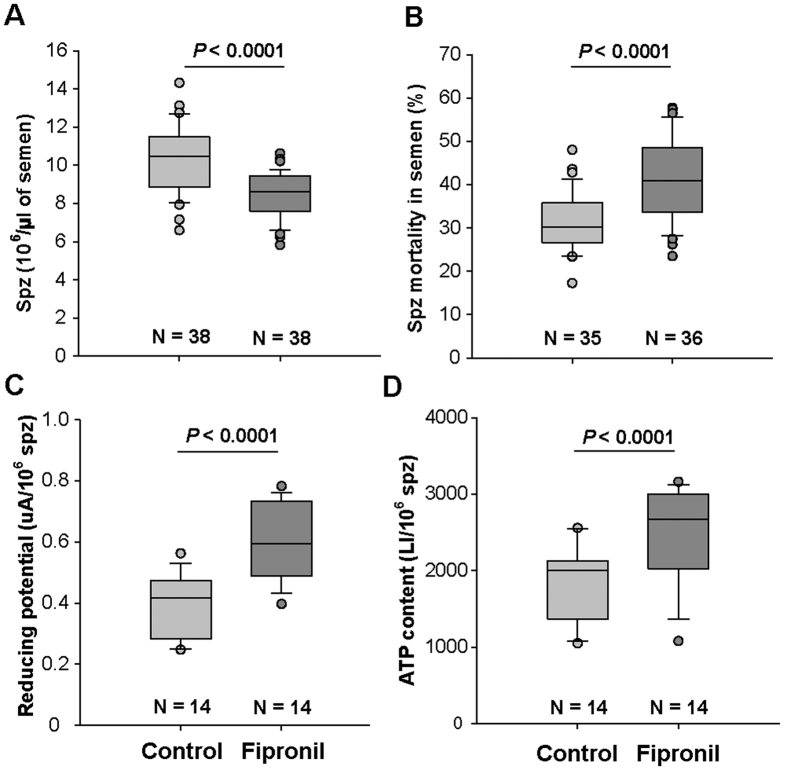
Figure 2. Effects of chronic exposure to Fipronil on drone fertility.
The day after collection, the semen samples were analyzed to assess the effects of Fipronil exposure on drone fertility. (A) Total spermatozoa (spz) concentration in semen, including live and dead spermatozoa. (B) Mortality rate of spz expressed as a percentage (%). (C) Reducing potential of semen in absorbance units (AU λ = 570 nm), corresponding to the rate of reduced resazurin per million spz. (D) Rate of adenosine triphosphate (ATP) in spz, expressed as the luminescence intensity (LI) per million spz. For each parameter, the data correspond to the values obtained in experiments conducted between 2012 and 2014. The reducing potential and ATP content assays were only performed during the three first experiments; “n” indicates the number of samples for each treatment and parameter. Statistical analyses were performed using a generalized linear mixed model with a random effect on the different experiments.
Figure 3
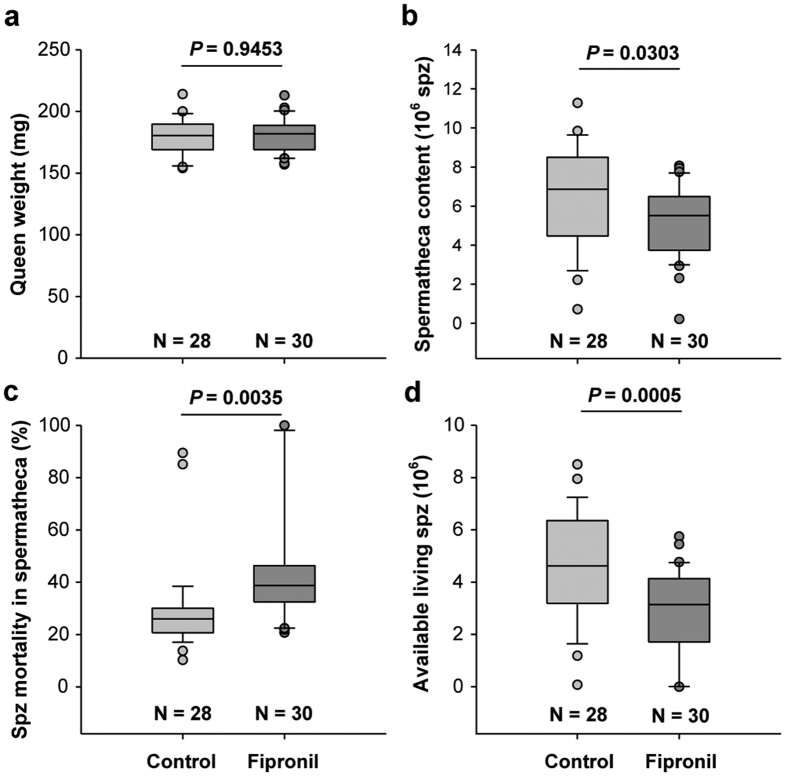
Figure 3. Consequences of drone exposure on queens.
Following the exposure of drones in the experiment conducted in 2014, a portion of the collected semen was used to instrumentally inseminate 2 groups of 40 queens each. Two weeks later, the surviving queens in the control (n = 28) and Fipronil groups (n = 30) were weighed and dissected, and the spermathecae were analyzed to determine (a) queen weight, (b) the number of spermatozoa (spz) stored in the spermatheca, (c) the mortality rate of spz expressed as a percentage (%) of stored spz, and (d) live spz available to fertilize eggs, deducted from the two previous parameters. A t-test was applied to statistically analyzed queen weight (a). For parameters (bd), statistical analyses were performed using a generalized linear mixed model with a random effect on the hive from which the sperm capillaries originated.
Figure 4
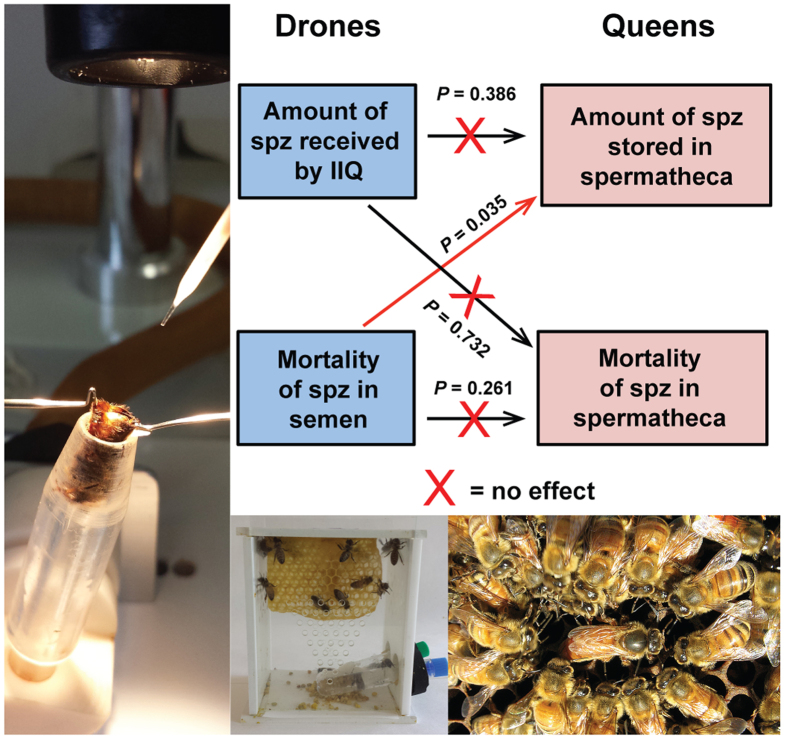
Figure 4. Relationships among drone semen characteristics and spermathecal content.
For all of the instrumentally inseminated queens (IIQ) (n = 58), the quantity and mortality of injected spermatozoa (spz) were compared with those of spz stored in the spermatheca. Arrows correspond to the effect of one factor on another. The number of spz received by the queen was calculated based on the concentration and volume of injected spz (8 μL). Statistical analyses were performed using a generalized linear mixed model with a random effect on the hive from which the sperm capillaries originated. linear mixed model with a random effect on the different experiments.

References

    1. Ceballos G. et al.. Accelerated modern human–induced species losses: Entering the sixth mass extinction. Sci. Adv. 1, e1400253, doi:10.1126/sciadv.140025 (2015). - DOI - PMC - PubMed
    1. IUCN. Red list of threatened species. Version 2015.4 (IUCN, 2015, www.iucnredlist.org).
    1. Goulson D., Nicholls E., Botias C. & Rotheray E. L. Bee declines driven by combined stress from parasites, pesticides, and lack of flowers. Science (New York, N.Y.) 347, 1255957, doi:10.1126/science.1255957 (2015). - DOI - PubMed
    1. Wilcove D. S., Rothstein D., Dubow J., Phillips A. & Losos E. Quantifying threats to imperiled species in the United States. Bioscience 48, 607–615, doi:10.2307/1313420 (1998). - DOI
    1. Carlsen E., Giwercman A., Keiding N. & Skakkebaek N. E. Evidence for decreasing quality of semen during past 50 years. Brit. Med. J. 305, 609–613, doi:10.1136/bmj.305.6854.609 (1992). - DOI - PMC - PubMed

Publication types

LinkOut - more resources