


Deorphanization and characterization of the ectopically expressed olfactory receptor OR51B5 in myelogenous leukemia cells
- PMID: 27551504
- PMCID: PMC4979495
- DOI: 10.1038/cddiscovery.2016.10
Deorphanization and characterization of the ectopically expressed olfactory receptor OR51B5 in myelogenous leukemia cells
Abstract
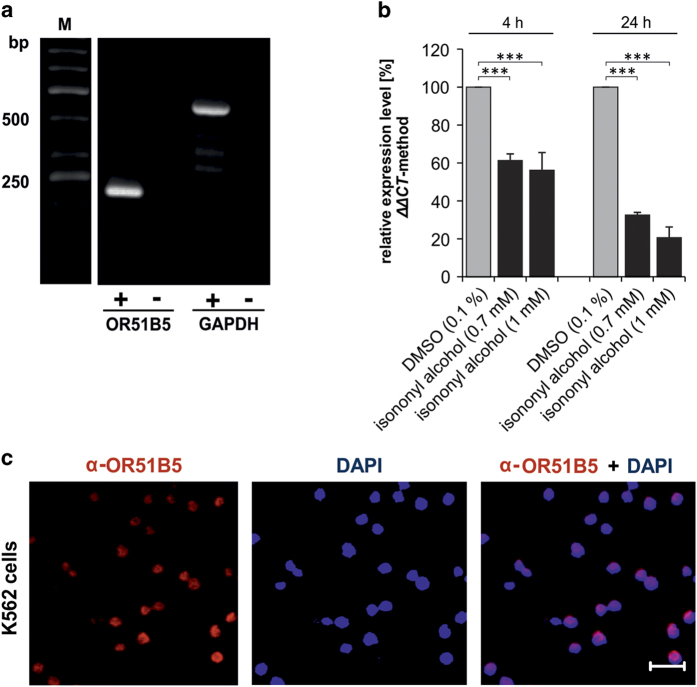
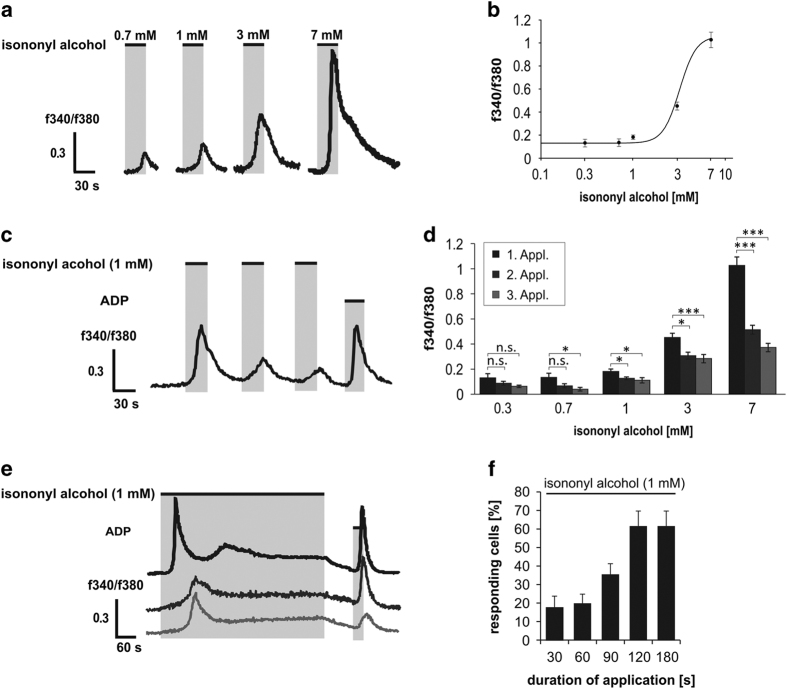
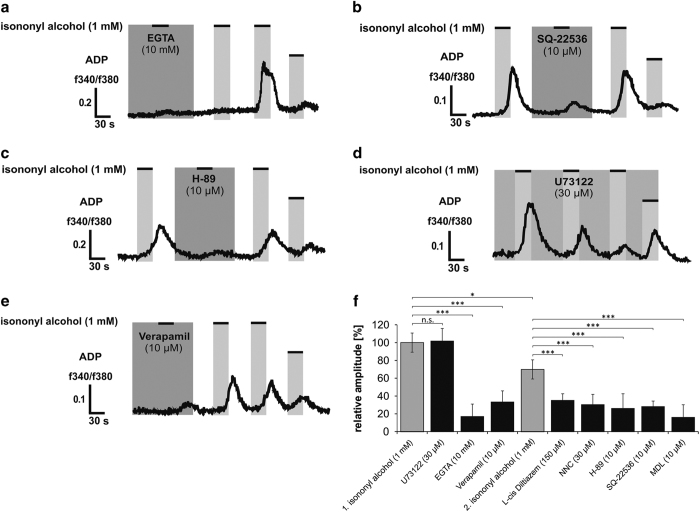
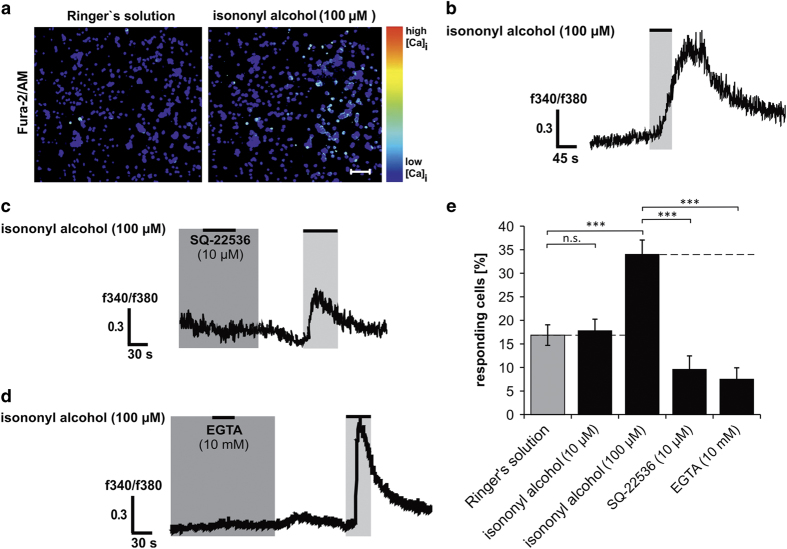
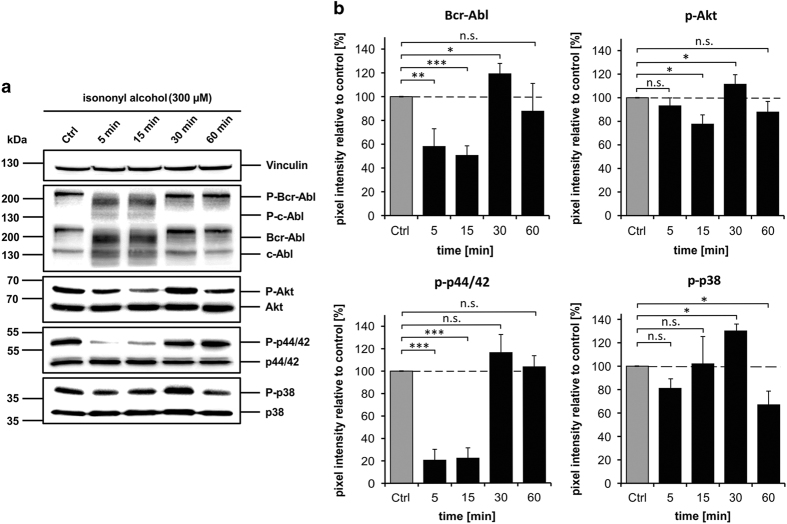
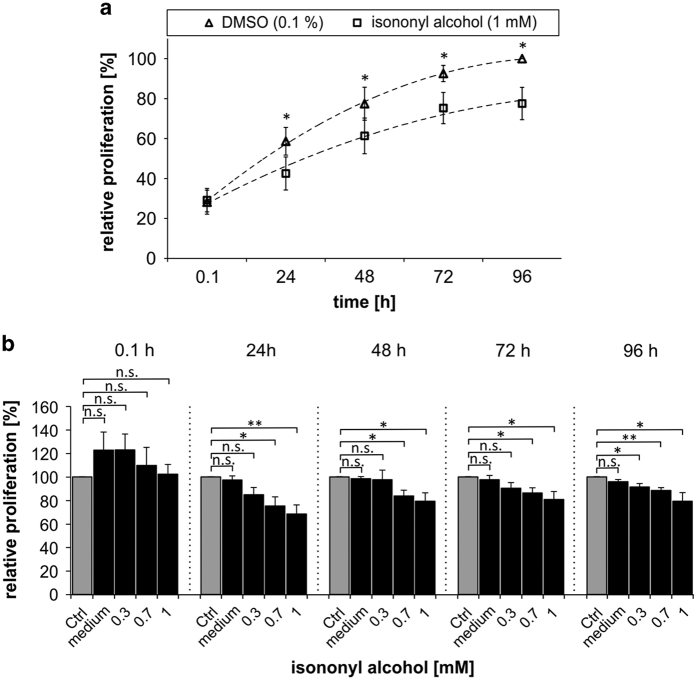
The ectopic expression of olfactory receptors (ORs) in the human body has been of major interest in the past decade. Several studies have reported the expression of ORs not only in healthy tissues such as heart, sperm or skin cells, but also in cancerous tissues of the liver, prostate or intestine. In the present study, we detected the expression of OR51B5 in the chronic myelogenous leukemia (CML) cell line K562 and in white blood cell samples of clinically diagnosed acute myelogenous leukemia (AML) patients by reverse transcription-PCR and immunocytochemical staining. The known OR51B5 ligand isononyl alcohol increased the levels of intracellular Ca(2+) in both AML patient blood cells and K562 cells. With calcium imaging experiments, we characterized in greater detail the OR51B5-mediated signaling pathway. Here, we observed an involvement of adenylate cyclase and the downstream L-type and T-type calcium channels. In addition, the activation of OR51B5 leads to an inhibition of cell proliferation in K562 cells. In western blot experiments, we found that incubation with isononyl alcohol led to a reduction in p38-MAPK (mitogen-activated protein kinase) phosphorylation that might be responsible for the decreased cell proliferation. In the present study, we characterized the OR51B5-mediated signaling pathway downstream of the activation with isononyl alcohol, which leads to reduced proliferation and therefore provide a novel pharmacological target for CML and AML, the latter of which remains difficult to treat.
Figures
References
-
- Buck L , Axel R . A novel multigene family may encode odorant receptors: a molecular basis for odor recognition. Cell 1991; 65: 175–187. - PubMed
-
- Spehr M , Gisselmann G , Poplawski A , Riffell JA , Wetzel CH , Zimmer RK et al. Identification of a testicular odorant receptor mediating human sperm chemotaxis. Science 2003; 299: 2054–2058. - PubMed
-
- Braun T , Voland P , Kunz L , Prinz C , Gratzl M . Enterochromaffin cells of the human gut: sensors for spices and odorants. Gastroenterology 2007; 132: 1890–1901. - PubMed
-
- Weng J , Wang J , Hu X , Wang F , Ittmann M , Liu M . PSGR2, a novel G-protein coupled receptor, is overexpressed in human prostate cancer. Int J Cancer 2006; 118: 1471–1480. - PubMed
-
- Xu L L , Stackhouse BG , Florence K , Zhang W , Shanmugam N , Sesterhenn IA et al. PSGR, a novel prostate-specific gene with homology to a G protein-coupled receptor, is overexpressed in prostate cancer. Cancer Res 2000; 60: 6568–6572. - PubMed
LinkOut - more resources
Full Text Sources
Other Literature Sources
Miscellaneous
