


Considerations For Optimizing Microbiome Analysis Using a Marker Gene
- PMID: 27551678
- PMCID: PMC4976105
- DOI: 10.3389/fnut.2016.00026
Considerations For Optimizing Microbiome Analysis Using a Marker Gene
Abstract
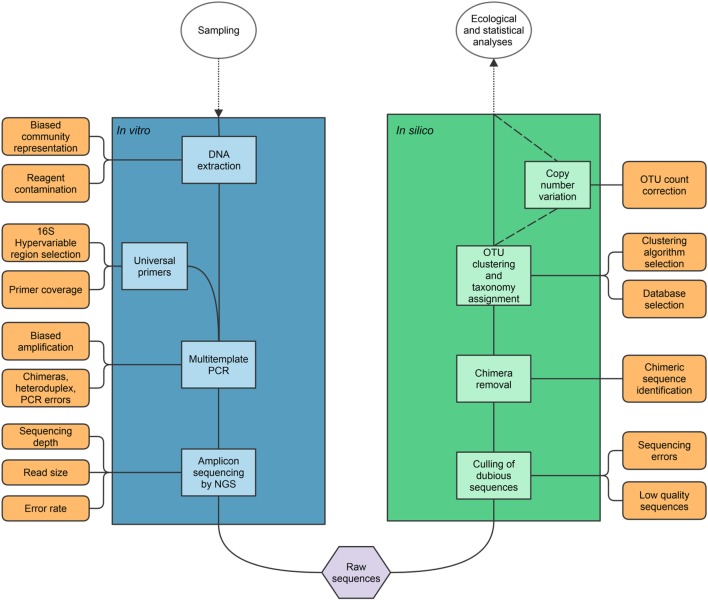
Next-generation sequencing technologies have found a widespread use in the study of host-microbe interactions due to the increase in their throughput and their ever-decreasing costs. The analysis of human-associated microbial communities using a marker gene, particularly the 16S rRNA, has been greatly benefited from these technologies - the human gut microbiome research being a remarkable example of such analysis that has greatly expanded our understanding of microbe-mediated human health and disease, metabolism, and food absorption. 16S studies go through a series of in vitro and in silico steps that can greatly influence their outcomes. However, the lack of a standardized workflow has led to uncertainties regarding the transparency and reproducibility of gut microbiome studies. We, here, discuss the most common challenges in the archetypical 16S rRNA workflow, including the extraction of total DNA, its use as template in PCR with primers that amplify specific hypervariable regions of the gene, amplicon sequencing, the denoising and removal of low-quality reads, the detection and removal of chimeric sequences, the clustering of high-quality sequences into operational taxonomic units, and their taxonomic classification. We recommend the essential technical information that should be conveyed in publications for reproducibility of results and encourage non-experts to include procedures and available tools that mitigate most of the problems encountered in microbiome analysis.
Keywords: 16S rRNA; gut microbiome; next-generation sequencing; personalized medicine; personalized nutrition.
Figures
References
-
- Foxx-Orenstein AE, Chey WD. Manipulation of the gut microbiota as a novel treatment strategy for gastrointestinal disorders. Am J Gastroenterol Suppl (2012) 1(1):41–6.10.1038/ajgsup.2012.8 - DOI
Publication types
LinkOut - more resources
Full Text Sources
Other Literature Sources
