. 2017 Feb;13(2):659-665.
doi: 10.1016/j.nano.2016.08.004. Epub 2016 Aug 20.

GLP-1 nanomedicine alleviates gut inflammation

Affiliations

GLP-1 nanomedicine alleviates gut inflammation

Arivarasu N Anbazhagan et al. Nanomedicine. 2017 Feb.

Abstract

The gut hormone, glucagon like peptide-1 (GLP-1) exerts anti-inflammatory effects. However, its clinical use is limited by its short half-life. Previously, we have shown that GLP-1 as a nanomedicine (GLP-1 in sterically stabilized phospholipid micelles, GLP-1-SSM) has increased in vivo stability. The current study was aimed at testing the efficacy of this GLP-1 nanomedicine in alleviating colonic inflammation and associated diarrhea in dextran sodium sulfate (DSS) induced mouse colitis model. Our results show that GLP-1-SSM treatment markedly alleviated the colitis phenotype by reducing the expression of pro-inflammatory cytokine IL-1β, increasing goblet cells and preserving intestinal epithelial architecture in colitis model. Further, GLP-1-SSM alleviated diarrhea (as assessed by luminal fluid) by increasing protein expression of intestinal chloride transporter DRA (down regulated in adenoma). Our results indicate that GLP-1 nanomedicine may act as a novel therapeutic tool in alleviating gut inflammation and associated diarrhea in inflammatory bowel disease (IBD).

Keywords: Colitis; Diarrhea; GLP-1 SSM; IBD.


Conflict of interest statement

Conflict of interest: Authors state no conflict of interest.

Figures
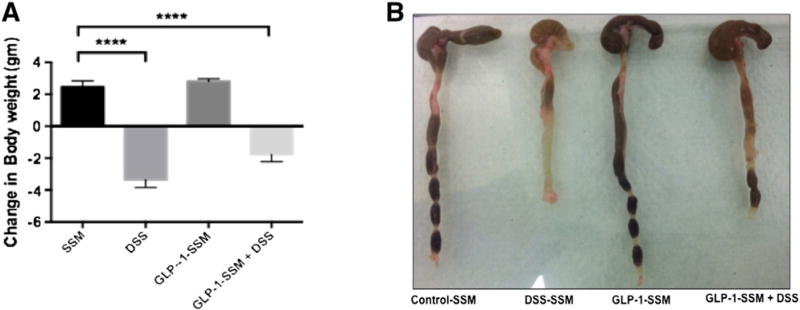
Figure 1
Figure 1
GLP-1 nanomedicine attenuates DSS induced colitis in mice. Change in body weight (A), preservation of stool consistency (B) during DSS treatment. Colitis was induced by 3% (wt/vol) DSS supplemented in drinking water for 7 days to DSS and DSS + GLP1-SSM groups. 15 nmol of GLP1-SSM or SSM was administered by i.p injection everyday to mice in respective groups during the 7 days of DSS treatment. Data were expressed as the mean ± SEM, ****P < 0.0001. n = 10 mice per group.
Figure 2
Figure 2
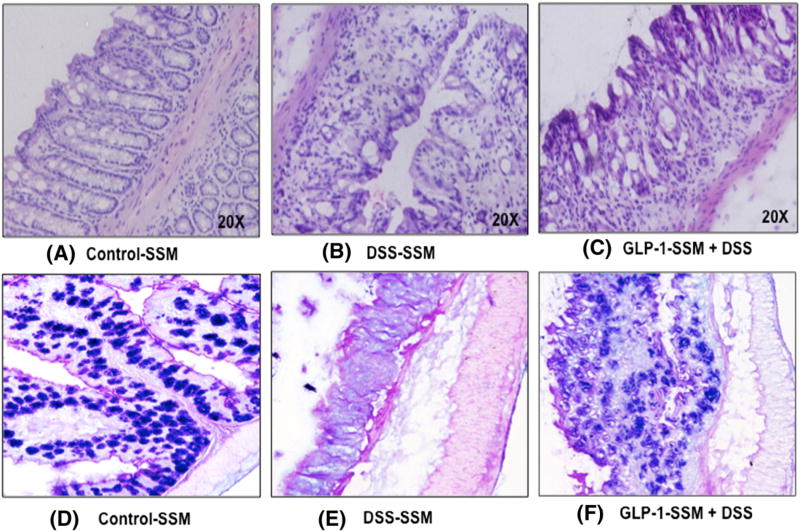
GLP-1 nanomedicine alleviates histologic alterations observed in DSS induced colitis. After 7 days of treatment, the colon was collected and 5 µm thick sections of distal colon were prepared. Sections were stained by H & E (A–C) and PAS (D–F) and assessed histologically.
Figure 3
Figure 3
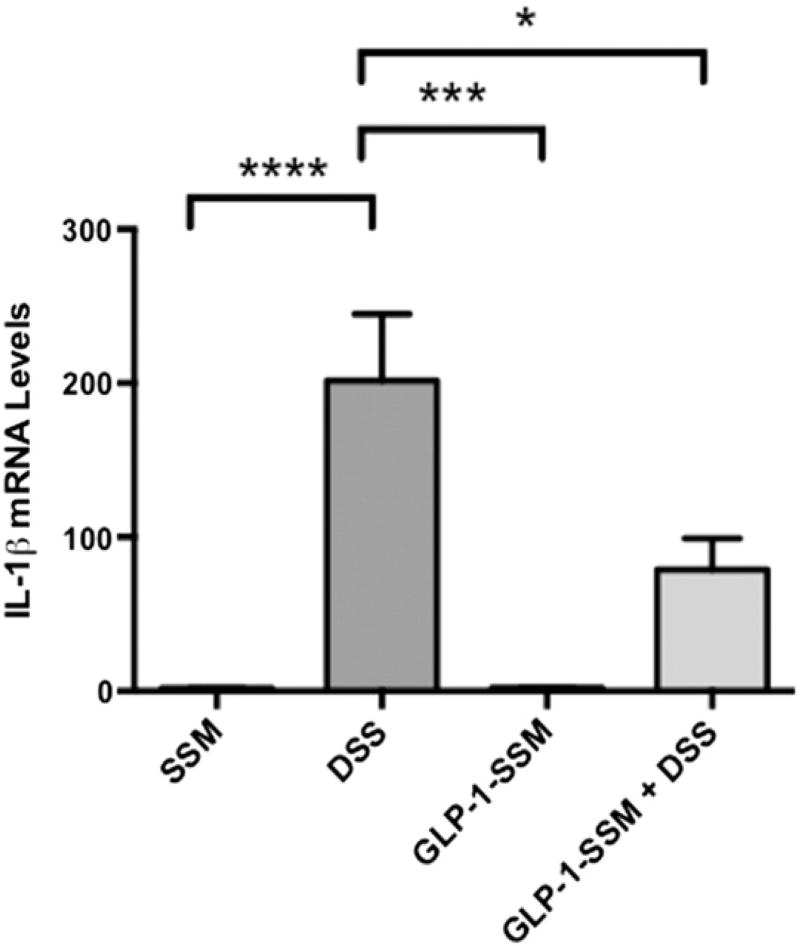
Anti-inflammatory effects of GLP-1 nanomedicine in mice with colitis. After 7 days of treatment RNA from mucosal scrapings from distal colon were prepared, and expression of IL-1β was measured by qRT PCR. Data were expressed as the mean ± SEM, *P < 0.05, ***P < 0.001, ****P < 0.0001. n = 10 mice per group.
Figure 4
Figure 4
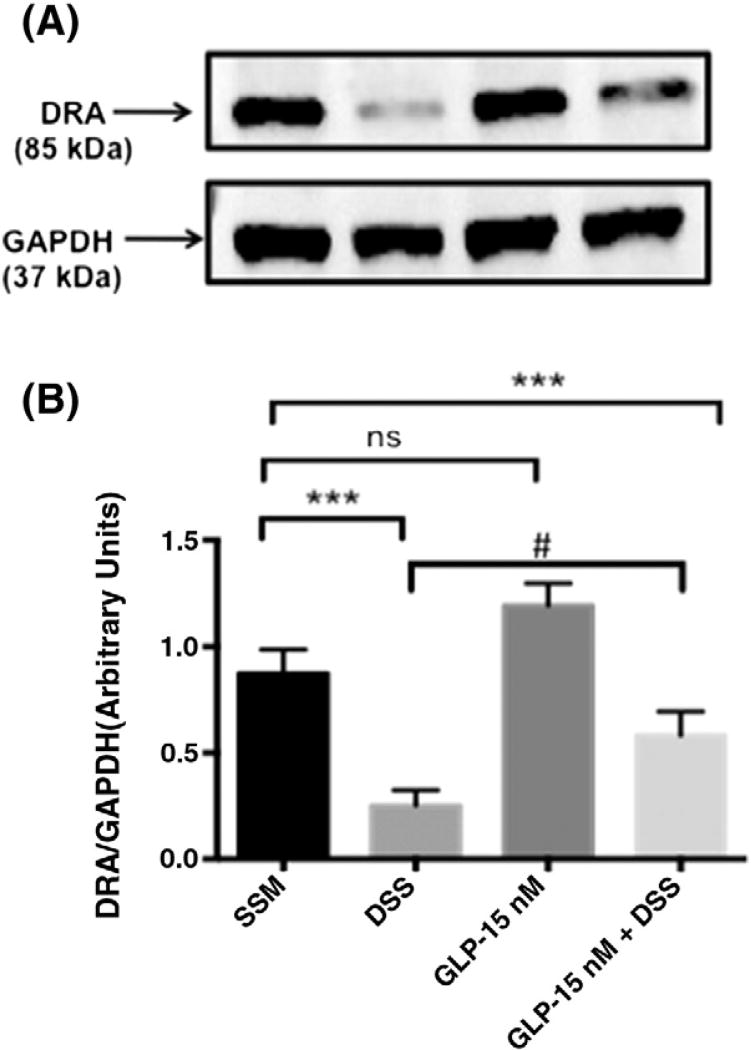
GLP-1 nanomedicine blocks DSS induced decrease in DRA protein expression. DRA protein levels in distal colonic mucosal tissue lysates were measured by Western blot. A representative blot is shown (A). Densitometric analysis of relative band intensities (B). Data were expressed as mean ± SEM ***P < 0.001. n = 10 mice per group, # denotes DSS and DSS + GLP1-SSM groups are not significantly different by one-way (ANOVA) but two groups are significantly different according to Student’s t test (P < 0.05).
Figure 5
Figure 5
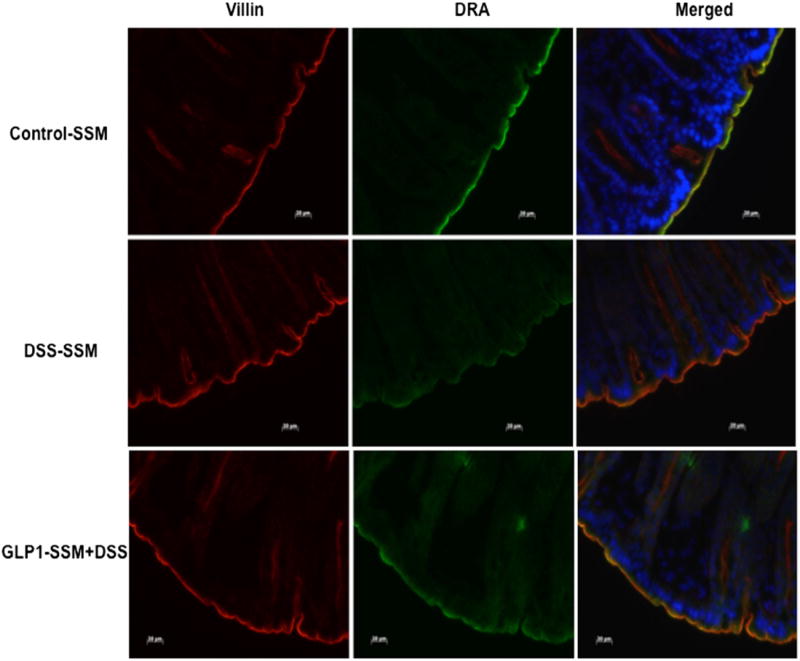
GLP-1 nanomedicine blocks the DSS-induced decrease in DRA expression. Green, DRA; red, villin; blue, nuclei; scale bar = 20 µm.

References

    1. Corridoni D, Arseneau KO, Cominelli F. Inflammatory bowel disease. Immunol Lett. 2014;161(2):231–5. - PMC - PubMed
    1. Viscido A, Capannolo A, Latella G, Caprilli R, Frieri G. Nanotechnology in the treatment of inflammatory bowel diseases. J Crohns Colitis. 2014;8(9):903–18. - PubMed
    1. Pichai MV, Ferguson LR. Potential prospects of nanomedicine for targeted therapeutics in inflammatory bowel diseases. Gastroenterol. 2012;18(23):2895–901. - PMC - PubMed
    1. Vong LB, Tomita T, Yoshitomi T, Matsui H, Nagasaki Y. An orally administered redox nanoparticle that accumulates in the colonic mucosa and reduces colitis in mice. Gastroenterology. 2012;143(4):1027–36 [e3]. - PubMed
    1. Priyamvada S, Gomes R, Gill RK, Saksena S, Alrefai WA, Dudeja PK. Mechanisms underlying dysregulation of electrolyte absorption in inflammatory bowel disease-associated diarrhea. Inflamm Bowel Dis. 2015;21(12):2926–35. - PMC - PubMed

LinkOut - more resources