


Mapping adolescent first births within three east African countries using data from Demographic and Health Surveys: exploring geospatial methods to inform policy
- PMID: 27553956
- PMCID: PMC4994382
- DOI: 10.1186/s12978-016-0205-1
Mapping adolescent first births within three east African countries using data from Demographic and Health Surveys: exploring geospatial methods to inform policy
Abstract
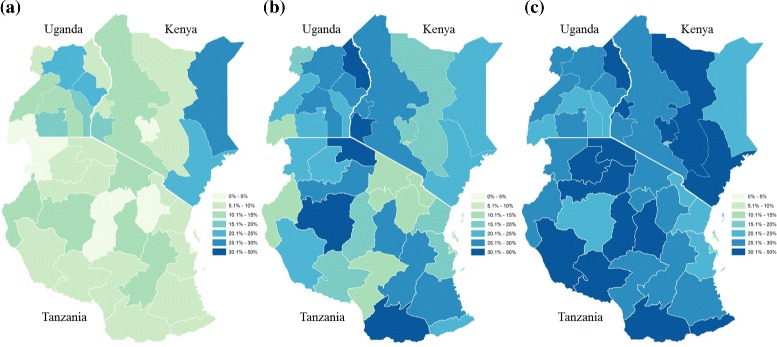
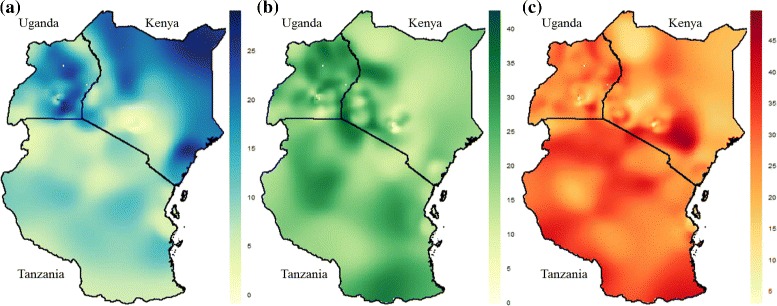
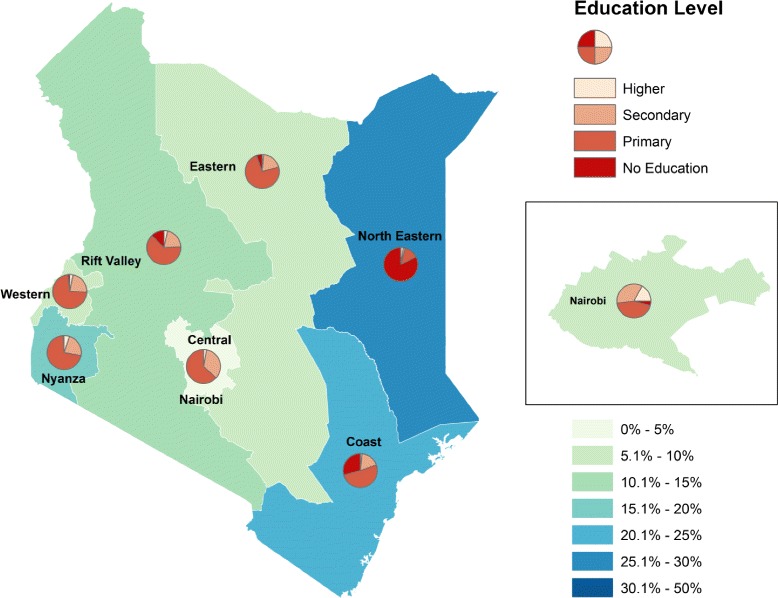
Background: Early adolescent pregnancy presents a major barrier to the health and wellbeing of young women and their children. Previous studies suggest geographic heterogeneity in adolescent births, with clear "hot spots" experiencing very high prevalence of teenage pregnancy. As the reduction of adolescent pregnancy is a priority in many countries, further detailed information of the geographical areas where they most commonly occur is of value to national and district level policy makers. The aim of this study is to develop a comprehensive assessment of the geographical distribution of adolescent first births in Uganda, Kenya and Tanzania using Demographic and Household (DHS) data using descriptive, spatial analysis and spatial modelling methods.
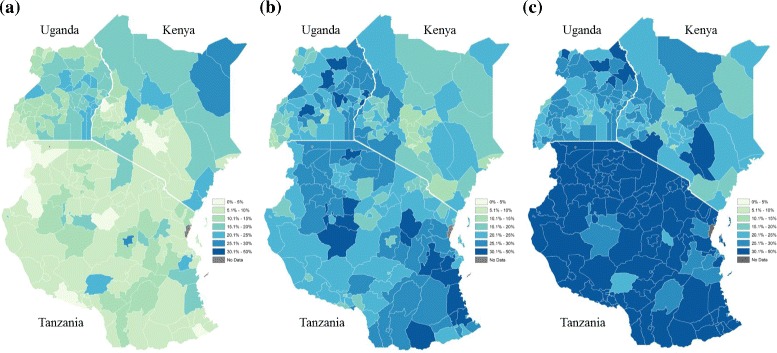
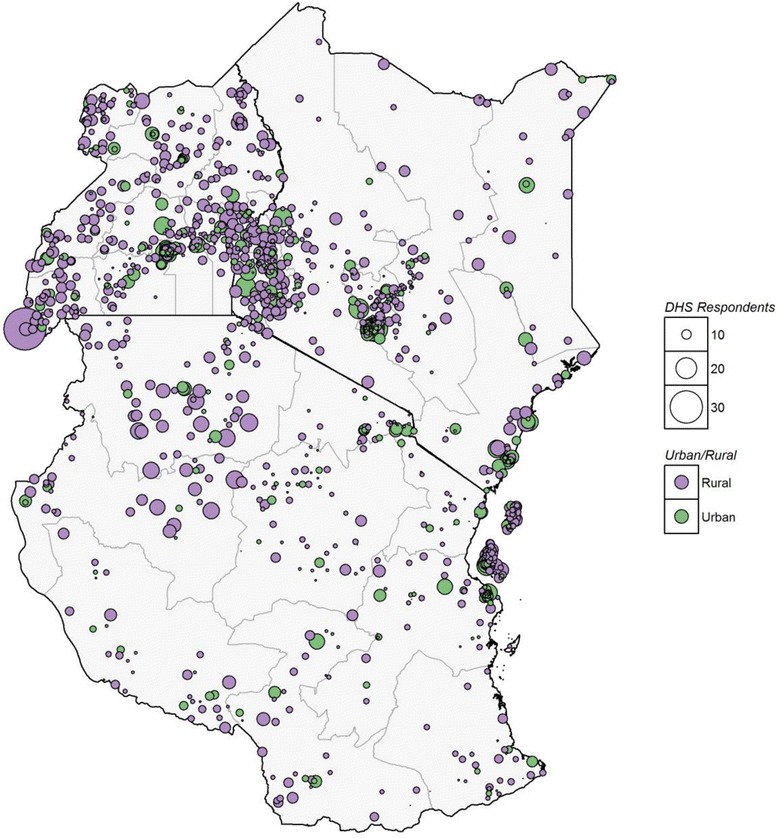
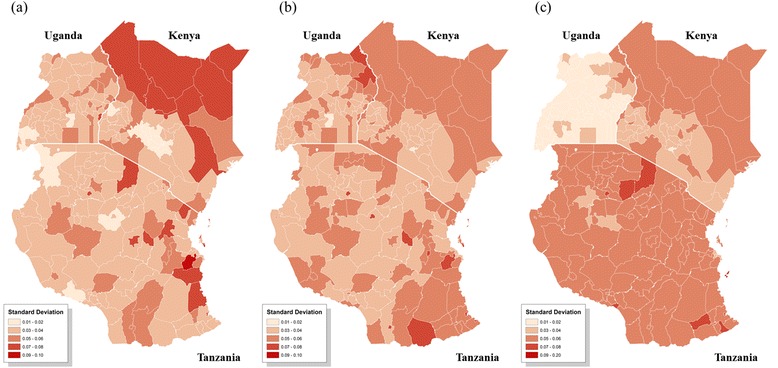
Methods: The most recent Demographic and Health Surveys (DHS) among women aged 20 to 29 in Tanzania, Kenya, and Uganda were utilised. Analyses were carried out on first births occurring before the age of 20 years, but were disaggregated in to three age groups: <16, 16/17 and 18/19 years. In addition to basic descriptive choropleths, prevalence maps were created from the GPS-located cluster data utilising adaptive bandwidth kernel density estimates. To map adolescent first birth at district level with estimates of uncertainty, a Bayesian hierarchical regression modelling approach was used, employing the Integrated Nested Laplace Approximation (INLA) technique.
Results: The findings show marked geographic heterogeneity among adolescent first births, particularly among those under 16 years. Disparities are greater in Kenya and Uganda than Tanzania. The INLA analysis which produces estimates from smaller areas suggest "pockets" of high prevalence of first births, with marked differences between neighbouring districts. Many of these high prevalence areas can be linked with underlying poverty.
Conclusions: There is marked geographic heterogeneity in the prevalence of adolescent first births in East Africa, particularly in the youngest age groups. Geospatial techniques can identify these inequalities and provide policy-makers with the information needed to target areas of high prevalence and focus scarce resources where they are most needed.
Keywords: Adolescent; Fertility; Inequality; Small area estimation; Spatial analysis.
Figures
References
-
- McQueston K, Silverman R, Glassman A. Adolescent fertility in low and middle income countries: effects and solutions. Washington: Center for Global Development; 2012.
-
- Uren Z, Sheers D, Dattani N. Teenage conceptions by small area deprivation in England and Wales, 2001–2002. Health Stat Q. 2007;33:34–9. - PubMed
MeSH terms
Grants and funding
LinkOut - more resources
Full Text Sources
Other Literature Sources
Medical
Research Materials
