


Higher FT4 or TSH below the normal range are associated with increased risk of dementia: a meta-analysis of 11 studies
- PMID: 27558885
- PMCID: PMC4997309
- DOI: 10.1038/srep31975
Higher FT4 or TSH below the normal range are associated with increased risk of dementia: a meta-analysis of 11 studies
Abstract
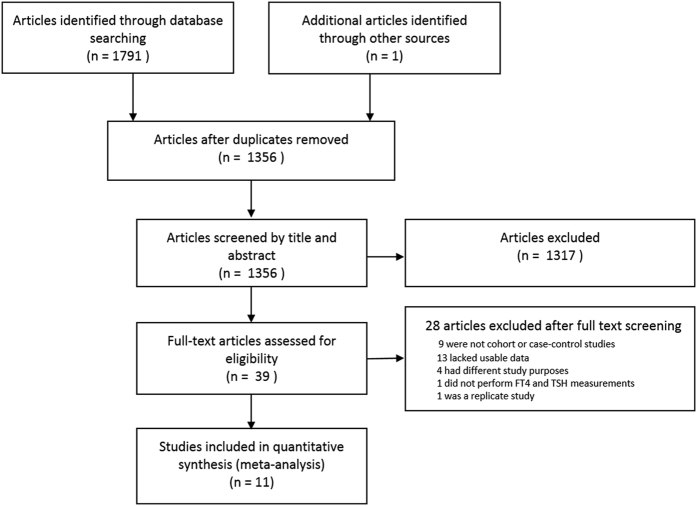
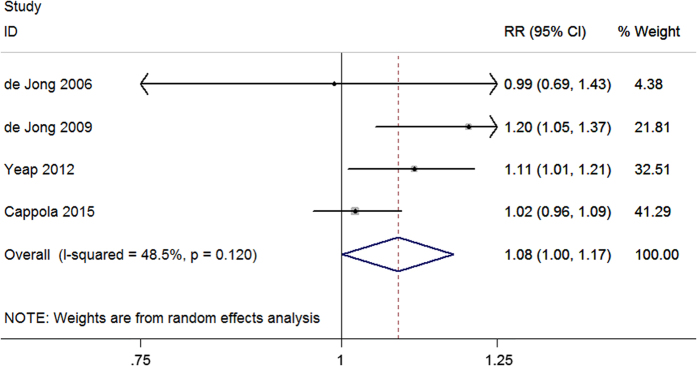
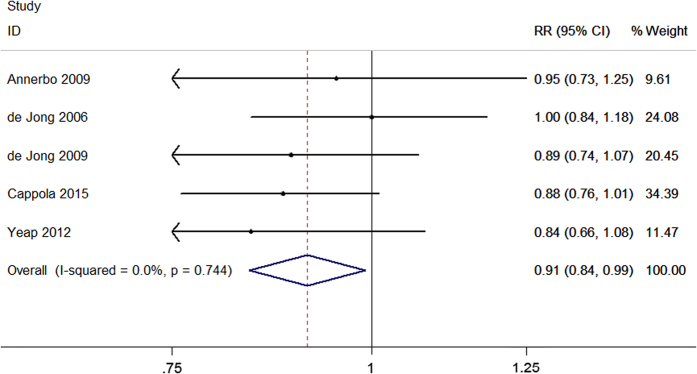
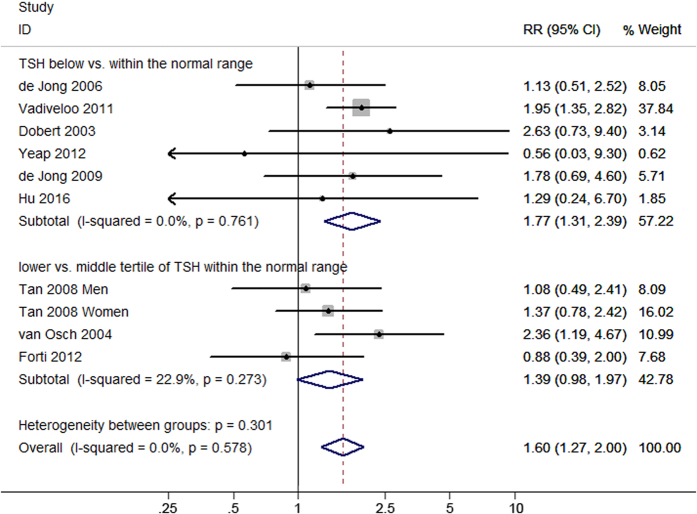
Observational studies of thyroid function and dementia have reported conflicting results. We reviewed cohort and case-control studies from MEDLINE, EMBASE, Web of Science and the Cochrane Library that focused on the association between serum thyroxine, thyrotropin and dementia. A total of 24,952 participants from three case-control and eight cohort studies were included. The relationships between dementia and the per standard deviation (SD) increment of free thyroxine (FT4) (random relative ratio (RR) = 1.08, 95% confidence interval (CI) 1.00-1.17) and thyroid-stimulating hormone (TSH) (fixed RR = 0.91, 95% CI 0.84-0.99) were well established. TSH levels in the low category were associated with an increased risk of dementia (fixed RR = 1.60, 95% CI 1.27-2.00). However, the positive association was confined to TSH levels below the normal range (fixed RR = 1.77, 95% CI 1.31-2.39), not those in the lower tertile of the normal range (fixed RR = 1.39, 95% CI 0.98-1.97). Additionally, dementia was not significantly associated with high TSH levels (fixed RR = 0.99, 95% CI 0.76-1.29). Furthermore, there was no positive association between dementia and the low or high categories of TSH in men. Thus, individuals with higher FT4 levels or those with TSH levels below the normal range have an increased risk of dementia.
Figures
References
Publication types
MeSH terms
Substances
LinkOut - more resources
Full Text Sources
Other Literature Sources
Medical
