Review
. 2016 Jun 20:12:1250-68.
doi: 10.3762/bjoc.12.120. eCollection 2016.

Cyclisation mechanisms in the biosynthesis of ribosomally synthesised and post-translationally modified peptides

Affiliations
Review

Cyclisation mechanisms in the biosynthesis of ribosomally synthesised and post-translationally modified peptides

Andrew W Truman. Beilstein J Org Chem. .

Abstract

Ribosomally synthesised and post-translationally modified peptides (RiPPs) are a large class of natural products that are remarkably chemically diverse given an intrinsic requirement to be assembled from proteinogenic amino acids. The vast chemical space occupied by RiPPs means that they possess a wide variety of biological activities, and the class includes antibiotics, co-factors, signalling molecules, anticancer and anti-HIV compounds, and toxins. A considerable amount of RiPP chemical diversity is generated from cyclisation reactions, and the current mechanistic understanding of these reactions will be discussed here. These cyclisations involve a diverse array of chemical reactions, including 1,4-nucleophilic additions, [4 + 2] cycloadditions, ATP-dependent heterocyclisation to form thiazolines or oxazolines, and radical-mediated reactions between unactivated carbons. Future prospects for RiPP pathway discovery and characterisation will also be highlighted.

Keywords: RiPPs; biosynthesis; cyclisation; enzymes; peptides.


Figures
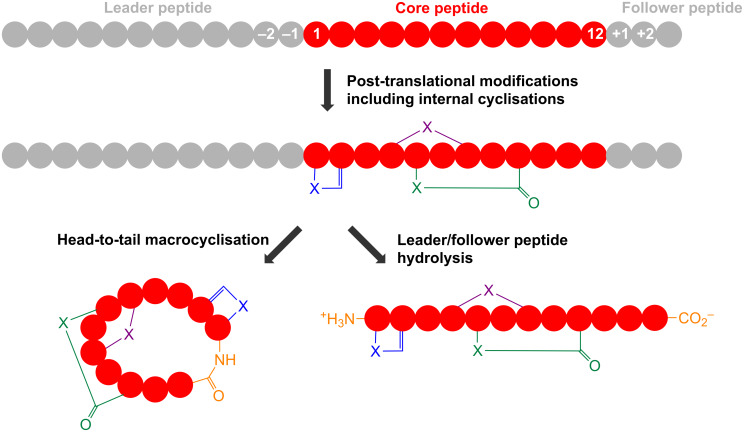
Figure 1
Figure 1
Schematic of RiPP biosynthesis. Thiazole/oxazole formation is represented by the blue heterocycle (X = S, O), lanthionine formation is represented by the purple cross-link (X = S) and macrolactam (X = N) or macrolactone (X = O) formation is represented by the green cyclisation.
Figure 2
Figure 2
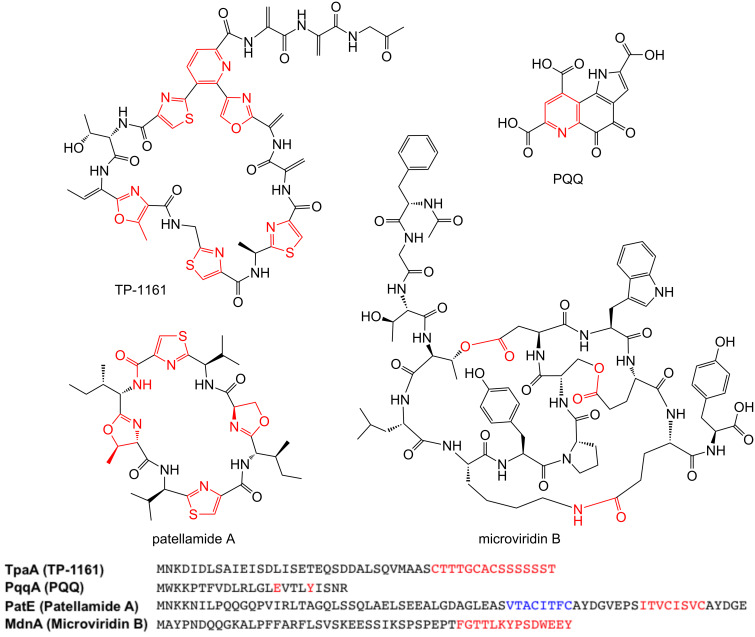
Examples of heterocycles in RiPPs alongside the precursor peptides that these molecules derive from. The red features on the molecules indicate where cyclisation has taken place, while the sections of the sequences highlighted in red correspond to the core peptides for each of these molecules. The sequence highlighted in blue in PatE corresponds to the core peptide for patellamide C, another macrocyclic RiPP that contains thiazoles and oxazolines.
Figure 3
Figure 3
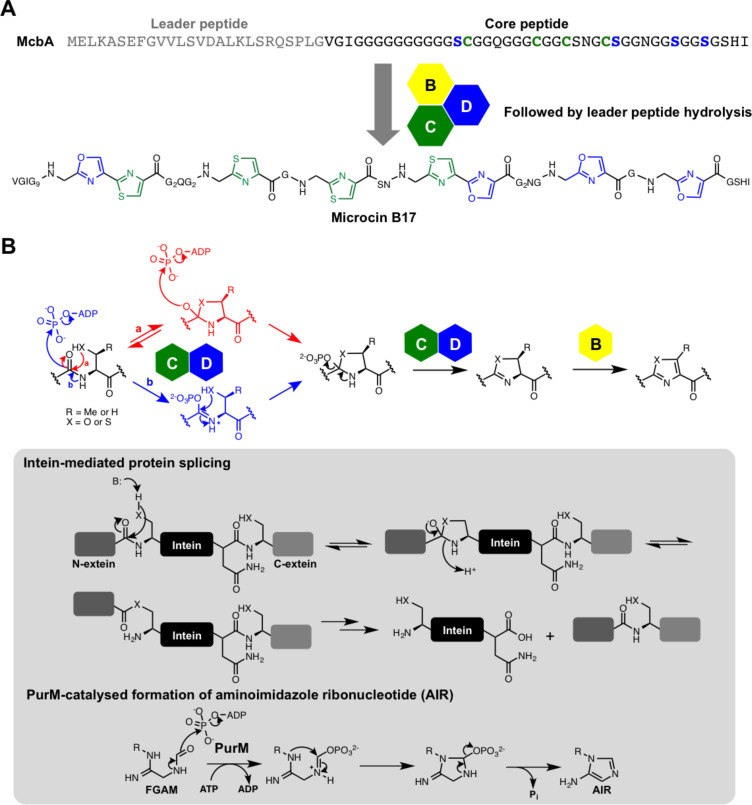
Formation of thiazoles and oxazoles in RiPPs. A) Biosynthesis of microcin B17. B) Mechanistic models for the introduction of azol(in)es into microcin, where pathway a was reported by the authors as the likely order of steps. An analogous mechanism was proposed in the biosynthesis of trunkamide, but with the transfer of AMP instead of phosphate. Inset: partial mechanism of intein-mediated protein splicing, which proceeds via a reversible hemiorthoamide, and the proposed mechanism of PurM-catalysed conversion of formylglycinamide ribonucleotide (FGAM) into aminoimidazole ribonucleotide (AIR), which involves activation of an amide by ATP and a 5-endo-trig cyclisation.
Figure 4
Figure 4
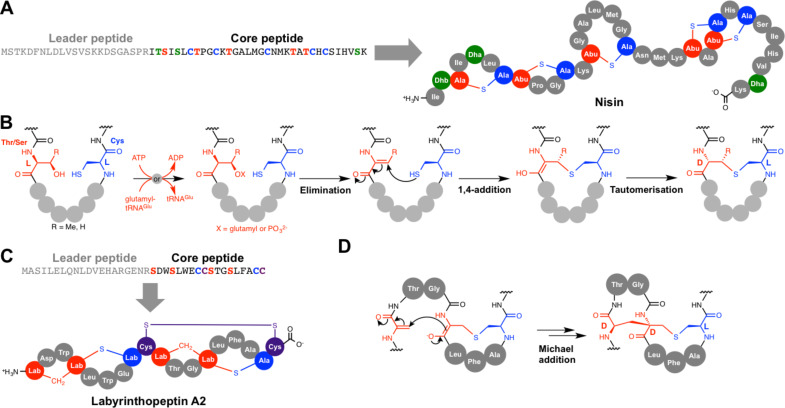
Lanthionine bond formation. A) Nisin and its precursor peptide. B) Mechanism of lanthionine bond formation for class I–IV lanthionine synthetases. GTP is used in an analogous way to ATP by some enzymes, for example in the biosynthesis of labyrinthopeptin A2. C) Labyrinthopeptin A2 and its precursor peptide. D) Mechanism for labionin formation in the biosynthesis of labyrinthopeptin A2.
Figure 5
Figure 5
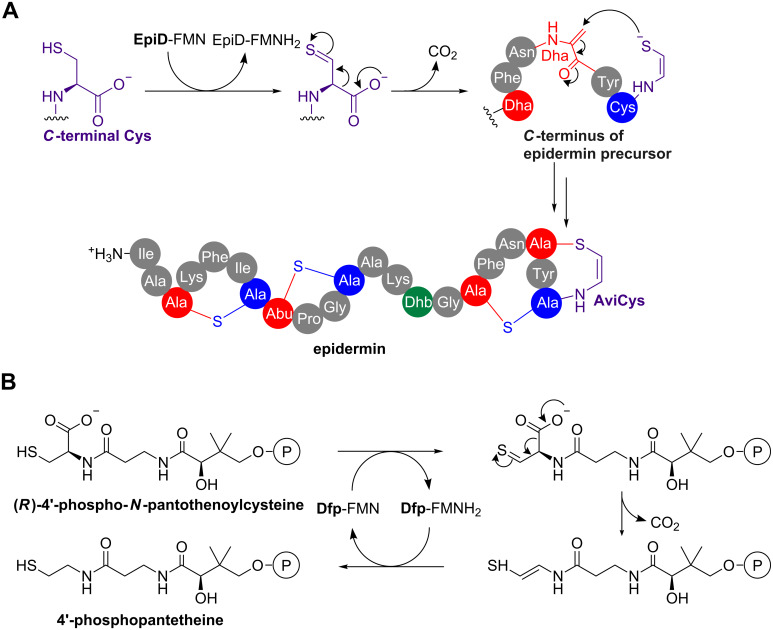
S-[(Z)-2-Aminovinyl]-D-cysteine (AviCys) formation in the epidermin pathway. A) Mechanisms for decarboxylation and 1,4-addition. B) Mechanism for the E. coli Dfp-catalysed conversion of (R)-4'-phospho-N-pantothenoylcysteine into 4'-phosphopantetheine during coenzyme A biosynthesis. The function of Dfp was discovered following the mechanistic characterisation of EpiD.
Figure 6
Figure 6
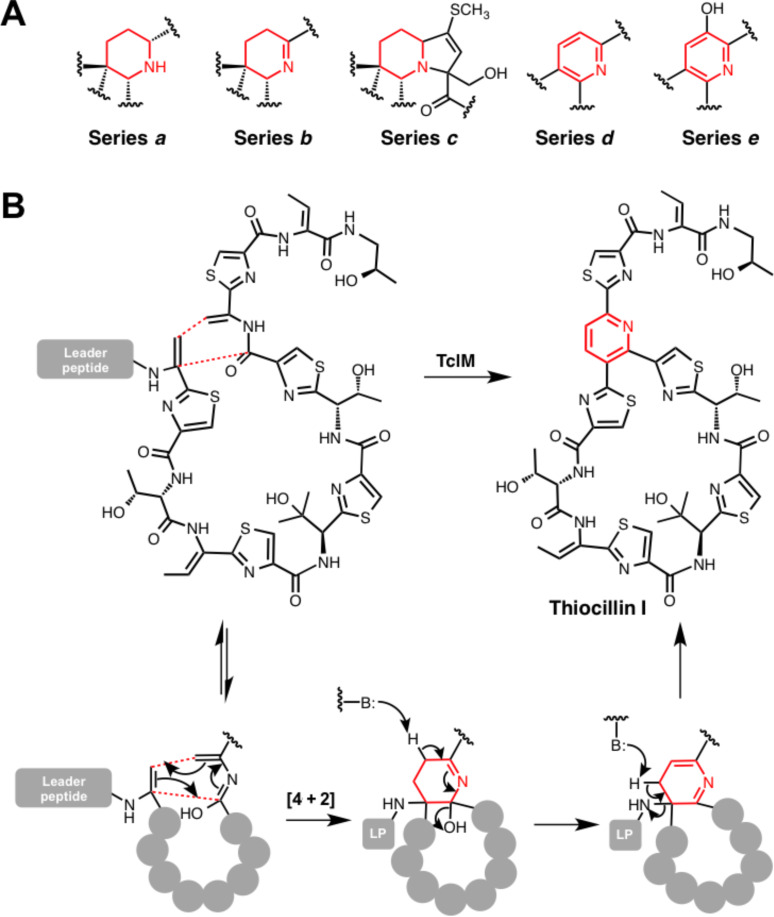
Cyclisation in the biosynthesis of thiopeptides. A) Mechanism of TclM-catalysed heterocyclisation in the biosynthesis of thiocillin I. B) An overview of the various 6-membered nitrogen-containing heterocycles that are found in thiopeptides.
Figure 7
Figure 7
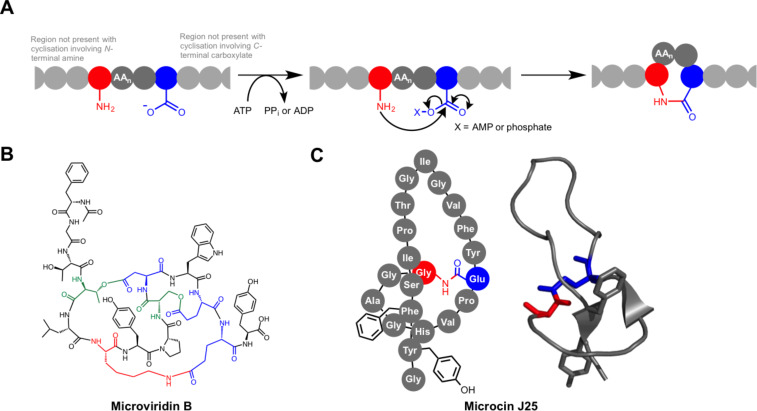
ATP-dependent macrocyclisation. A) General mechanism for ATP-dependent macrolactonisation or macrolactamisation in RiPPs. B) Structure of microviridin B, where the nucleophilic residues involved in the formation of cyclic esters are coloured green. C) Illustration of microcin J25 alongside a solution NMR structure [93] of this molecule (PDB: 1PP5). The Phe19 and Tyr20 side chains are shown in both structures to illustrate how the lasso peptide is conformationally restricted following cyclisation.
Figure 8
Figure 8
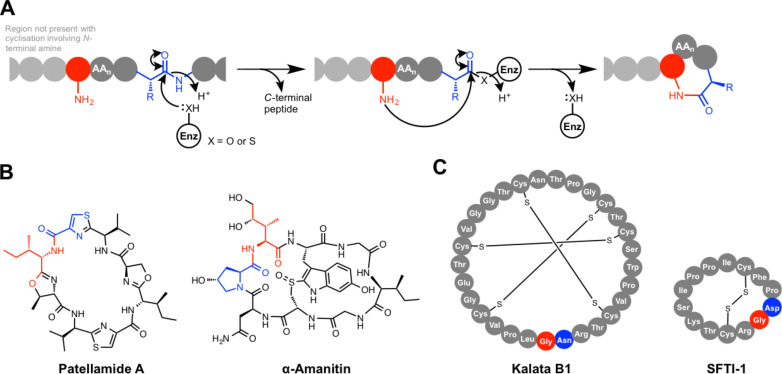
Peptidase-like macrolactam formation. A) General mechanism. B) Examples of RiPPs cyclised by serine protease-like enzymes. C) Examples of RiPPs cyclised by cysteine protease-like enzymes.
Figure 9
Figure 9
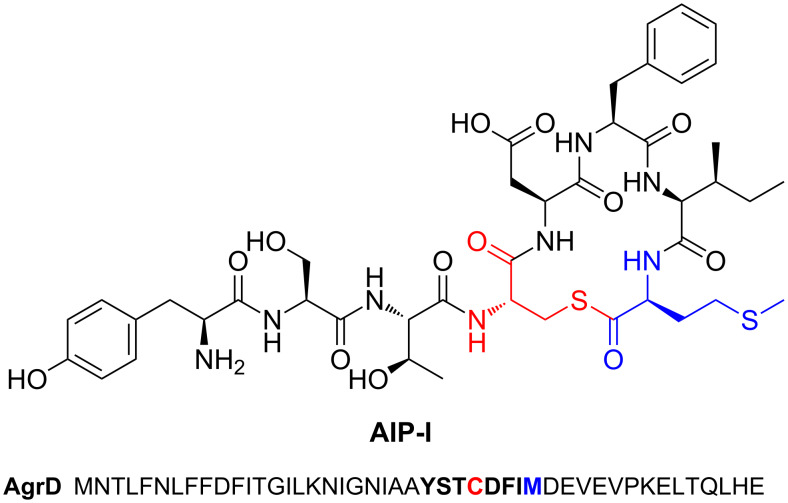
Structure of autoinducing peptide AIP-I from Staphylococcus aureus and the sequence of the corresponding precursor peptide AgrD.
Figure 10
Figure 10
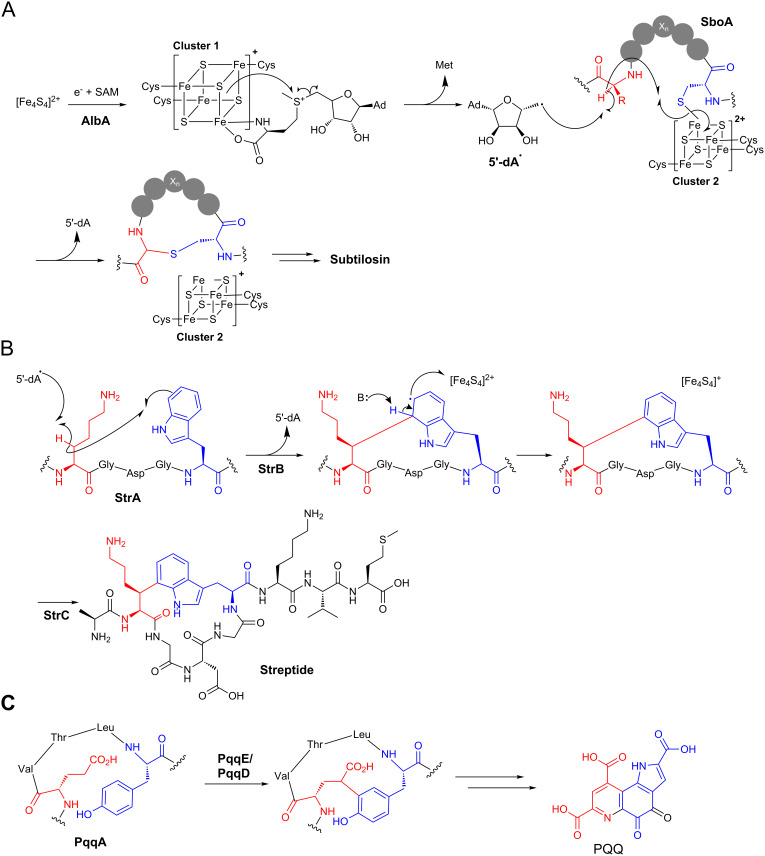
Radical cyclisation in RiPP biosynthesis. A) AlbA-catalysed formation of thioethers in the biosynthesis of subtilosin. The mechanism for deoxyadenosine radical formation is consistent throughout most radical SAM enzymes. B) Mechanism of carbon–carbon cross-linking in streptide biosynthesis. C) Proposed carbon–carbon bond formation by SPASM protein PqqE in the biosynthesis of pyrroloquinoline quinone (PQQ).
Figure 11
Figure 11
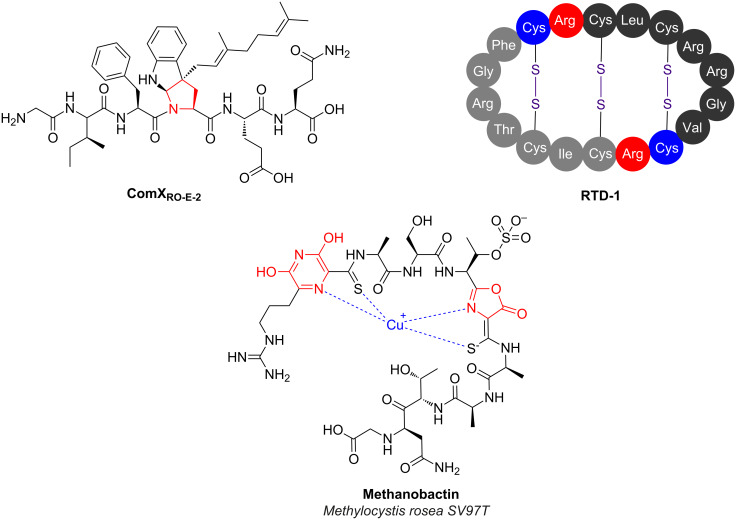
RiPPs with uncharacterised mechanisms of cyclisation. Unusual heterocycles in ComX and methanobactin are indicated in red. RTD-1 is formed by the head-to-tail dimerisation of precursor peptides encoded on two separate genes.

References

    1. Marahiel M A. Nat Prod Rep. 2016;33:136–140. doi: 10.1039/C5NP00082C. - DOI - PubMed
    1. Walsh C T. Nat Prod Rep. 2016;33:127–135. doi: 10.1039/C5NP00035A. - DOI - PubMed
    1. Lautru S, Gondry M, Genet R, Pernodet J-L. Chem Biol. 2002;9:1355–1364. doi: 10.1016/S1074-5521(02)00285-5. - DOI - PubMed
    1. Gondry M, Sauguet L, Belin P, Thai R, Amouroux R, Tellier C, Tuphile K, Jacquet M, Braud S, Courçon M, et al. Nat Chem Biol. 2009;5:414–420. doi: 10.1038/nchembio.175. - DOI - PubMed
    1. Arnison P G, Bibb M J, Bierbaum G, Bowers A A, Bugni T S, Bulaj G, Camarero J A, Campopiano D J, Challis G L, Clardy J, et al. Nat Prod Rep. 2013;30:108–160. doi: 10.1039/C2NP20085F. - DOI - PMC - PubMed