. 2016 Aug 26:7:12439.
doi: 10.1038/ncomms12439.

The plastid metalloprotease FtsH6 and small heat shock protein HSP21 jointly regulate thermomemory in Arabidopsis

Affiliations

The plastid metalloprotease FtsH6 and small heat shock protein HSP21 jointly regulate thermomemory in Arabidopsis

Mastoureh Sedaghatmehr et al. Nat Commun. .

Abstract

Acquired tolerance to heat stress is an increased resistance to elevated temperature following a prior exposure to heat. The maintenance of acquired thermotolerance in the absence of intervening stress is called 'thermomemory' but the mechanistic basis for this memory is not well defined. Here we show that Arabidopsis HSP21, a plastidial small heat shock protein that rapidly accumulates after heat stress and remains abundant during the thermomemory phase, is a crucial component of thermomemory. Sustained memory requires that HSP21 levels remain high. Through pharmacological interrogation and transcriptome profiling, we show that the plastid-localized metalloprotease FtsH6 regulates HSP21 abundance. Lack of a functional FtsH6 protein promotes HSP21 accumulation during the later stages of thermomemory and increases thermomemory capacity. Our results thus reveal the presence of a plastidial FtsH6-HSP21 control module for thermomemory in plants.


Figures
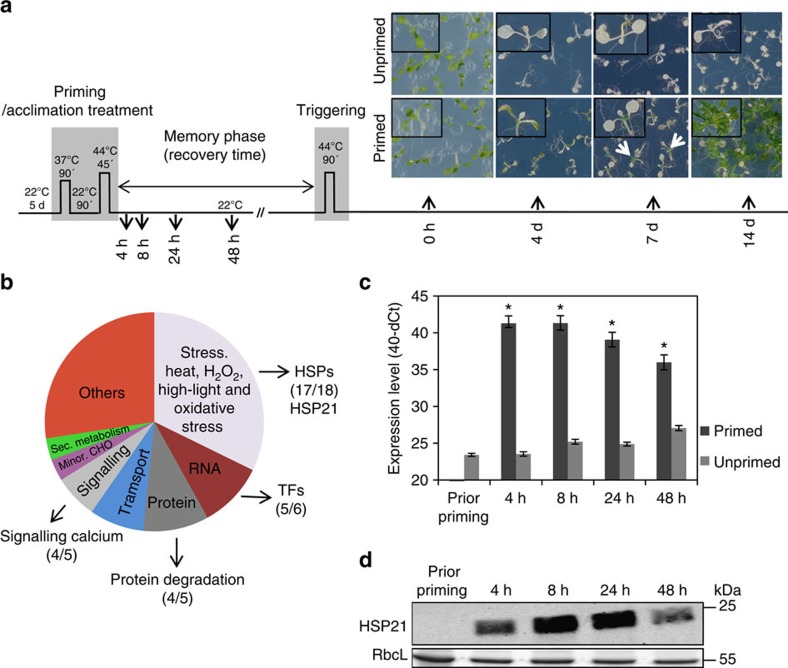
Figure 1
Figure 1. Differential response of primed and unprimed plants to heat stress and identification of thermomemory-associated genes.
(a) Schematic representation of the thermomemory experimental set-up. Unless otherwise indicated, five-day-old Arabidopsis thaliana seedlings were subjected to a priming heat regime of 90 min, 37 °C, followed by 90 min recovery at 22 °C, and 45 min at 44 °C. After priming, seedlings were returned to normal growth condition at 22 °C for 3 or 4 days (memory phase), and then subjected to the heat stress triggering stimulus (90 min, 44 °C). Subsequently, seedlings were transferred to normal growth condition (22 °C) and photographed after 0 h (right after triggering), 4, 7 and 14 days, respectively. Unprimed plants received only the triggering stimulus. Note, cotyledons of both, primed and unprimed seedlings bleach, but only primed plants (not unprimed plants) develop new leaves (arrows point to examples) and continue to grow after triggering. (b) Classification of memory-induced genes into functional categories (biological processes) according to their GO term. (c) Quantative reverse trancription–PCR and (d) Immunoblot analyses revealed enhanced transcript and protein abundance of HSP21 until 48 h into the memory phase in Arabidopsis accession Col-0. In c, values were expressed as the difference between an arbitrary value of 40 and dCt, so that high 40-dCt value indicates high gene expression level. Error bars indicate means±s.d. of three independent biological replicates each containing a pool of ∼100 seedlings. Asterisks indicate statistically significant difference (P<0.01; Student's t-test) from the unprimed conditions. In d, immunodetection was performed using anti-HSP21 antibody (top panel). RbcL, Ribulose 1,5-bisphosphate carboxylase/oxygenase large subunit (loading control; bottom panel). kDa, kilo Dalton.
Figure 2
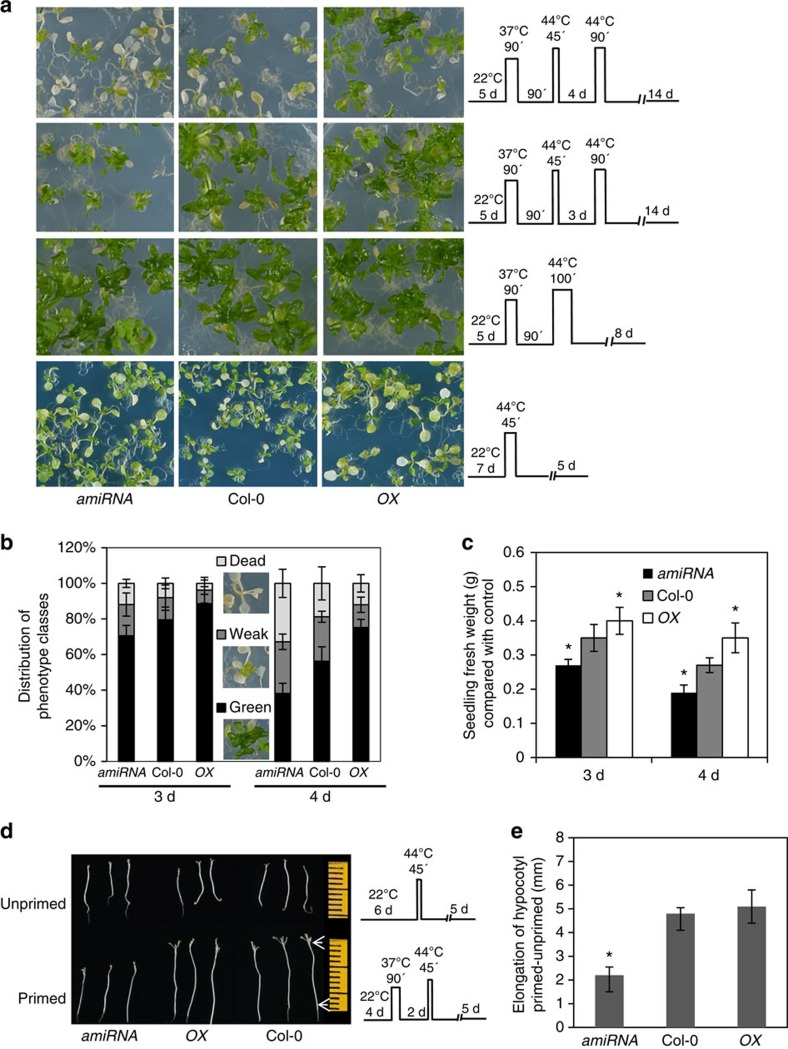
Figure 2. HSP21 affects thermomemory.
Seedlings of HSP21 transgenic and wild-type (Col-0) plants were exposed to different heat stress regimes (schematically shown on the right of a and d). (a) Upper middle and top panels: heat stress triggering after extended recovery, that is, 3 and 4 days, respectively, following the priming treatment. Lower middle panel: acquired heat stress tolerance. Bottom panel: basal heat stress tolerance; heat stress applied to 7-day-old seedlings. Following heat stress, seedlings were transferred to normal growth condition (22 °C) and photographed after 14 days (upper middle and top panels), 8 days (lower middle) or 5 days (bottom). (b,c) Quantification of results shown in a (upper middle and top panels). (b) Percentage of seedlings in different phenotype classes. Phenotypes were determined 14 days after triggering. Seedlings were counted as ‘green' (if shoot regeneration was vivid and almost the entire plant was green), ‘weak' (if shoot regeneration was weak and plants were largely pale), or ‘dead'. Representative images are shown. At 3 d recovery, data for HSP21 transgenic lines are not significantly different from Col-0, except for green seedlings of HSP21-amiRNA. At 4-day recovery all data for HSP21 transgenic lines are different from Col-0, except for ‘weak' seedlings of HSP21-amiRNA (P<0.05; one-way analysis of variance (ANOVA) least significant difference (LSD) test). (c) Seedling fresh weight compared to Col-0. In b and c, means±s.d. are given (n=7 plates with ∼25 seedlings each). (d) Hypocotyl elongation of HSP21 transgenic plants and Col-0 under heat stress. Six-day-old seedlings were subjected to heat stress triggering without (unprimed) or with (primed) pre-treatment at moderate temperature stress as shown. Photos were taken 5 days after triggering. White arrows exemplarily demarcate the upper and lower ends of the hypocotyl. A ruler was included in all images (here shown on the right) to determine hypocotyl lengths. (e) Hypocotyl lengths measured 5 days after recovery from the heat stress triggering and compared between primed and unprimed seedlings. Means±s.d. are given (n=6 plates with ∼20 seedlings each). amiRNA, HSP21-amiRNA line; OX, 35S:HSP21 line. Asterisks in c and e indicate statistically significant difference (P<0.05; one-way ANOVA LSD test) from Col-0.
Figure 3
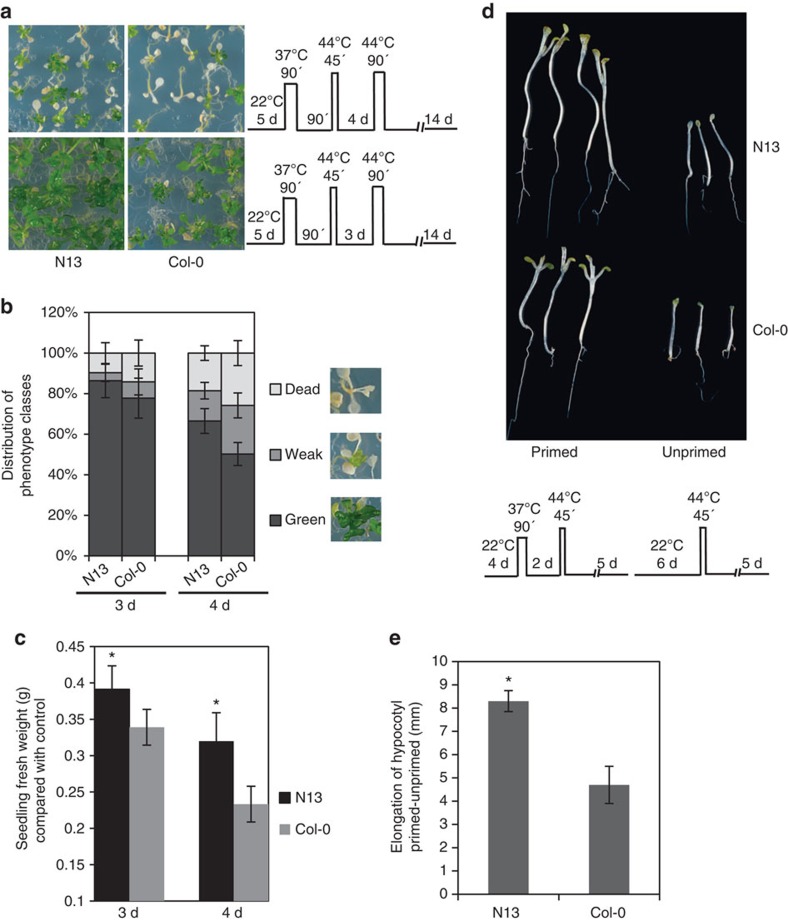
Figure 3. Accession N13 has a superior ability to memorise a past heat stress.
(a) Five-day-old seedlings of Arabidopsis accessions N13 and Col-0 were subjected to the heat stress triggering stimulus 3 or 4 days after priming, as shown schematically on the right of each section. (b,c) Quantification of phenotypes. (b) Percentage of seedlings in different phenotype classes. Images show representative phenotype categories as explained in legend to Fig. 2b. At 3 d recovery, data for N13 are not significantly different from Col-0. At 4 d recovery all data for N13 are different from Col-0 (P<0.05; Student's t-test). (c) Seedling fresh weight compared to control plants. In b and c, means±s.d. are given (n=10 plates with ∼25 seedlings each). (d) Hypocotyl elongation after heat stress. Six-day-old seedlings were subjected to the heat stress triggering stimulus without (unprimed) or with (primed) pre-treatment with moderate temperature stress as shown schematically. Photos were taken 5 days after triggering. (e) Hypocotyl lengths measured 5 days after recovery from the heat stress triggering stimulus and compared between primed and unprimed conditions. Means±s.d. are given (n=6 plates with ∼20 seedlings each). Asterisks in c and e indicate statistically significant difference (P<0.01; Student's t-test) from the Col-0 control.
Figure 4
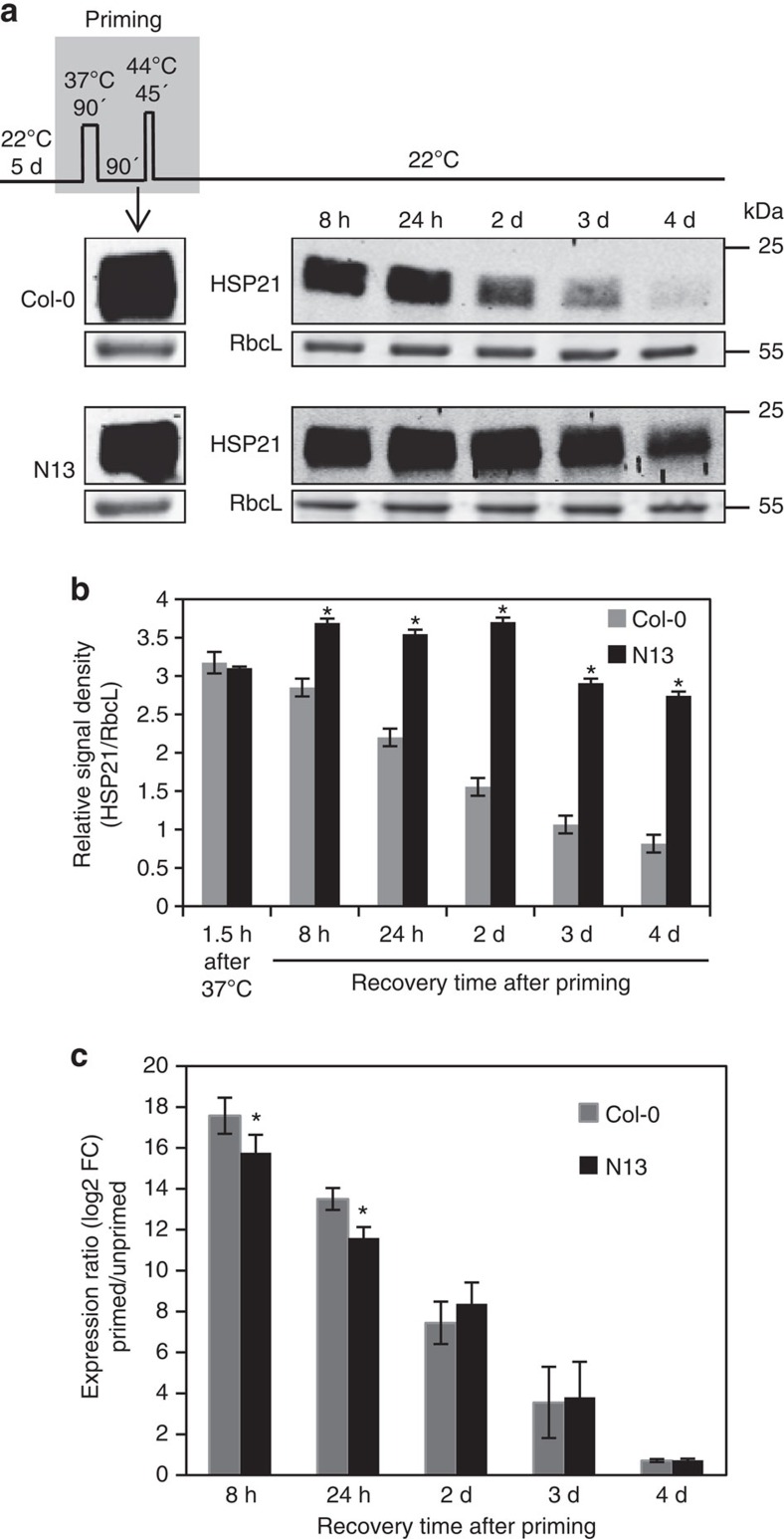
Figure 4. Differential abundance of HSP21 in Arabidopsis accessions N13 and Col-0 during the thermomemory phase.
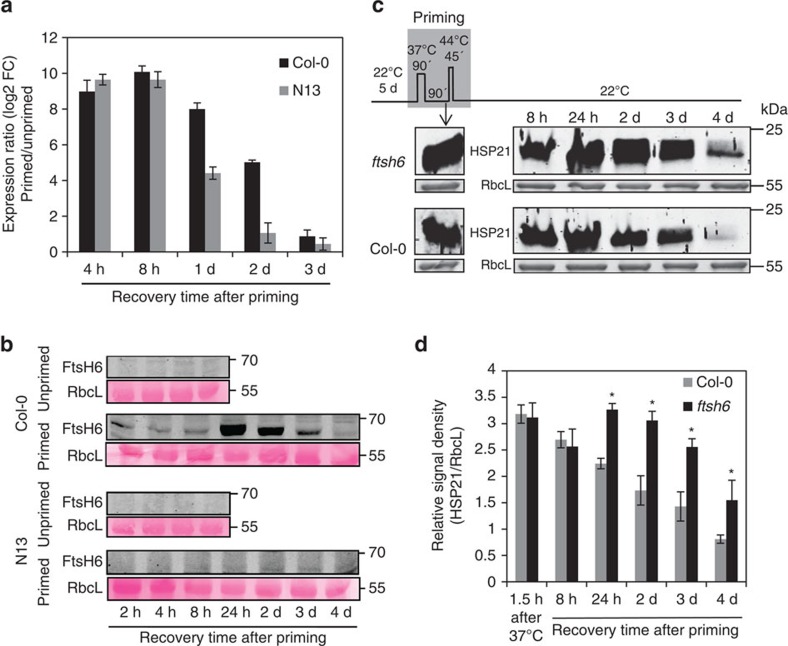
(a) Immunoblot analysis of HSP21 protein level after the first step of priming treatment (90 min, 37 °C) and during the thermomemory phase. RbcL, Ribulose 1,5-bisphosphate carboxylase/oxygenase large subunit (loading control). kDa, kilo Dalton. (b) Signals of immunoblot analyses were quantified using ImageJ and normalized to the amount of RbcL in the same samples. Means±s.d. are given (n=3, independent biological replicates each representing a pool of ∼120 seedlings grown on six plates; full gel blots used for the quantifications are shown in Supplementary Fig. 10). (c) HSP21 expression in N13 and Col-0 seedlings during memory phase compared to unprimed controls. FC, fold change. Means±s.d. (n=3, independent biological replicates each representing a pool of ∼120 seedlings grown on six plates). Asterisks in b and c indicate statistically significant difference (P<0.05; Student's t-test) from the Col-0 control.
Figure 5
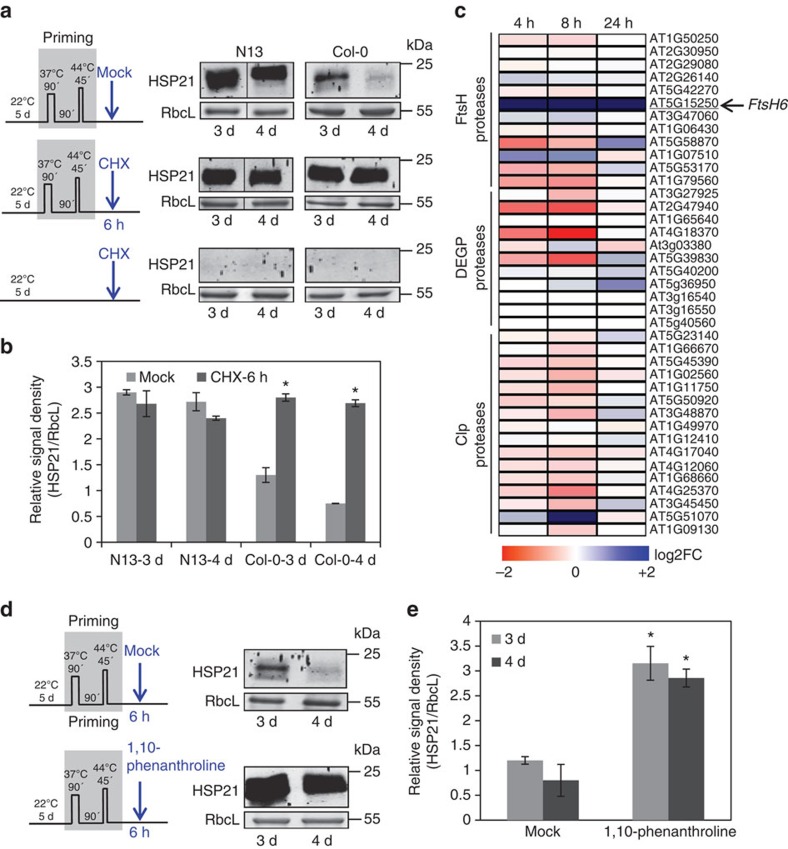
Figure 5. The effect of cycloheximide and 1,10-phenanthroline on the accumulation of HSP21.
(a) Immunoblot analyses of HSP21 in accessions N13 and Col-0 at days 3 and 4 of the memory phase on cycloheximide (CHX) and mock (0.1% dimethylsulphoxide) treatments. CHX or mock treatment was applied to Arabidopsis seedlings at 6 h into the memory phase, as shown schematically on the left of each section. Bottom panel: Immunoblot analyses of HSP21 in accessions N13 and Col-0 in unprimed samples. Note the absence of HSP21 protein. RbcL, Ribulose 1,5-bisphosphate carboxylase/oxygenase, large subunit (loading control). Bands shown for mock- and CHX-treated N13 seedlings (primed) have been rearranged for presentation purpose. The original blot images are shown in Supplementary Fig. 10. (b) Signals of immunoblot analyses like in a were quantified using ImageJ and normalized to the amount of RbcL in the same samples. Mean±s.d. are given (n=3, independent biological replicates each representing a pool of ∼100 seedlings grown on five plates). Asterisks indicate significant difference in the level of HSP21 between CHX- and mock-treated samples at each indicated time point (P<0.05; Student's t-test). (c) Heat map showing the fold change (log2 basis) of the expression of major nuclear-encoded (plastid) chloroplast proteases in Col-0 seedlings at 4 h, 8 h and 24 h after the priming stimulus (that is, during the memory phase) compared with control plants (unprimed). Blue, upregulated; red, downregulated; scale bar given at the bottom of the heat map. (d) Immunoblot analyses of HSP21 protein abundance in Col-0 seedlings at days 3 and 4 days of the memory phase on treatment with 1,10-phenanthroline (a metalloprotease inhibitor). Seedlings were harvested for immunoblotting after days 3 or 4. Immunodetection was performed using anti-HSP21 antibody. RbcL, Ribulose 1,5-bisphosphate carboxylase/oxygenase large subunit (loading control). (e) Signals of immunoblot analyses like in d were quantified using ImageJ and normalized to the amount of RbcL in the same samples. Means±s.d. (n=3, independent biological replicates each representing a pool of ∼100 seedlings grown on five plates). Asterisks indicate significant difference in the level of HSP21 between mock- and 1,10-phenanthroline-treated samples at each indicated time point (P<0.05; Student's t-test). kDa, kilo Dalton. Uncropped gel blots used for the quantification of data in b and e are shown in Supplementary Fig. 10.
Figure 6
Figure 6. Metalloprotease FtsH6 is involved in thermopriming.
(a) FtsH6 expression in Arabidopsis N13 and Col-0 seedlings during the memory phase compared to unprimed controls. FC, fold change. Error bars indicate means±s.d. of three independent biological replicates each containing a pool of ∼160 seedlings. (b) Immunoblot analysis of FtsH6 protein in accessions Col-0 and N13 at different time points of the memory phase. Immunodetection was performed using anti-FtsH6 antibody (top panels). RbcL, Ribulose 1,5-bisphosphate carboxylase/oxygenase large subunit (loading control; bottom panels). Note the absence of FtsH6 protein in Col-0 unprimed samples and in N13 unprimed and primed samples. (c) Immunoblot analysis of HSP21 protein in ftsh6 mutant (Salk_012429) and Col-0 seedlings after the first step of the priming treatment (90 min, 37 °C) and during the thermomemory phase. Immunodetection was performed using anti-HSP21 antibody (top panel). RbcL, ribulose 1,5-bisphosphate carboxylase/oxygenase large subunit (loading control; bottom panel). (d) Signals of the immunoblot analyses were quantified using ImageJ and normalized to the amount of RbcL in the same samples. Means±s.d. are given (n=3, independent biological replicates each representing a pool of ∼100 seedlings grown on five plates; gel blots used for the quantification are shown in Supplementary Fig. 10). Asterisks indicate statistically significant difference (P<0.05; Student's t-test) from the Col-0 control. kDa, kilo Dalton.
Figure 7
Figure 7. Overexpression of FtsH6 restricts thermomemory in N13.
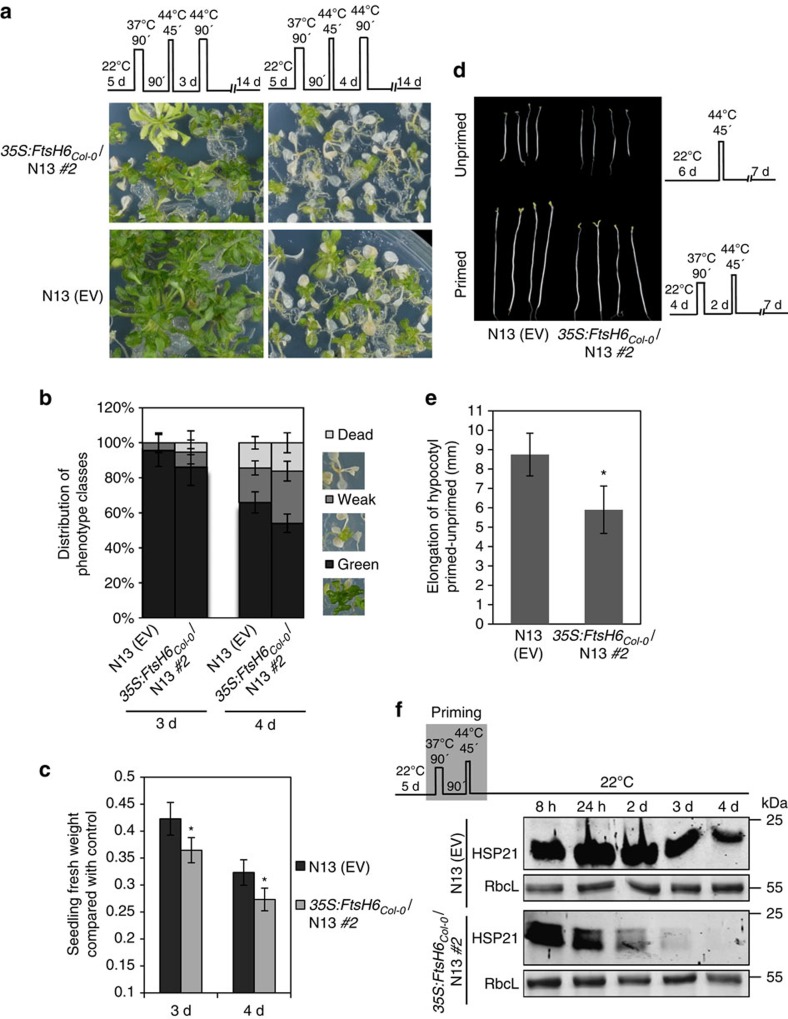
(a) Seedlings of 35S:FtsH6Col-0/N13 and N13 EV were exposed to different heat stress regimes schematically shown on the top of each section; heat stress triggering stimulus after 3 days (left panels) and 4 days (right panels), respectively, following the priming treatment. (b,c) Quantification of results shown in a. (b) The percentage of seedlings in different phenotype classes. Phenotype analysis was performed 14 days after the triggering stimulus. Images show representative phenotype categories as explained in legend to Fig. 2b. At 3 d and 4 d recovery, data for 35S:FtsH6Col-0/N13 are significantly different from N13, except for dead seedlings of 35S:FtsH6Col-0/N13 at 4 days (P<0.05; Student's t-test). (c) Seedling fresh weight compared to control plants. Means±s.d. are given (n=10 plates with ∼25 seedlings each). (d) Hypocotyl elongation assay for 35S:FtsH6Col-0/N13 and N13 EV seedlings under heat stress. Six-day-old seedlings were subjected to heat stress triggering stimulus without (unprimed) or with (primed) pre-treatment with moderate temperature stress as shown schematically. Photos were taken 7 days after triggering. (e) Hypocotyl lengths measured 7 days after recovery from the heat stress triggering stimulus and compared between primed and unprimed seedlings. Means±s.d. are given (n=10 plates with ∼20 seedlings each). Asterisks in c and e indicate statistically significant difference (P<0.05; Student's t-test) from the N13 EV control. (f) Immunoblot analysis of HSP21 protein in 35S:FtsH6Col-0/N13 and N13 EV seedlings during the thermomemory phase. Immunodetection was performed using anti-HSP21 antibody (top panel). RbcL, ribulose 1,5-bisphosphate carboxylase/oxygenase large subunit (loading control; bottom panels). kDa, kilo Dalton.
Figure 8
Figure 8. Proposed model for the regulation of thermomemory via the control of HSP21 protein abundance by FtsH6.
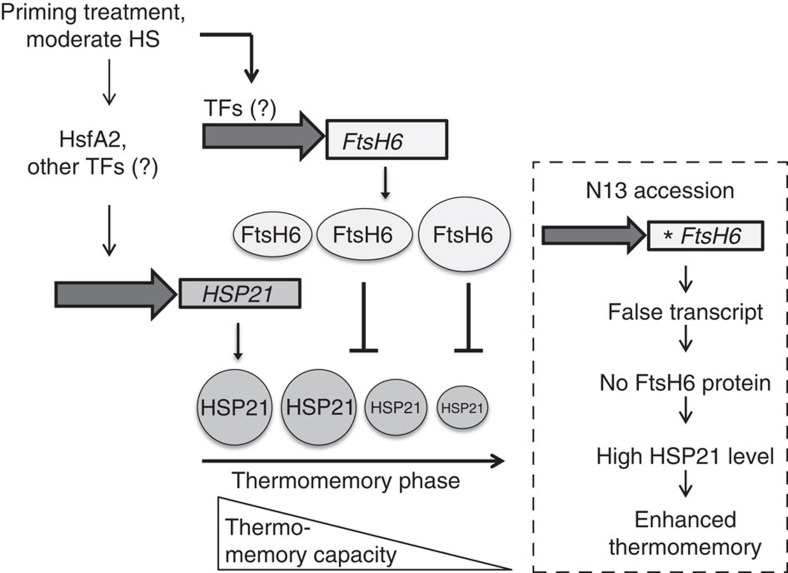
A priming treatment (heat stress) induces HSP21 and FtsH6 expression, and accumulation of the two plastidial proteins. On progression into the memory phase, HSP21 protein abundance decreases due to FstH6 activity, which restricts the duration of the thermomemory. Right: No FtsH6 protein is produced in Arabidopsis accession N13, due to DNA polymorphisms in its coding sequence (the asterisk indicates the premature stop codon in the N13 FtsH6 sequence). The lack of FtsH6 allows HSP21 protein to remain at higher abundance for a longer time, thereby extending thermomemory duration. In addition to HSP21, FtsH6 may control the abundance of other, currently unknown, target proteins during the thermomemory phase (not indicated).

References

    1. Balmer A., Pastor V., Gamir J., Flors V. & Mauch-Mani B. The 'prime-ome': towards a holistic approach to priming. Trends Plant Sci. 20, 443–452 (2015). - PubMed
    1. Hilker M. et al. Priming and memory of stress responses in organisms lacking a nervous system. Biol. Rev. Camb. Philos. Soc. 2015, 20 (2015). - PubMed
    1. Chen B., Retzlaff M., Roos T. & Frydman J. Cellular strategies of protein quality control. Cold Spring Harb. Perspect. Biol. 3, a004374 (2011). - PMC - PubMed
    1. Kotak S. et al. Complexity of the heat stress response in plants. Curr. Opin. Plant Biol. 10, 310–316 (2007). - PubMed
    1. Sun Y. & MacRae T. H. Small heat shock proteins: molecular structure and chaperone function. Cell Mol. Life Sci. 62, 2460–2476 (2005). - PMC - PubMed

Publication types

MeSH terms