


Antimicrobial activity, cytotoxicity and chemical analysis of lemongrass essential oil (Cymbopogon flexuosus) and pure citral
- PMID: 27562470
- PMCID: PMC5071368
- DOI: 10.1007/s00253-016-7807-y
Antimicrobial activity, cytotoxicity and chemical analysis of lemongrass essential oil (Cymbopogon flexuosus) and pure citral
Abstract
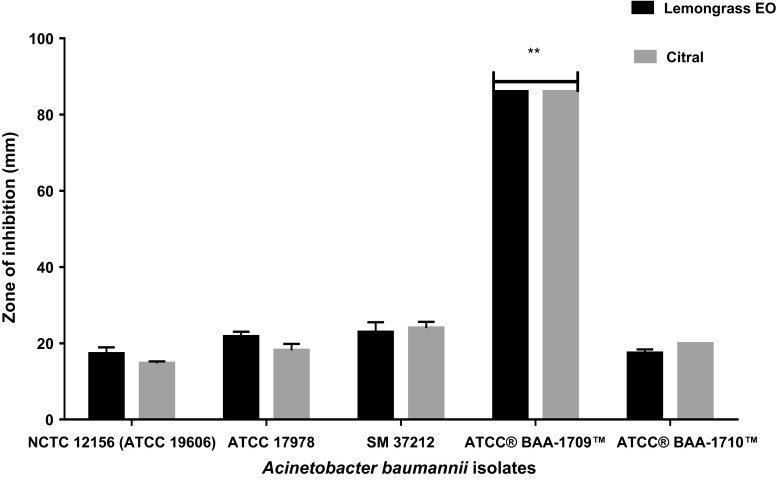
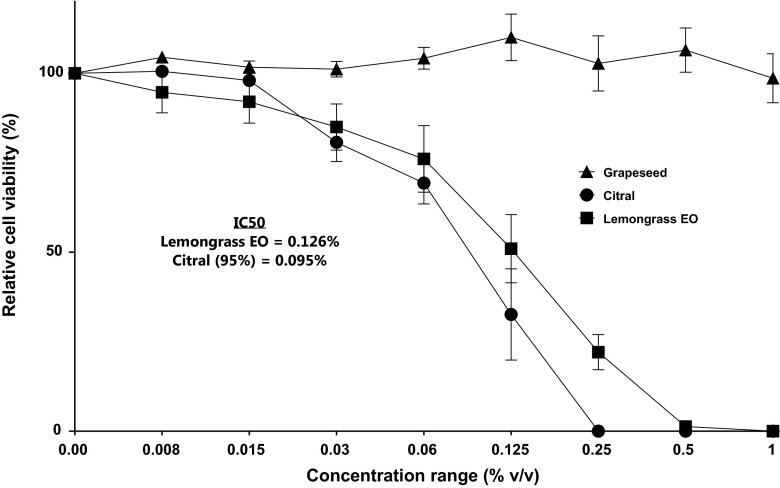
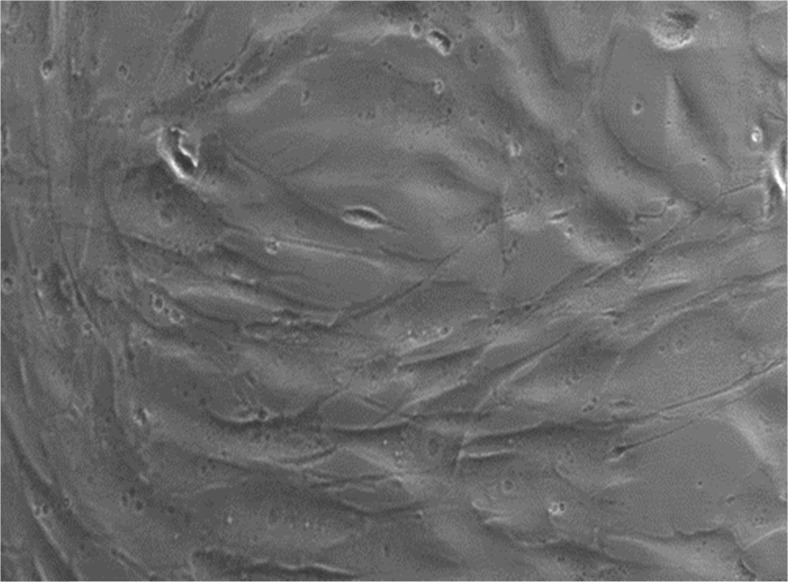
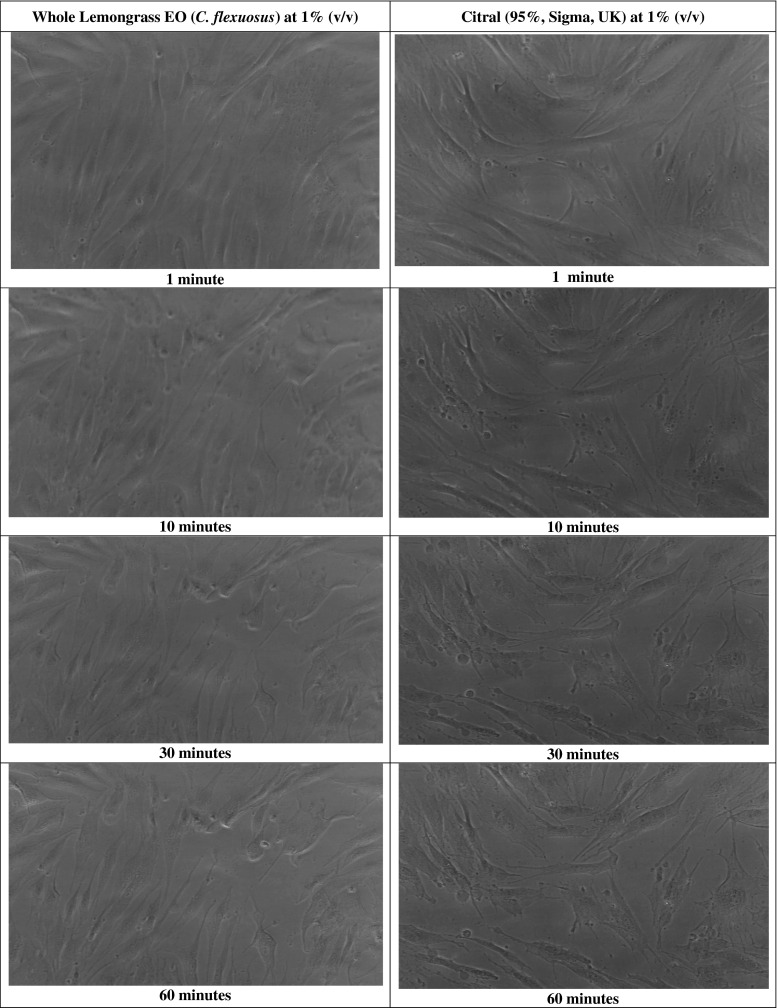
The aim of this study was to determine the antimicrobial effects of lemongrass essential oil (C. flexuosus) and to determine cytotoxic effects of both test compounds on human dermal fibroblasts. Antimicrobial susceptibility screening was carried out using the disk diffusion method. Antimicrobial resistance was observed in four of five Acinetobacter baumannii strains with two strains confirmed as multi-drug-resistant (MDR). All the strains tested were susceptible to both lemongrass and citral with zones of inhibition varying between 17 to 80 mm. The mean minimum inhibitory concentration (MIC) and minimum bactericidal concentration (MBC) of citral (mic-0.14 % and mbc-0.3 % v/v) was lower than that of Lemongrass (mic-0.65 % and mbc-1.1 % v/v) determined using the microtitre plate method. Cell viability using human dermal fibroblasts (HDF; 106-05a) was determined following exposure to both compounds and a control (Grapeseed oil) using the XTT assay and the IC50 determined at 0.095 % (v/v) for citral and 0.126 % (v/v) for lemongrass. Grapeseed oil had no effect on cell viability. Live cell imaging was performed using the LumaScope 500 imaging equipment and changes in HDF cell morphology such as necrotic features and shrinkage were observed. The ability of lemongrass essential oil (EO) and citral to inhibit and kill MDR A. baumannii highlights its potential for use in the management of drug-resistant infections; however, in vitro cytotoxicity does suggest further tests are needed before in vivo or ex vivo human exposure.
Keywords: Acinetobacter baumannii; IC50; Lemongrass oil; Multi-drug resistance (MDR); Toxicity.
Conflict of interest statement
The authors declare that they have no conflicts of interest. Ethical approval This article does not contain any studies with human participants or animals performed by any of the authors.
Figures
References
-
- Adukwu EC 2013. Ph.D. thesis. University of Northampton, Northampton, UK.
-
- Aleksic V, Mimica-Dukic N, Simin N, Nedeljkovic NS, Knezevic P. Synergistic effect of Myrtus communis L. essential oils and conventional antibiotics against multi-drug resistant Acinetobacter baumannii wound isolates. Phytomedicine. 2014;21(12):1666–1674. doi: 10.1016/j.phymed.2014.08.013. - DOI - PubMed
-
- BSAC methods for antimicrobial susceptibility testing, Version 13 June 2014.http://bsac.org.uk/wp-content/uploads/2014/06/BSAC-disc-susceptibility-t.... (Last accessed January 2015).
MeSH terms
Substances
LinkOut - more resources
Full Text Sources
Other Literature Sources
Molecular Biology Databases
