


Bladder preservation in non-metastatic muscle-invasive bladder cancer (MIBC): a single-institution experience
- PMID: 27563352
- PMCID: PMC4970626
- DOI: 10.3332/ecancer.2016.657
Bladder preservation in non-metastatic muscle-invasive bladder cancer (MIBC): a single-institution experience
Abstract
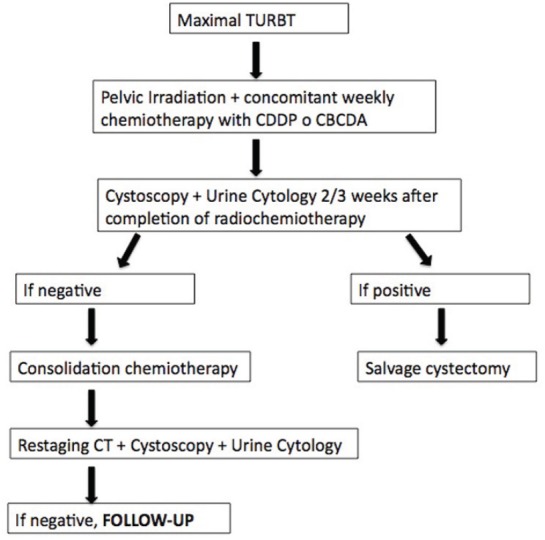
The aim of this study is to access the feasibility, toxicity profile, and tumour outcome of an organ preservation curative approach in non-metastatic muscle-invasive bladder cancer. A retrospective analysis was conducted on patients affected by M0 bladder cancer, who refused cystectomy and were treated with a curative approach. The standard bladder preservation scheme included maximal transurethral resection of bladder tumour (TURBT) and combination of radiotherapy and platin-based chemotherapy, followed by endoscopic evaluation, urine cytology, and instrumental evaluation. Thirteen patients fulfilled the inclusion criteria. TNM stage was cT2cN0M0 and cT2cNxM0, in 12 and one patients, respectively. All patients had transitional cell cancer. Twelve patients completed the whole therapeutic programme (a bimodal treatment without chemotherapy for one patient). Median follow-up is 36 months. None of the patients developed severe urinary or intestinal acute toxicity. In 10 patients with a follow-up > 6 months, no cases of severe late toxicity were observed. Response evaluated in 12 patients included complete response and stable disease in 11 patients (92%), and one patient (8%), respectively. At the time of data analysis (March 2016), 10 patients (77%) are alive with no evidence of disease, two patients (15%) died for other reasons, and one patient has suspicious persistent local disease. The trimodality approach, including maximal TURBT, radiotherapy, and chemotherapy for muscle-invasive bladder cancer, is well-tolerated and might be considered a valid and feasible option in fit patients who refuse radical cystectomy.
Keywords: concomitant chemoradiotherapy; organ preservation; trimodality; urinary bladder cancer.
Figures
References
-
- Stein JP, Lieskovsky G, Cote R, et al. Radical cystectomy in the treatment of invasive bladder cancer: long-term results in 1,054 patients. J Clin Oncol. 2001;19:666–75. - PubMed
-
- Shipley WU, Rose MA. Bladder cancer The selection of patients for treatment by full-dose irradiation. Cancer. 1985;55:2278–84. - PubMed
LinkOut - more resources
Full Text Sources
Other Literature Sources