. 2016 Nov;21(11):1315-1325.
doi: 10.1634/theoncologist.2016-0049. Epub 2016 Aug 26.

Clinical Actionability of Comprehensive Genomic Profiling for Management of Rare or Refractory Cancers

Affiliations

Clinical Actionability of Comprehensive Genomic Profiling for Management of Rare or Refractory Cancers

Kim M Hirshfield et al. Oncologist. 2016 Nov.

Abstract

Background: The frequency with which targeted tumor sequencing results will lead to implemented change in care is unclear. Prospective assessment of the feasibility and limitations of using genomic sequencing is critically important.

Methods: A prospective clinical study was conducted on 100 patients with diverse-histology, rare, or poor-prognosis cancers to evaluate the clinical actionability of a Clinical Laboratory Improvement Amendments (CLIA)-certified, comprehensive genomic profiling assay (FoundationOne), using formalin-fixed, paraffin-embedded tumors. The primary objectives were to assess utility, feasibility, and limitations of genomic sequencing for genomically guided therapy or other clinical purpose in the setting of a multidisciplinary molecular tumor board.

Results: Of the tumors from the 92 patients with sufficient tissue, 88 (96%) had at least one genomic alteration (average 3.6, range 0-10). Commonly altered pathways included p53 (46%), RAS/RAF/MAPK (rat sarcoma; rapidly accelerated fibrosarcoma; mitogen-activated protein kinase) (45%), receptor tyrosine kinases/ligand (44%), PI3K/AKT/mTOR (phosphatidylinositol-4,5-bisphosphate 3-kinase; protein kinase B; mammalian target of rapamycin) (35%), transcription factors/regulators (31%), and cell cycle regulators (30%). Many low frequency but potentially actionable alterations were identified in diverse histologies. Use of comprehensive profiling led to implementable clinical action in 35% of tumors with genomic alterations, including genomically guided therapy, diagnostic modification, and trigger for germline genetic testing.

Conclusion: Use of targeted next-generation sequencing in the setting of an institutional molecular tumor board led to implementable clinical action in more than one third of patients with rare and poor-prognosis cancers. Major barriers to implementation of genomically guided therapy were clinical status of the patient and drug access. Early and serial sequencing in the clinical course and expanded access to genomically guided early-phase clinical trials and targeted agents may increase actionability.

Implications for practice: Identification of key factors that facilitate use of genomic tumor testing results and implementation of genomically guided therapy may lead to enhanced benefit for patients with rare or difficult to treat cancers. Clinical use of a targeted next-generation sequencing assay in the setting of an institutional molecular tumor board led to implementable clinical action in over one third of patients with rare and poor prognosis cancers. The major barriers to implementation of genomically guided therapy were clinical status of the patient and drug access both on trial and off label. Approaches to increase actionability include early and serial sequencing in the clinical course and expanded access to genomically guided early phase clinical trials and targeted agents.

Keywords: Cancer; Molecular sequencing; Molecular targeted therapy; Mutation; Tumor genomics.


Conflict of interest statement

Disclosures of potential conflicts of interest may be found at the end of this article.

Figures
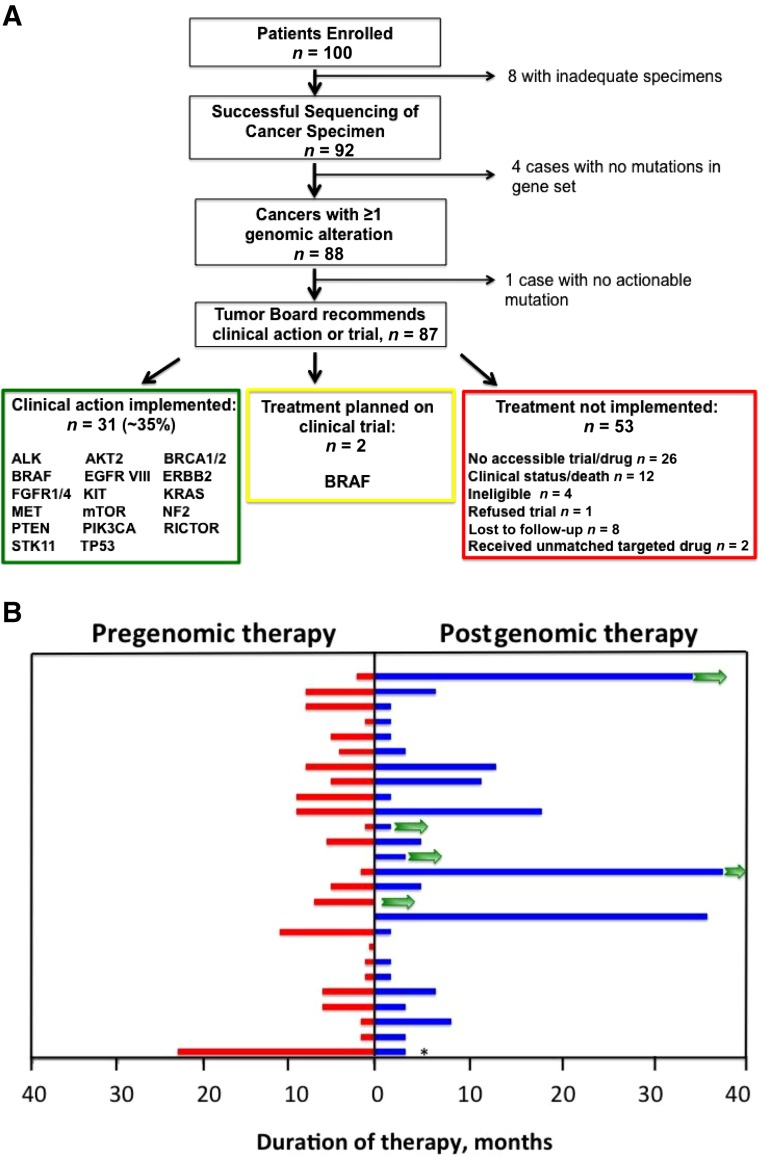
Figure 1.
Figure 1.
Tumor genomic profiling consort diagram and patient outcomes. (A): Comprehensive genomic profiling of tumors from 100 patients with rare or refractory cancers. Time from genomic testing to generation of formal recommendations averaged 3–4 weeks. Clinical action included enrollment in a therapeutic clinical trial, FDA-approved therapy, off-label use of approved therapy, discontinuation of ineffective targeted therapy, germline mutation testing, and diagnostic reclassification. Genes with alterations for which clinical action was implemented are listed in the respective categories. Two patients are being screened for participation in clinical trial with targeted therapy. Two patients with action implemented had targeted therapy prescribed but were then lost to follow-up. (B): Duration of therapy in individual patients before genomic profiling and with targeted therapy (not significant). Comparisons are for nontargeted therapy before genomic profiling (red) and duration of targeted therapy after genomic profiling (blue). Green arrows indicate patients with ongoing therapy. Last patient was on combined therapy with targeted agent, which was discontinued (∗) at 5 months for side effects. Patient has ongoing response with monotherapy. Abbreviation: FDA, U.S. Food and Drug Administration.
Figure 2.
Figure 2.
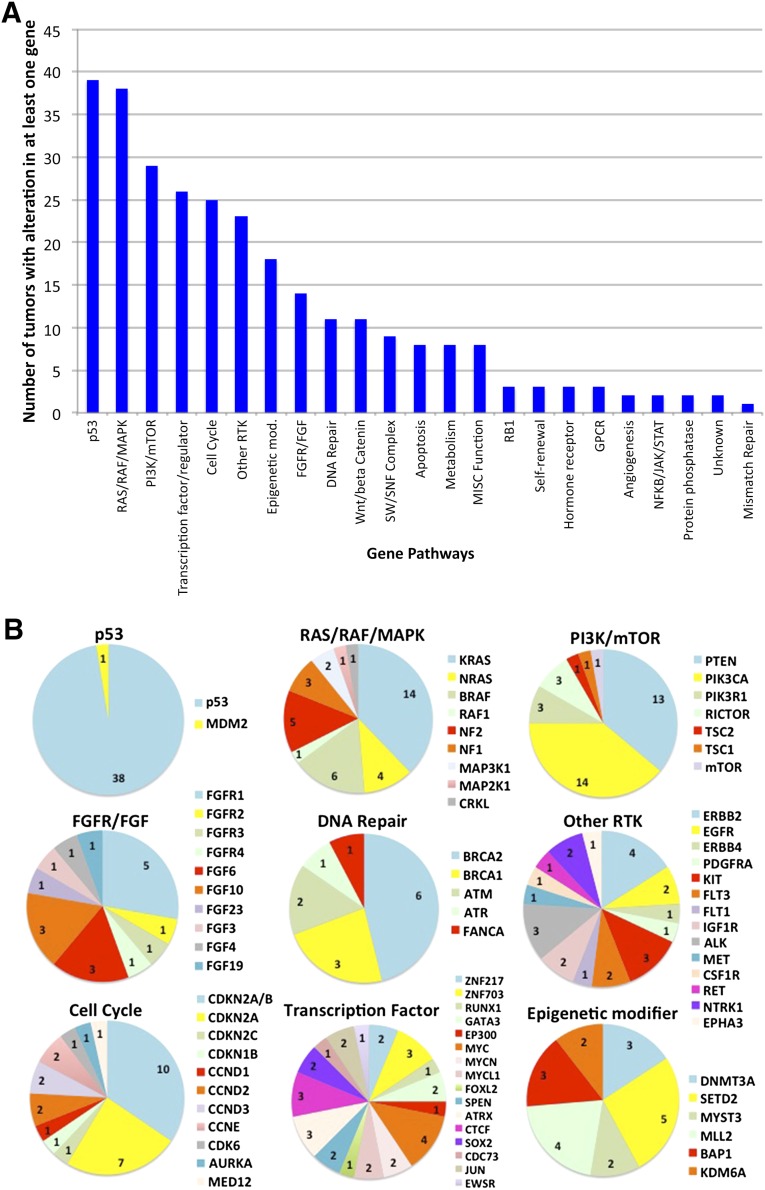
Mutational landscape identified in 92 different tumors based on functional pathways. (A): Types of alterations and number of alterations were reflective of tumor subtypes profiled. (B): For 9 of the 10 most frequent pathways, the frequency of genes with alterations within those pathways occurring is depicted. Wnt/β-catenin is not shown but had only two genes represented: APC (adenomatous polyposis coli) (n = 8) and MSH6 (MutS Homolog 6) (n = 1). Numbers represent the frequency of alterations affecting that gene.
Figure 3.
Figure 3.
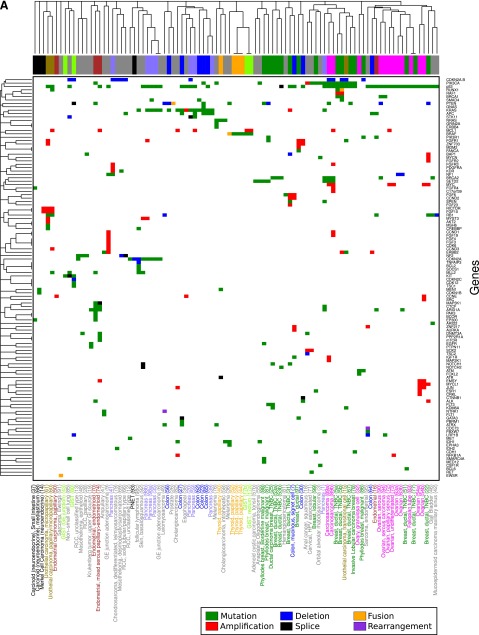
Hierarchical clustering of tumors with at least one genomic alteration by gene (A) and functional pathway (B). Tumor subtypes are represented in colored text below heat map and with corresponding boxes above heat map. In (A), box color (rows) within heat map depicts alteration in gene by type of genomic alteration; in (B), it depicts alteration in genes in functional pathway by type of genomic alteration. Alteration key: red, amplification; green, mutation; blue, deletion; purple, rearrangement; black, splice; orange, fusion; white, no alteration. The remaining colors are multiple alteration subtypes. Numbers in parentheses represent specimen number, and a, b, and c represent serial specimens.
Figure 3.
Figure 3.
Hierarchical clustering of tumors with at least one genomic alteration by gene (A) and functional pathway (B). Tumor subtypes are represented in colored text below heat map and with corresponding boxes above heat map. In (A), box color (rows) within heat map depicts alteration in gene by type of genomic alteration; in (B), it depicts alteration in genes in functional pathway by type of genomic alteration. Alteration key: red, amplification; green, mutation; blue, deletion; purple, rearrangement; black, splice; orange, fusion; white, no alteration. The remaining colors are multiple alteration subtypes. Numbers in parentheses represent specimen number, and a, b, and c represent serial specimens.
Figure 4.
Figure 4.
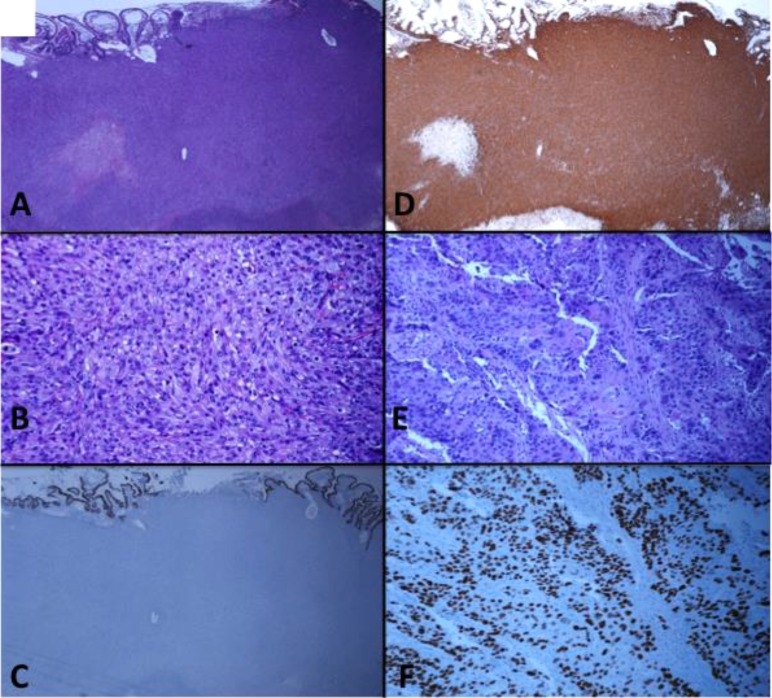
Genomic profiling aids in the diagnostic analysis of two anatomically distinct tumors from a single patient and ultimately suggests that tumors arose from the same precursor. Abdominal mass (A–D) shows a high-grade, vimentin-positive sarcoma with predominant epithelioid appearance and focal necrosis. (A, B): hematoxylin and eosin, low and high power, respectively; (C, D): low power, pancytokeratin and vimentin, respectively. The ovarian mass (E, F) shows a poorly differentiated, p40-positive squamous cell carcinoma. (E): Hematoxylin and eosin, high power. (F): p40, low power. CD117 expression was absent (data not shown).

References

    1. Kandoth C, McLellan MD, Vandin F, et al. Mutational landscape and significance across 12 major cancer types. Nature. 2013;502:333–339. - PMC - PubMed
    1. Vogelstein B, Papadopoulos N, Velculescu VE, et al. Cancer genome landscapes. Science. 2013;339:1546–1558. - PMC - PubMed
    1. McArthur GA, Chapman PB, Robert C, et al. Safety and efficacy of vemurafenib in BRAF(V600E) and BRAF(V600K) mutation-positive melanoma (BRIM-3): Extended follow-up of a phase 3, randomised, open-label study. Lancet Oncol. 2014;15:323–332. - PMC - PubMed
    1. Shaw AT, Kim DW, Nakagawa K, et al. Crizotinib versus chemotherapy in advanced ALK-positive lung cancer. N Engl J Med. 2013;368:2385–2394. - PubMed
    1. Tutt A, Robson M, Garber JE, et al. Oral poly(ADP-ribose) polymerase inhibitor olaparib in patients with BRCA1 or BRCA2 mutations and advanced breast cancer: A proof-of-concept trial. Lancet. 2010;376:235–244. - PubMed