


Prevalence, risk factors for infection and subtype distribution of the intestinal parasite Blastocystis sp. from a large-scale multi-center study in France
- PMID: 27566417
- PMCID: PMC5002209
- DOI: 10.1186/s12879-016-1776-8
Prevalence, risk factors for infection and subtype distribution of the intestinal parasite Blastocystis sp. from a large-scale multi-center study in France
Abstract
Background: Blastocystis sp. is the most common intestinal parasite of humans. Despite its potential public health impact, epidemiological data regarding the prevalence and molecular subtype distribution of Blastocystis sp. in Europe are rarely reported. Therefore, the first multi-center epidemiological survey performed in Europe was conducted in France to diagnose and subtype Blastocystis sp. and to identify risk factors for infection.
Methods: Stool samples from 788 patients were collected either in summer or winter in 11 hospitals throughout France together with patient data. All stool samples were tested for the presence of Blastocystis sp. by quantitative PCR targeting the SSU rDNA gene. Positive samples were sequenced to determine the distribution of the subtypes in our cohort. Statistical analyses were performed to identify potential risk factors for infection.
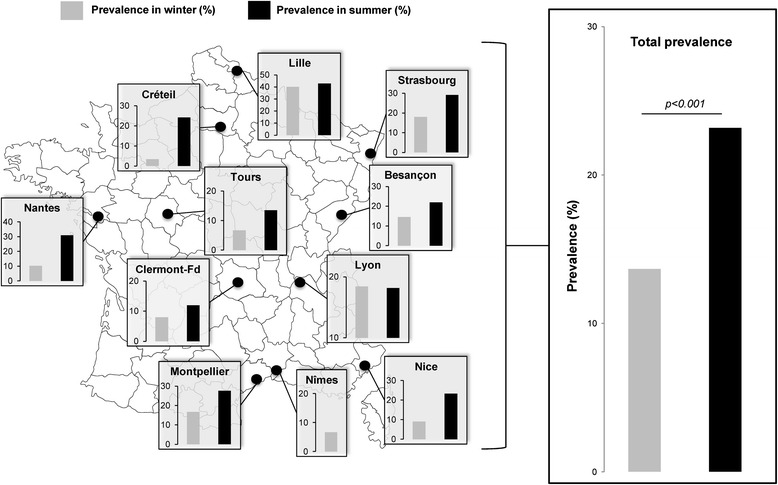
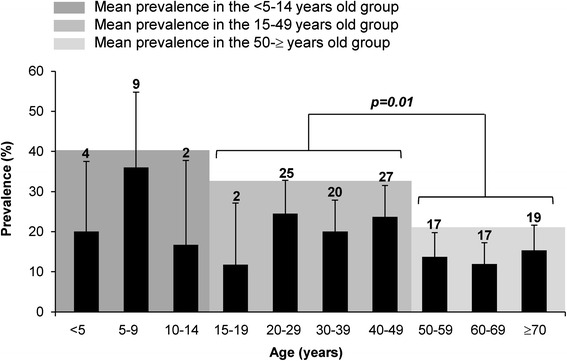
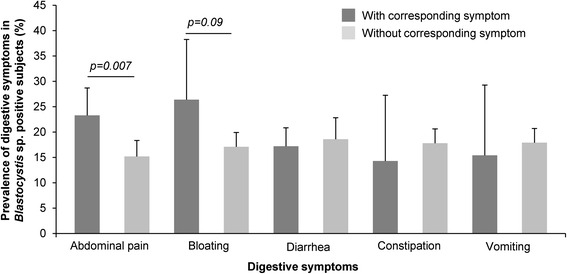
Results: Using quantitative PCR, the overall prevalence of Blastocystis sp. was shown to reach 18.1 %. The prevalence was significantly higher in summer (23.2 %) than in winter (13.7 %). Travellers or subjects infected with other enteric parasites were significantly more infected by Blastocystis sp. than non-travellers or subjects free of other enteric parasites, respectively. Different age-related epidemiological patterns were also highlighted from our data. The prevalence of Blastocystis sp. was not significantly higher in patients with digestive symptoms or diagnosed with chronic bowel diseases. Among symptomatic patients, Blastocystis sp. infection was significantly associated with abdominal pain. Gender, socioeconomic status, and immune status were not identified as potential risk factors associated with infection. Among a total of 141 subtyped isolates, subtype 3 was predominant (43.3 %), followed by subtype 1 and subtype 4 (20 %), subtype 2 (12.8 %), subtype 6 and subtype 7 (2.1 %). No association between ST and clinical symptoms was statistically evidenced.
Conclusions: A high prevalence of Blastocystis sp. infection was found in our French patient population. Seasonal impact on the prevalence of Blastocystis sp. was highlighted and recent travels and age were identified as main risk factors for infection. Most cases were caused by subtypes 1 to 4, with a predominance of subtype 3. Large variations in both prevalence and ST distribution between hospitals were also observed, suggesting distinct reservoirs and transmission sources of the parasite.
Keywords: Blastocystis sp; Intestinal parasite; Molecular epidemiology; PCR; Risk factors for infection; Subtyping.
Figures
References
Publication types
MeSH terms
LinkOut - more resources
Full Text Sources
Other Literature Sources
Molecular Biology Databases
