


'Dignity therapy', a promising intervention in palliative care: A comprehensive systematic literature review
- PMID: 27566756
- PMCID: PMC5405836
- DOI: 10.1177/0269216316665562
'Dignity therapy', a promising intervention in palliative care: A comprehensive systematic literature review
Abstract
Background: Dignity therapy is psychotherapy to relieve psychological and existential distress in patients at the end of life. Little is known about its effect.
Aim: To analyse the outcomes of dignity therapy in patients with advanced life-threatening diseases.
Design: Systematic review was conducted. Three authors extracted data of the articles and evaluated quality using Critical Appraisal Skills Programme. Data were synthesized, considering study objectives.
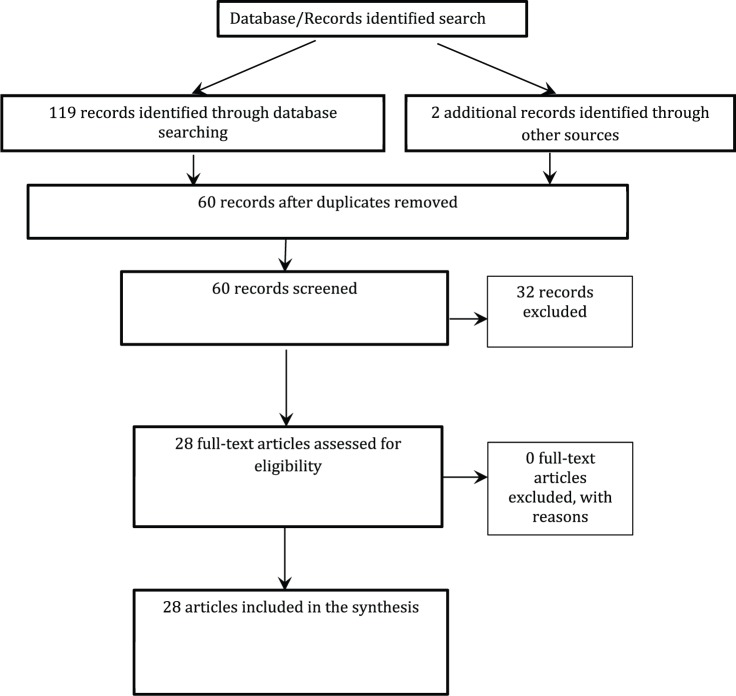
Data sources: PubMed, CINAHL, Cochrane Library and PsycINFO. The years searched were 2002 (year of dignity therapy development) to January 2016. 'Dignity therapy' was used as search term. Studies with patients with advanced life-threatening diseases were included.
Results: Of 121 studies, 28 were included. Quality of studies is high. Results were grouped into effectiveness, satisfaction, suitability and feasibility, and adaptability to different diseases and cultures. Two of five randomized control trials applied dignity therapy to patients with high levels of baseline psychological distress. One showed statistically significant decrease on patients' anxiety and depression scores over time. The other showed statistical decrease on anxiety scores pre-post dignity therapy, not on depression. Nonrandomized studies suggested statistically significant improvements in existential and psychosocial measurements. Patients, relatives and professionals perceived it improved end-of-life experience.
Conclusion: Evidence suggests that dignity therapy is beneficial. One randomized controlled trial with patients with high levels of psychological distress shows DT efficacy in anxiety and depression scores. Other design studies report beneficial outcomes in terms of end-of-life experience. Further research should understand how dignity therapy functions to establish a means for measuring its impact and assessing whether high level of distress patients can benefit most from this therapy.
Keywords: Dignity therapy; end of life; palliative care; psychotherapy; terminal.
Conflict of interest statement
Figures
References
-
- LeMay K, Wilson KG. Treatment of existential distress in life threatening illness: a review of manualized interventions. Clin Psychol Rev 2008; 28: 472–493. - PubMed
-
- Chochinov HM. Dignity-conserving care-a new model for palliative care: helping the patient feel valued. JAMA 2002; 287: 2253–2260. - PubMed
-
- Peters M, Godfrey C, McInerney P, et al. The Joanna Briggs Institute Reviewers’ Manual 2015: methodology for JBI scoping reviews. Adelaide, SA, Australia: The Joanna Briggs Institute, 2015, http://joannabriggs.org/assets/docs/sumari/Reviewers-Manual_Methodology-... (accessed 7 May–June 2016).
Publication types
MeSH terms
LinkOut - more resources
Full Text Sources
Other Literature Sources
Medical
