


PIPITS: an automated pipeline for analyses of fungal internal transcribed spacer sequences from the Illumina sequencing platform
- PMID: 27570615
- PMCID: PMC4981123
- DOI: 10.1111/2041-210X.12399
PIPITS: an automated pipeline for analyses of fungal internal transcribed spacer sequences from the Illumina sequencing platform
Abstract
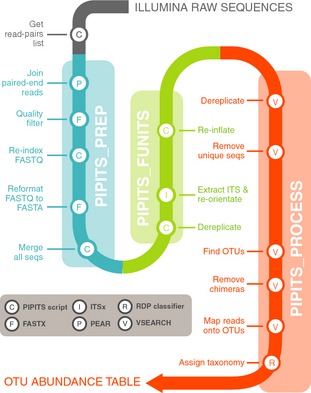
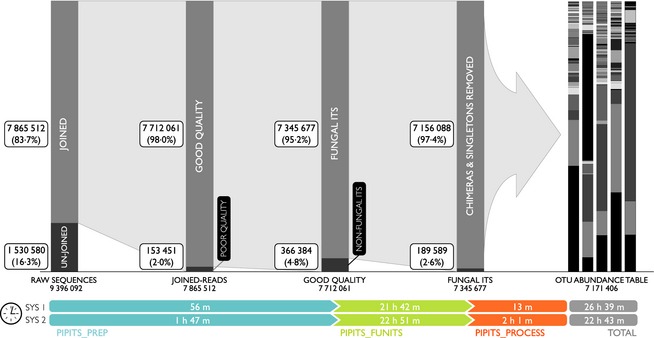
Studying fungal biodiversity using data generated from Illumina MiSeq sequencing platforms poses a number of bioinformatic challenges with the analysis typically involving a large number of tools for each analytical step from quality filtering to generating identified operational taxonomic unit (OTU) abundance tables.Here, we introduce PIPITS, an open-source stand-alone suite of software for automated processing of Illumina MiSeq sequences for fungal community analysis. PIPITS exploits a number of state of the art applications to process paired-end reads from quality filtering to producing OTU abundance tables.We provide detailed descriptions of the pipeline and show its utility in the analysis of 9 396 092 sequences generated on the MiSeq platform from Illumina MiSeq. PIPITS is the first automated bioinformatics pipeline dedicated for fungal ITS sequences which incorporates ITSx to extract subregions of ITS and exploits the latest RDP Classifier to classify sequences against the curated UNITE fungal data set.
Keywords: DNA metabarcoding; bioinformatics; fungi; internal transcribed spacer; pipeline.
Figures

References
-
- Abarenkov, K. , Tedersoo, L. , Nilsson, R.H. , Vellak, K. , Saar, I. , Veldre, V. et al (2010) PlutoF – a web based workbench for ecological and taxonomic research, with an online implementation for fungal ITS sequences. Evolutionary Bioinformatics, 2010, 189–196.
-
- Begerow, D. , Nilsson, H. , Unterseher, M. & Maier, W. (2010) Current state and perspectives of fungal DNA barcoding and rapid identification procedures. Applied Microbiology and Biotechnology, 87, 99–108. - PubMed
-
- Bengtsson‐Palme, J. , Ryberg, M. , Hartmann, M. , Branco, S. , Wang, Z. , Godhe, A. et al (2013) Improved software detection and extraction of ITS1 and ITS2 from ribosomal ITS sequences of fungi and other eukaryotes for analysis of environmental sequencing data. Methods in Ecology and Evolution, 4, 914–919.
LinkOut - more resources
Full Text Sources
Other Literature Sources
Research Materials