Pulsed low-dose RANKL as a potential therapeutic for postmenopausal osteoporosis
- PMID: 27570837
- PMCID: PMC4996279
- DOI: 10.1172/jci.insight.88839
Pulsed low-dose RANKL as a potential therapeutic for postmenopausal osteoporosis
Abstract
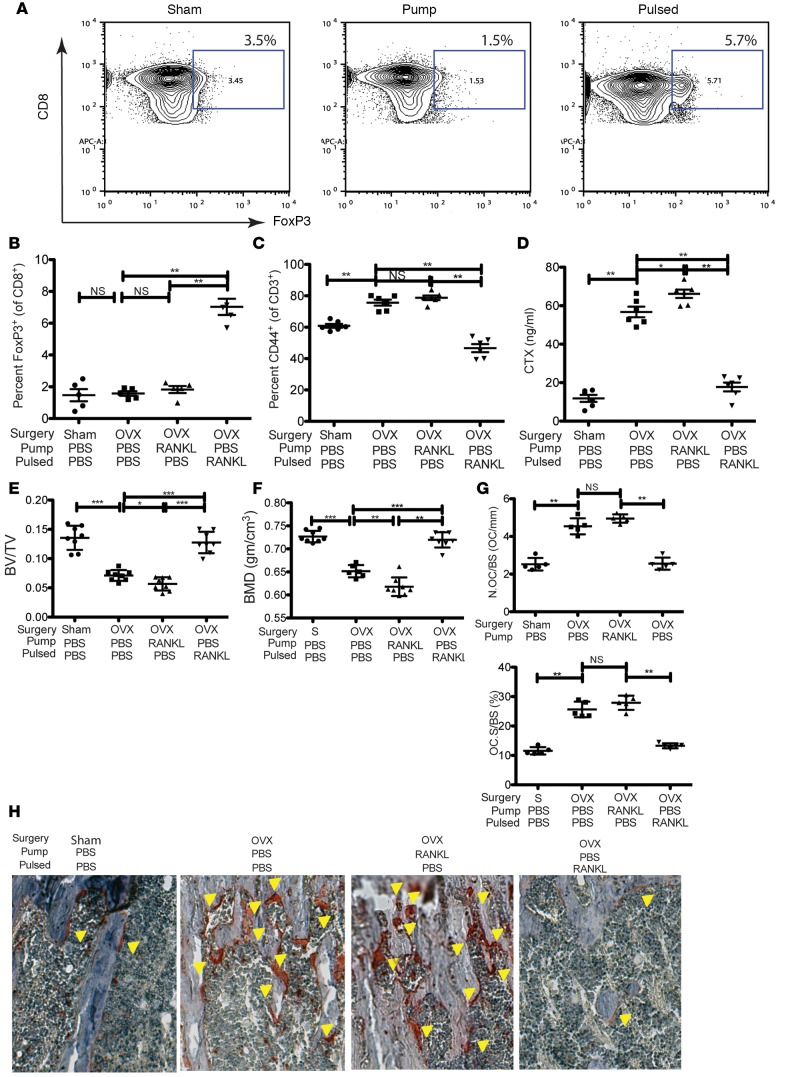
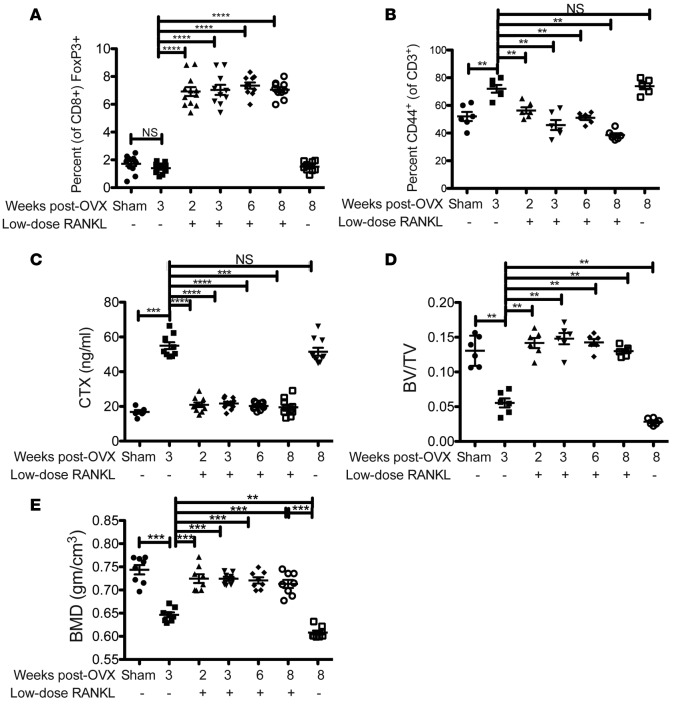
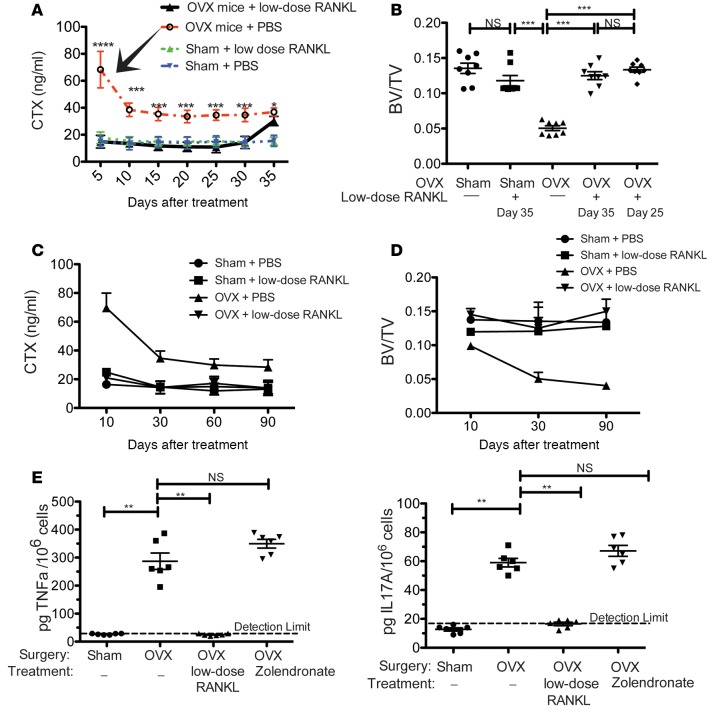
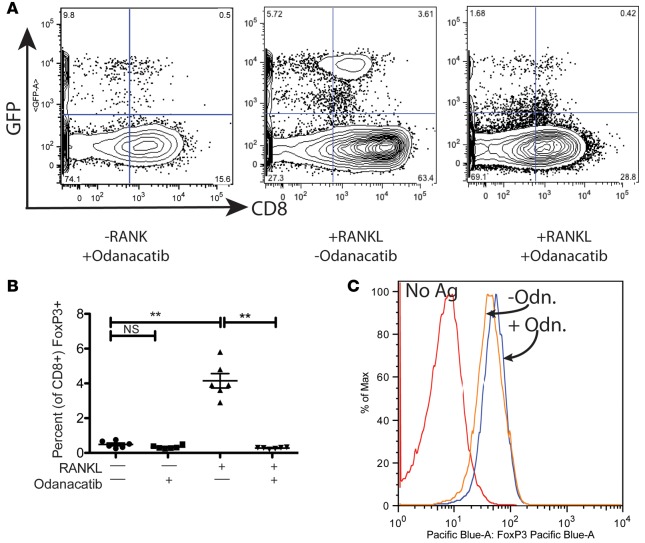
A number of studies in model animal systems and in the clinic have established that RANKL promotes bone resorption. Paradoxically, we found that pulsing ovariectomized mice with low-dose RANKL suppressed bone resorption, decreased the levels of proinflammatory effector T cells and led to increased bone mass. This effect of RANKL is mediated through the induction of FoxP3+CD25+ regulatory CD8+ T cells (TcREG) by osteoclasts. Here, we show that pulses of low-dose RANKL are needed to induce TcREG, as continuous infusion of identical doses of RANKL by pump did not induce TcREG. We also show that low-dose RANKL can induce TcREG at 2, 3, 6, and 10 weeks after ovariectomy. Our results show that low-dose RANKL treatment in ovariectomized mice is optimal at once-per-month doses to maintain the bone mass. Finally, we found that treatment of ovariectomized mice with the Cathepsin K inhibitor odanacatib also blocked TcREG induction by low-dose RANKL. We interpret this result to indicate that antigens presented to CD8+ T cells by osteoclasts are derived from the bone protein matrix because Cathepsin K degrades collagen in the bone. Taken together, our studies provide a basis for using low-dose RANKL as a potential therapeutic for postmenopausal osteoporosis.
Conflict of interest statement
ZSB and RA are listed as inventors on two patents on the use of TcREG (9144599) and the use of pulsed low-dose RANKL (pending) as therapy.
Figures
References
-
- Dore RK. The RANKL pathway and denosumab. Rheum Dis Clin North Am. 2011;37(3):433–52. - PubMed
Grants and funding
LinkOut - more resources
Full Text Sources
Other Literature Sources
Research Materials