


Virus-derived DNA drives mosquito vector tolerance to arboviral infection
- PMID: 27580708
- PMCID: PMC5025746
- DOI: 10.1038/ncomms12410
Virus-derived DNA drives mosquito vector tolerance to arboviral infection
Abstract
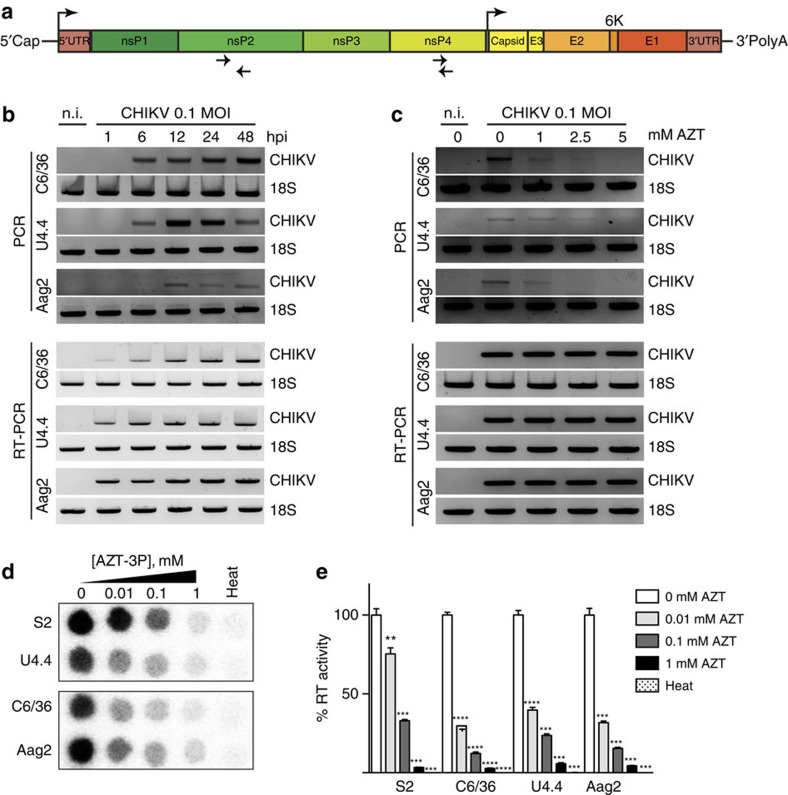
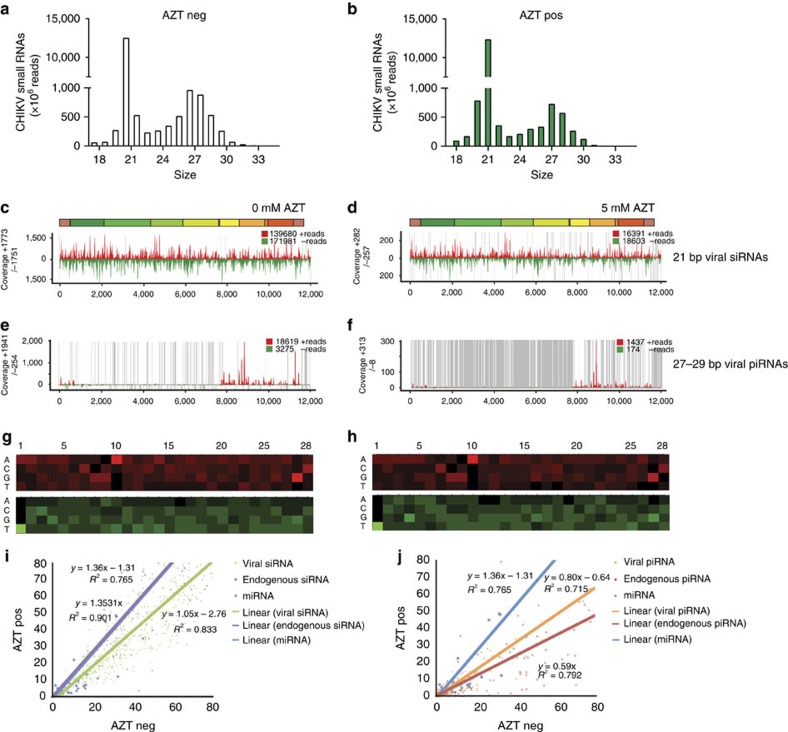
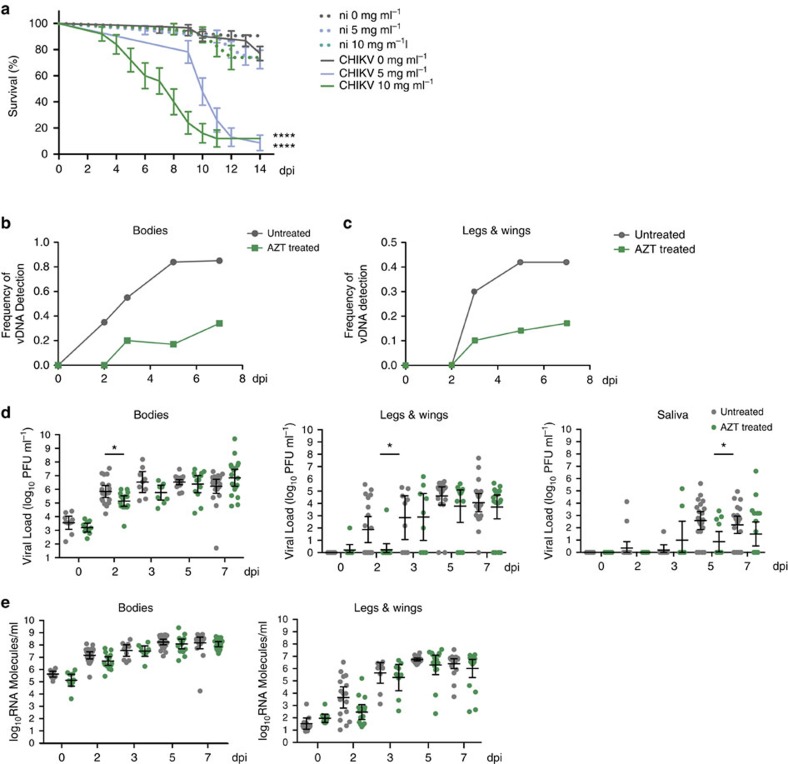
Mosquitoes develop long-lasting viral infections without substantial deleterious effects, despite high viral loads. This makes mosquitoes efficient vectors for emerging viral diseases with enormous burden on public health. How mosquitoes resist and/or tolerate these viruses is poorly understood. Here we show that two species of Aedes mosquitoes infected with two arboviruses from distinct families (dengue or chikungunya) generate a viral-derived DNA (vDNA) that is essential for mosquito survival and viral tolerance. Inhibition of vDNA formation leads to extreme susceptibility to viral infections, reduction of viral small RNAs due to an impaired immune response, and loss of viral tolerance. Our results highlight an essential role of vDNA in viral tolerance that allows mosquito survival and thus may be important for arbovirus dissemination and transmission. Elucidating the mechanisms of mosquito tolerance to arbovirus infection paves the way to conceptualize new antivectorial strategies to selectively eliminate arbovirus-infected mosquitoes.
Figures

References
-
- World Health Organization (WHO). World Health Report. Executive Summary: Insect-borne diseases http://www.who.int/whr/1996/media_centre/executive_summary1/en/index9.html (1996).
-
- Adelman Z. N., Blair C. D., Carlson J. O., Beaty B. J. & Olson K. E. Sindbis virus-induced silencing of dengue viruses in mosquitoes. Insect Mol. Biol. 10, 265–273 (2001). - PubMed
Publication types
MeSH terms
Substances
LinkOut - more resources
Full Text Sources
Other Literature Sources
Medical
