


Temporal asymmetries in auditory coding and perception reflect multi-layered nonlinearities
- PMID: 27580932
- PMCID: PMC5025791
- DOI: 10.1038/ncomms12682
Temporal asymmetries in auditory coding and perception reflect multi-layered nonlinearities
Abstract
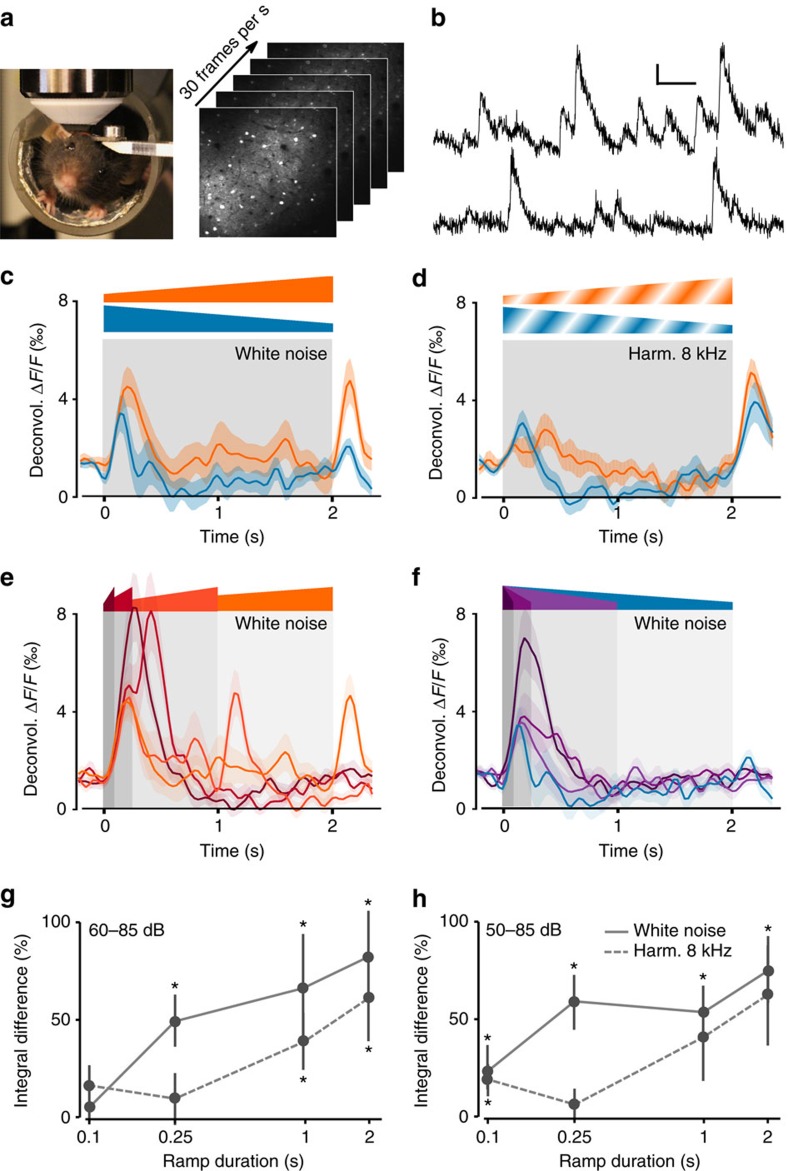
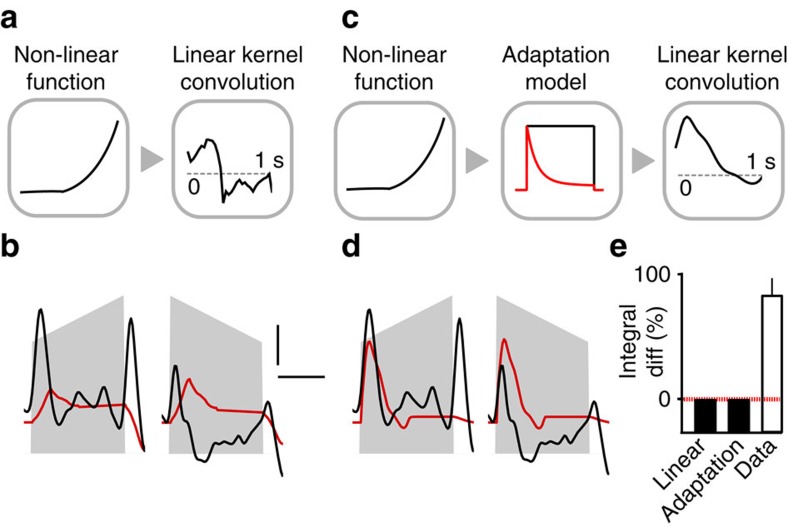
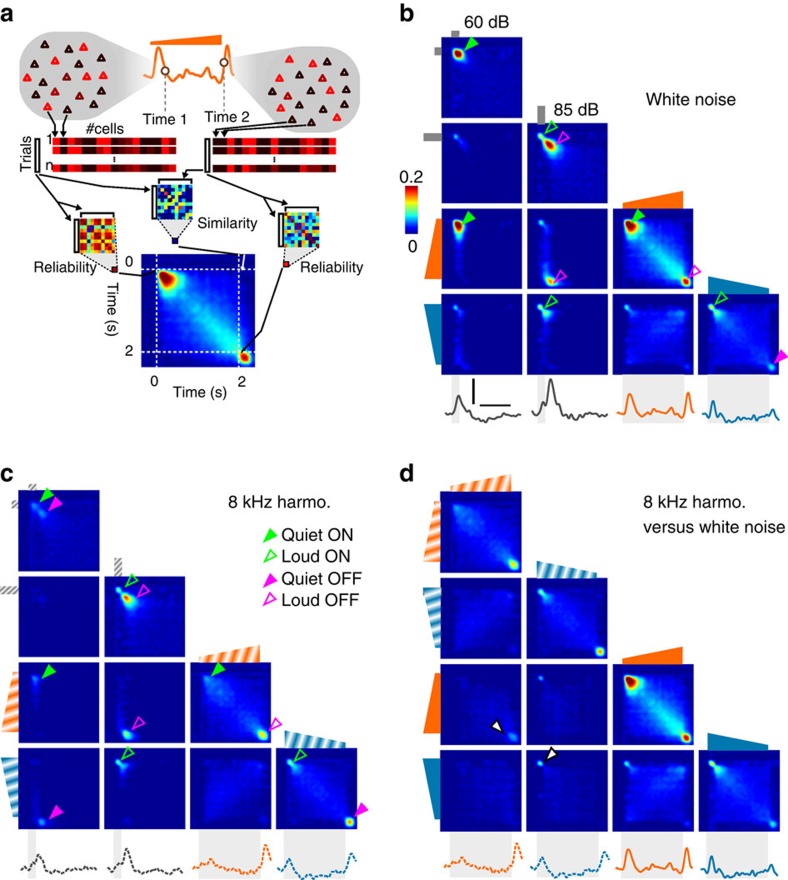
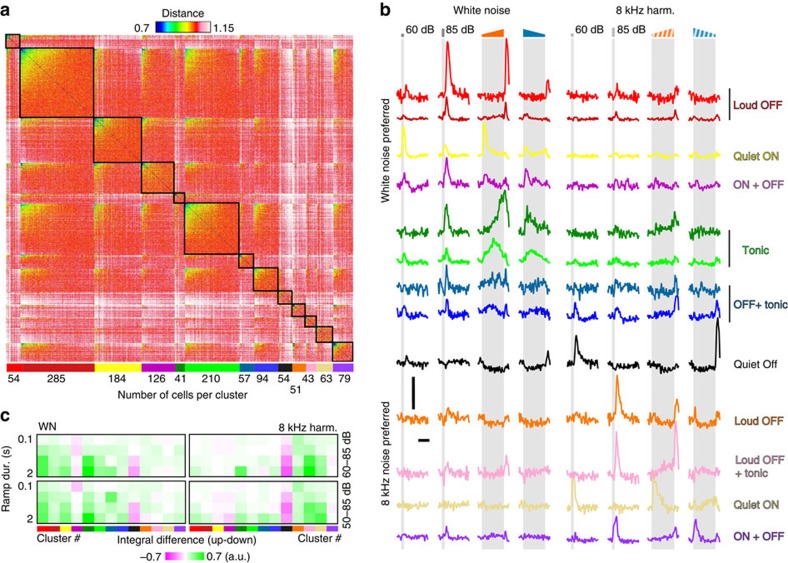
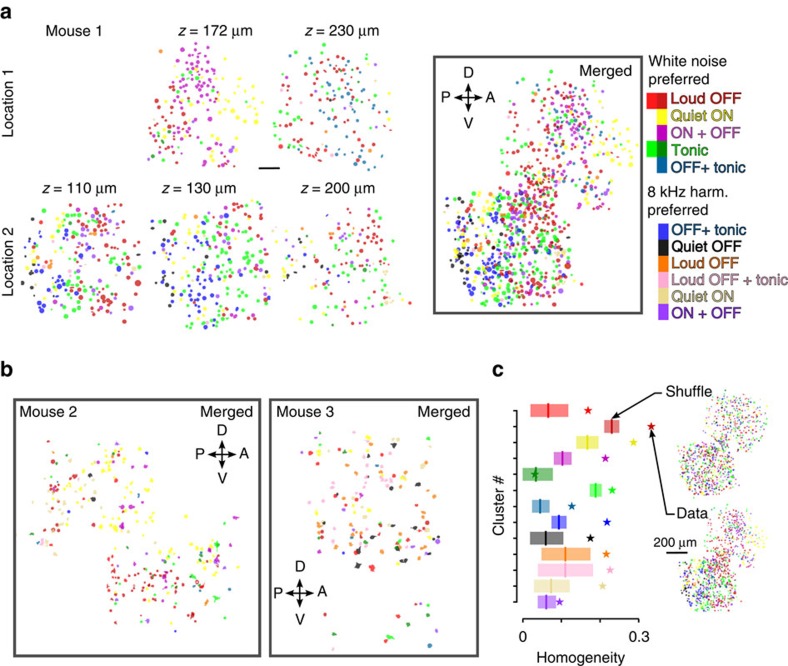
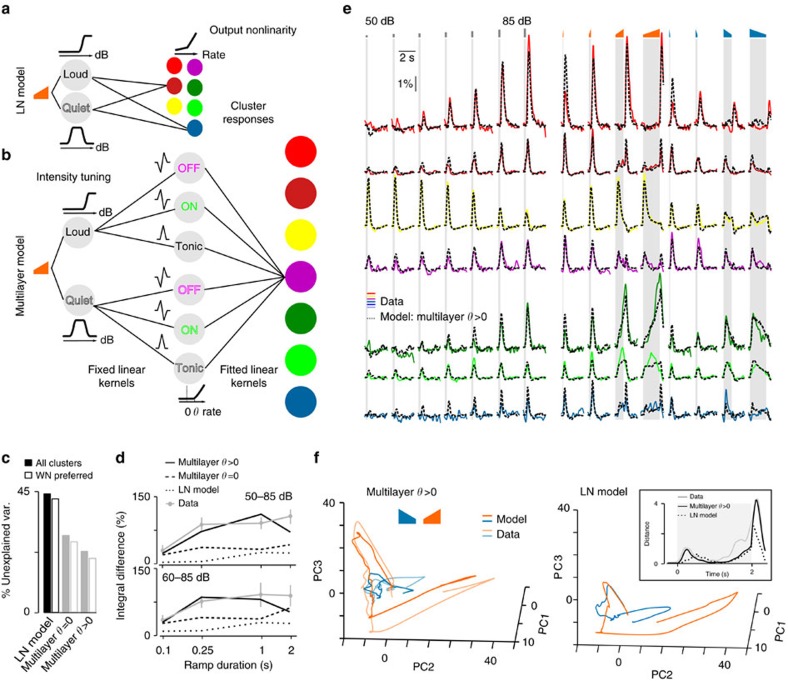
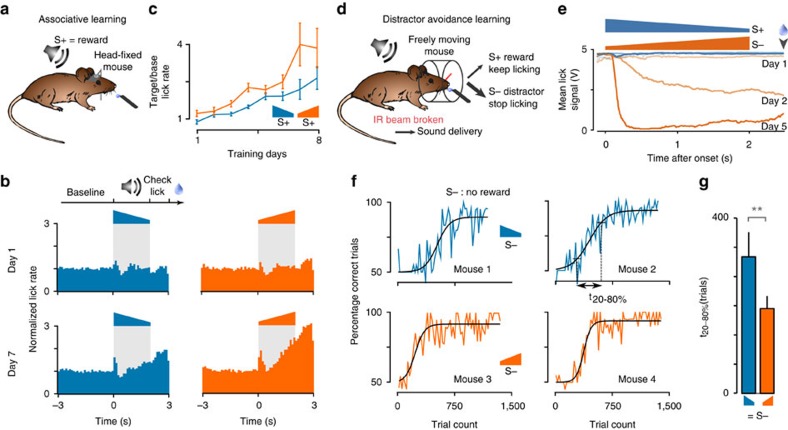
Sound recognition relies not only on spectral cues, but also on temporal cues, as demonstrated by the profound impact of time reversals on perception of common sounds. To address the coding principles underlying such auditory asymmetries, we recorded a large sample of auditory cortex neurons using two-photon calcium imaging in awake mice, while playing sounds ramping up or down in intensity. We observed clear asymmetries in cortical population responses, including stronger cortical activity for up-ramping sounds, which matches perceptual saliency assessments in mice and previous measures in humans. Analysis of cortical activity patterns revealed that auditory cortex implements a map of spatially clustered neuronal ensembles, detecting specific combinations of spectral and intensity modulation features. Comparing different models, we show that cortical responses result from multi-layered nonlinearities, which, contrary to standard receptive field models of auditory cortex function, build divergent representations of sounds with similar spectral content, but different temporal structure.
Figures
References
-
- Helmholtz H. v. & Ellis A. J. On the Sensations of Tone as a Physiological Basis for the Theory of Music 2nd edn Longmans, Green (1885).
-
- Lewis J. W. et al.. Human brain regions involved in recognizing environmental sounds. Cereb. Cortex. 14, 1008–1021 (2004). - PubMed
-
- McBeath M. K. & Neuhoff J. G. The Doppler effect is not what you think it is: dramatic pitch change due to dynamic intensity change. Psychon. Bull. Rev. 9, 306–313 (2002). - PubMed
-
- Nelken I., Rotman Y. & Bar Yosef O. Responses of auditory-cortex neurons to structural features of natural sounds. Nature 397, 154–157 (1999). - PubMed
-
- Theunissen F. E. & Elie J. E. Neural processing of natural sounds. Nat. Rev. Neurosci. 15, 355–366 (2014). - PubMed
Publication types
MeSH terms
LinkOut - more resources
Full Text Sources
Other Literature Sources
