


Clonal cooperativity in heterogenous cancers
- PMID: 27582427
- PMCID: PMC5330947
- DOI: 10.1016/j.semcdb.2016.08.028
Clonal cooperativity in heterogenous cancers
Abstract
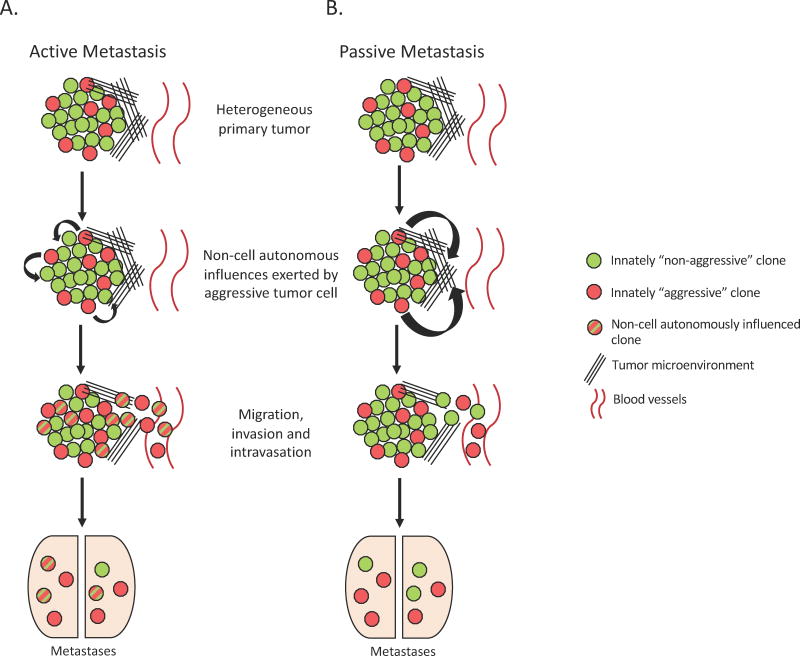
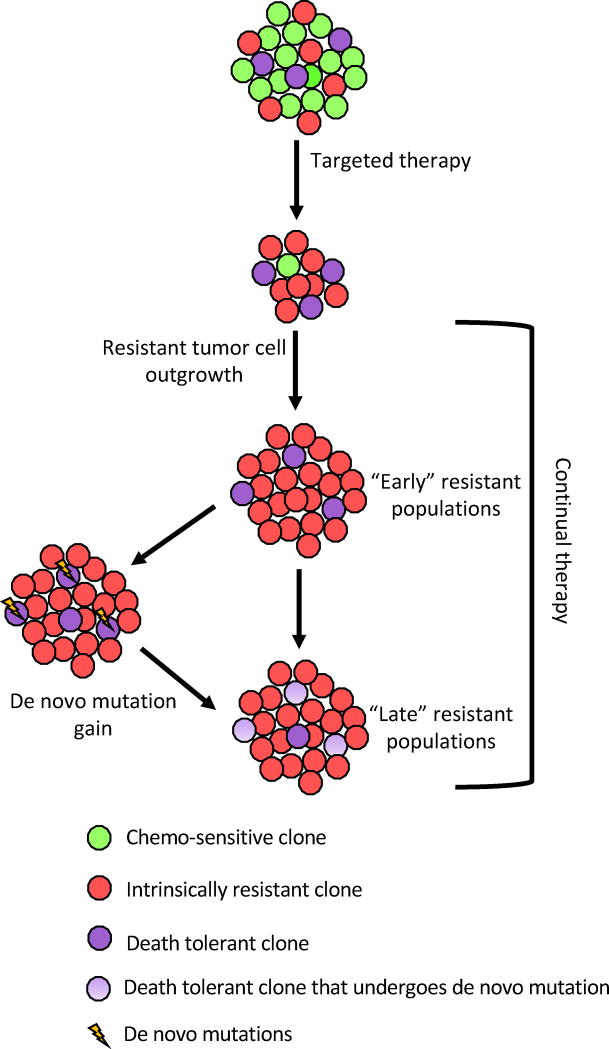
Tumor heterogeneity is a major obstacle to the development of effective therapies and is thus an important focus of cancer research. Genetic and epigenetic alterations, as well as altered tumor microenvironments, result in tumors made up of diverse subclones with different genetic and phenotypic characteristics. Intratumor heterogeneity enables competition, but also supports clonal cooperation via cell-cell contact or secretion of factors, resulting in enhanced tumor progression. Here, we summarize recent findings related to interclonal interactions within a tumor and the therapeutic implications of such interactions, with an emphasis on how different subclones collaborate with each other to promote proliferation, metastasis and therapy-resistance. Furthermore, we propose that disruption of clonal cooperation by targeting key factors (such as Wnt and Hedgehog, amongst others) can be an alternative approach to improving clinical outcomes.
Keywords: Clonal cooperativity; Epithelial to mesenchymal transition; Metastasis; Tumor heterogeneity.
Copyright © 2016 Elsevier Ltd. All rights reserved.
Figures
References
Publication types
MeSH terms
Grants and funding
LinkOut - more resources
Full Text Sources
Other Literature Sources
