


Perioperative pain management in hip arthroscopy; what options are there?
- PMID: 27583156
- PMCID: PMC5005063
- DOI: 10.1093/jhps/hnw015
Perioperative pain management in hip arthroscopy; what options are there?
Abstract
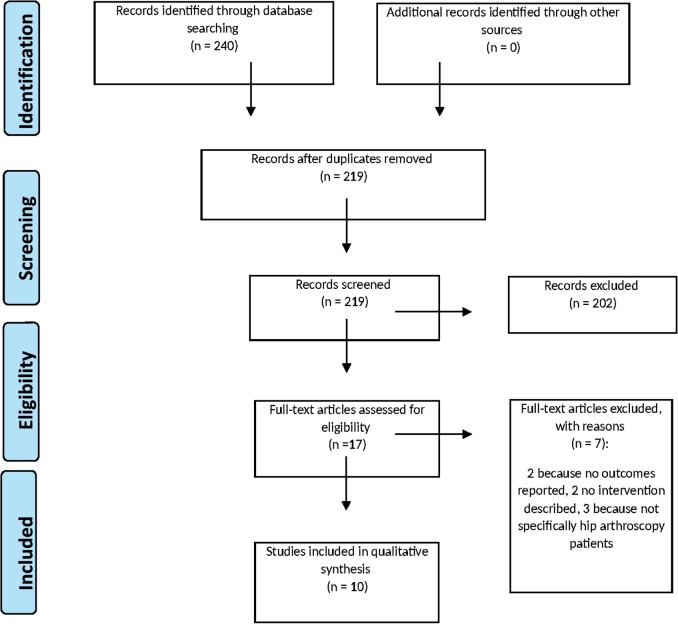
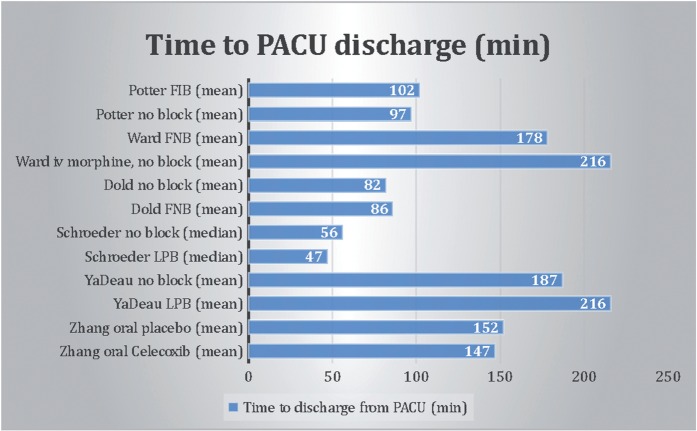
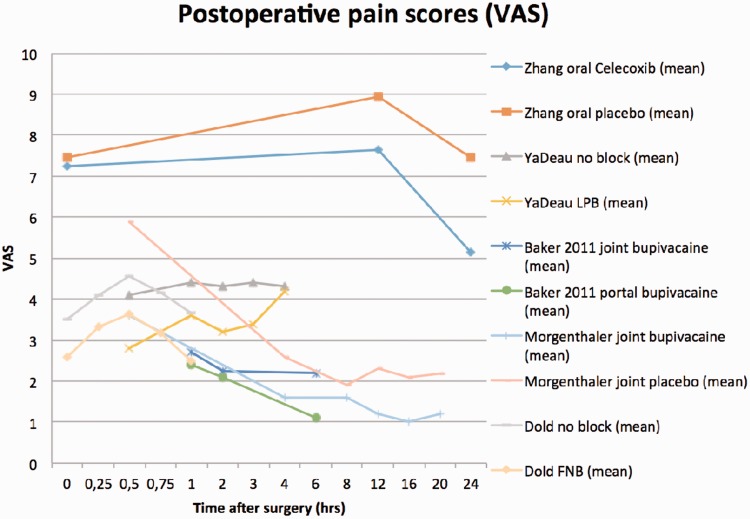
Hip arthroscopy is a fast growing orthopedic field of expertise. As in any field of surgery adequate postoperative pain management regimes are of utmost importance. The purpose of this review is to provide an overview of current knowledge on anesthetic options for perioperative pain management for hip arthroscopy. We searched the Pubmed/Medline and Embase database for literature and included 10 studies for our analysis. Because of the variety of pain scales and different ways of measured pain no meta-analysis could be performed and a descriptive review is performed. There are several types of pain regimens that can mostly be divided in two groups: local anesthetics and nerve blocks. Included studies show a rather large variation in reported visual analogue scale scores, post anesthesia care unit admission time and opioid usage. There are several anesthetic options available for hip arthroscopy. Different studies use different dosages, anesthetic regimens and different protocols; this partly explains the differences between studies with similar techniques. Peripheral nerve blocks seems promising but regarding current literature no clear recommendation can be made about what the best perioperative pain management option is, an overview of all reported techniques is given.
Figures
References
-
- Colvin AC, Harrast J, Harner C. Trends in hip arthroscopy. J Bone Joint Surg Am 2012; 94: e23. - PubMed
-
- Montgomery SR, Ngo SS, Hobson T. et al. Trends and demographics in hip arthroscopy in the United States. Arthroscopy 2013; 29:661–5. - PubMed
-
- Sing DC, Feeley BT, Tay B. et al. Age-related trends in hip arthroscopy: a large cross sectional analysis. Arthroscopy 2015; 31:2307–13.e2. - PubMed
-
- Safran MR. Advances in hip arthroscopy. Sports Med Arthrosc 2010; 18:55.. - PubMed
-
- Khanduja V, Villar RN. Arthroscopic surgery of the hip: current concepts and recent advances. J Bone Joint Surg Br 2006; 88:1557–66. - PubMed
Publication types
LinkOut - more resources
Full Text Sources
Other Literature Sources
